Let’s talk about cancel culture. Actually, no, I was just kidding. But what I want to discuss is the bizarre relationship between stand-up comedy and what we regard as morality. So maybe we’ll be touching on some stuff that’s cancel culture-adjacent.
If you’ve paid attention for the last 15 years you’ll know that a lot of comedians, previously well-regarded ones, have been disgraced and exposed for horrible behavior.
I’m talking about Bill Cosby, who presented himself as the ultimate nice guy and family man, someone who frequently chastised other comics for using naughty words in their acts. Turns out he was a serial abuser who drugged and sexually violated more than 60 women over half a century. That’s more than 60 women that we know about.
I’m talking about Louis CK, who was outed with sexual impropriety, also spanning decades. At the time this news came out, and there’s lots of evidence that his PR team aggressively suppressed this information coming out to the public for a long time, he was the biggest stand-up in the world. He apparently lost 35 million dollars in the hour after the news finally made it to the public.
Fans of his, of whom I’ve been one, minimise what he did with the claim that his transgressions were conducted with consent, albeit gained through a massive power imbalance. This was my assumption for a long time, but I’ve since learned that this claim isn’t entirely true. Comedy without Errors on YouTube has made a comprehensive 5+ hour documentary breakdown titled We Need to Talk About Louis that is an eye-opener.
There are also Russell Brand who is still being investigated for a scary number of allegations about sexual assault; Jeffrey Ross, Chris D’Elia and countless more. Aziz Ansari has been under scrutiny for obtaining sexual consent with social pressure. But I’m not just talking about this particular type of violation.
John Mulaney, a long-time favourite comedian of mine, details a lot of degenerate behaviour as a drug addict while presenting a squeaky-clean image to the world. TJ Miller has placed a fake bomb threat in addition to a variety of assault allegations.
And I also want to talk about the speech acts of comics. By now we’re all familiar with Michael Richards losing it on stage and outing himself as a bitter racist. Ironically, despite contrarian claims from comedians who like to whine about “cancel culture” and how politically correct everyone is now, Richard’s rant might not get much of a reaction in the year 2026 in which “anti woke” comedians are the wealthiest and most influential voices in the comedy landscape.
Before selling his podcast to Spotify for an astronomical amount of money. Joe Rogan had to dry-clean a lot of racist language from his old episodes. Tony Hinchcliffe, whose transgressions against both human decency and comedy itself I’ve already spent too much time talking about, doesn’t seem to have any jokes that aren’t about race and don’t implicitly support racism.
Let’s quickly tackle an argument that’s one of the factors around the whole argument that the Roganshpere wants to have with the rest of the world. They regularly employ the “It’s just jokes/it’s just words” defense, often explaining that words are harmless in and of themselves. Notably, Louis CK was deploying a funny bit about this, how “mouth sounds” don’t have any meaning or impact, the whole time he was perpetrating those other assaults. Over the last decade we’ve learned that his ability to rationalise is his superpower.
My rebuttal to that shouldn’t surprise you. It’s not particularly esoteric. Words do have power. These guys who disingeuously claim that you can’t do anything with something as inherently powerless as mere words – Joe Rogan, Andrew Schultz, Tim Dillon, Theo Von and Tony fucking Hinchcliffe – publicly used their words to platform Donald Trump and got him elected.
Sure, some of them are denying it now, but they’re all on record claiming on their respective podcasts that they made it happen and ‘isn’t comedy awesome because we can do so much with our words’ These disingenuous pricks blow hot and cold with the same breath – acknowledging the power when there’s a compliment attached and denying it when it’s tied to an accusation.
My rebuttal is summed up with something I said 4 years ago and still stand by:
“Some comics defend their egregious material by minimising our role. They’ll tell us it’s just words, and words have no power. It sounds persuasive, but I’m calling bullshit. I’d tell those people that they’re either lying or not very good comedians. If your words don’t have any power, you need to work on your act until they do.
I mean, these guys are all grifters. All of them cite their wealth as evidence of their success and rightness, even though that wealth was mostly accumulated from being shitty. My favourite example of piece of shit grifting is Andrew Schulz and the bullshit moves he made in 2022 with his “Infamous” special.
He generated a lot of hype for it with a story he recited about how a massive streaming service he’s not allowed to name, hinting at Netflix, wanted to buy and produce his special for a ton of money but they wanted to consult with him about some of the edgy and offensive bits.
And because he is known for his principles and integrity, he said “No, sir” and did the charitable act of selling it directly to his fans instead, giving them a chance to purchase a historically important special that will never be available through media channels with all of their woke censorship.
And then after selling it to as many hyped people would purchase it, he put it on YouTube for free, monetized with advertisments for sports betting.
And he did this literally before half of his customers had a chance to play the copy they’d bought and downloaded.
What a fucking liar. What a fucking grifter. Your first clue should have been the mysterious and unspecified streamer who wanted to censor him. Over the last few years Netflix has gone out of it’s way to publish offensive (and shitty) comedy specials and been 100% consistent in defending the ‘free speech’ content when people criticise it.
YouTube on the other hand, is powerfully censored. You will not see people use words like rape (they say “S.A”) or porn (for which they substitute “corn”), or even words like “dead” and “killed” (for which they say “un-alive”). YouTube content creators regularly tell us that even hinting as using these words will get their content demonetised and maybe even removed from the platform. There is no universe in which YouTube is an edgy free-speech alternative to Netflix.
Don’t even get me started on the moral bullshit of putting gambling ads all over the special after he already sold it. This guy is a piece of shit and has continued to be so. You can tell just from his sleazy moustache and haircut, which aren’t allowed to be within 500 metres of a school zone.
Sure, he’s currently back-pedalling all of his Trump support since the realising that Iran war and the Epstein bullshit now makes him look bad, but he was a cheerleader who vigorously helped Trump lie and gloss over that stuff for as long as he could and has spent hours on his own podcast gloating about how he and his buddies installed a right-wing president.
Obviously he and his cohorts did it for the money and influence. And now they’re using the money and influence they gained to justify it. Many of them are the same comics involved in the scandal around the Riyadh Comedy Festival last year. This is the event in which an oppressive regime with an atrocious human rights record offered big bags of money, giant ones in some instances, to comedians for performing at their event.
Make no mistake, when I say “oppressive regime” I’m talking about some really evil shit. Military actions. Employing the death penalty with no due process, really fucked-up treatment of women and LGBTQ+ people, crushing free speech, including imprisoning journalists and a whole lot more.
Principled comedians who crap on about free speech (and 100% of the comics who participated have bored us with their free speech polemics in the past) should object to cooperating with an evil government just because of the censorship thing alone. But apparently both their comedic brands and ethics are both for sale and more flexible than they’ve previously implied.
There are defences, and I’ve tried to be fair to them. The most common one might be that I’d probably take the same deal and rationalise it in the same way, that it’s pretty easy to judge when I haven’t been invited myself.
There is something to that. I have my own comedy about this phenomenon. The main thesis in my own act this year is my claim that the world we live in doesn’t let us own anything anymore and that we even have to rent the music we used to be able to buy outright – and this even comes down to our own integrity and ethics, which used to be something we took ownership of but now can only afford if we keep subscribing. Even our lives are a subscription service, for which the ongoing fee is named Cost of Living. Ethics? Sure, if you can afford them, but I’ve worked with homeless people, and none of them ever asked me if the tuna was Dolphin Safe.
I might like to think I have the moral fortitude to say ‘fuck you’ to giant bags of money.
It might be harder than that, though.
But that’s because I’m not as wealthy as Bill Burr.
If I had Bill Burr’s wealth and success, I’d have a much easier time with this moral test.
So I reserve the right to express disappointment that he hasn’t even visibly tried to struggle with it.
Anyway after all that whining and moral pontificating, I wanted to ask why so many comedians fail to pass the basic decency test of being good people. I know it’s not all coming out of the comedy scene (right, P Diddy?) but what is it about comedy that fosters degeneracy?
First, I think the “outlaw” mythology around comedy is a big part of it. We tell people we’re not just outside of societal norms, but we actively challenge them. Defending the indefensible and flipping moral assumptions are powerful comedic tools. And people expect us to challenge standard, even standards of decency.
Also, it pays to bear in mind that one of the main ideas of comedy is Benign Violation Theory. I won’t repeat how it works on this page, but it pays to remember that creating a violation is the first part of any joke we deploy. Violating could legitimately be described as the essence of what we do. It’s expected of us.
We also evade accountability. We might get the occasional feral comment or DM from a heckler or online moral crusader but we generally hide behind the “it’s just jokes” stuff I mentioned earlier. Many comics will say that their comedic identity is merely a persona and that their real character is nothing like it. This cuts both ways, as with Bill Cosby. The important thing is that claiming to be more or less sincere about our statements than we actually are is allowed and therefore practised.
I’ve also discussed in my book that there are lifestyle aspects to comedy, especially as a full time career, that can incline us towards excessive use of drugs and alcohol. Living nocturnally and travelling alone, moving often, can change our perceptions and priorities with our choices.
Also, and this is another one of those moments that’s every bit as ironic as the “free speech warrior” stuff, comedians can live in echo chambers. We claim to be the only people outside of eacho chambers, and you’ll hear the phrase “liberal echo chamber” routinely dropped by most of those Rogansphere guys, but the Roganshere itself is the best example of an echo chamber I can think of. All of those guys are in a massive unending circle-jerk, constantly appearing on each other’s shitty podcasts and endlessly reassuring themselves and each other. They all spout the same talking points which they feed to each other on a daily basis.
Joe in particular repeatedly says he doesn’t listen to outside opinions or criticism because nobody has sufficient money or success to qualify anything they would ever have to say. He says he never reads comments or pays attention to any opinion which differs from his, that anyone who dares to offer one doesn’t have his awesome career and is necessarily mentally ill because they’re not him or his friends. That’s a matter of record. He’s said it on his podcast many times. How is he not living in a self-created echo chamber? If he were ever exposed to a normal opinion or moral standard, he’d call it mentally ill.
Speaking of mental health, it’s worth noting that there’s a staggeringly high prominence of mental health issues with comedians. The joke that if we didn’t have them we wouldn’t be comedians is so prevalent it’s becoming hack. Truth is, we’re all struggling with it and exposing ourselves to a world of mean and violation and contrary ideas, and doing in in an environment that’s not conducive to healthy living.
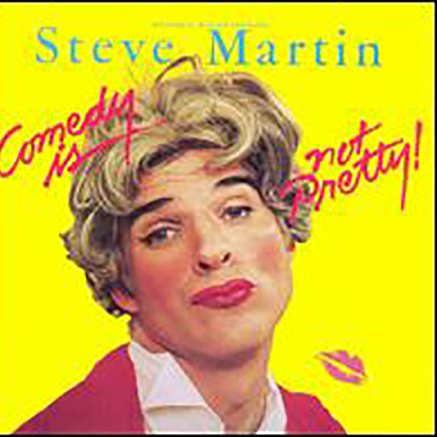
Comedy is not pretty. That’s the title of Steven Martin’s 1979 comedy album, but it’s also a prescient statement. We work in a sector that rewards us more for being mean and snarky than for being kind. Comedy’s tools are more effective when we violate and challenge. We pretend our words are natural and casual, no matter how much thought we put into choosing them, and can forget what consequences they can have. We see ourselves as outsiders, beyond the moral and social critiques of others, and see it as a superpower.
But does having superpowers automatically make us superheroes? As Spiderman would tell us, with great power comes great responsibility.
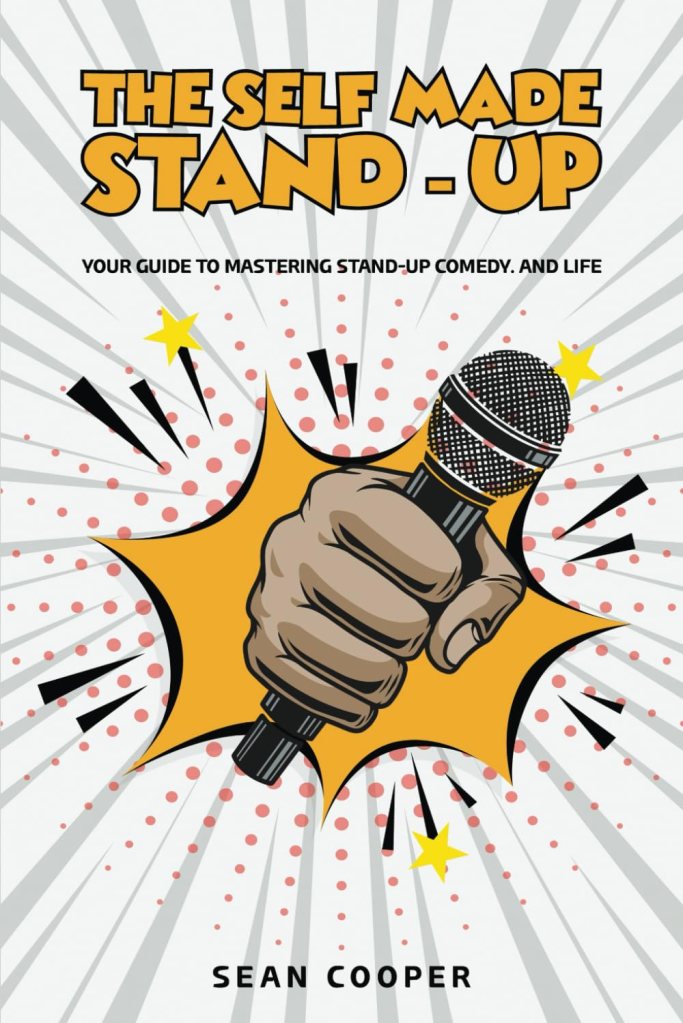
The Self Made Stand Up is available as a paperback or e-book from Amazon, Barnes and Noble and lots of other places.
More than a how-to book, The Self-Made Stand-Up is an essential resource for developing yourself as an effective comedian. If you’re a comedian, or looking to become one, The Self-Made Stand-Up is the emotional support animal you need.
You might want to consider joining my mailing list (I promise I won’t spam you)

