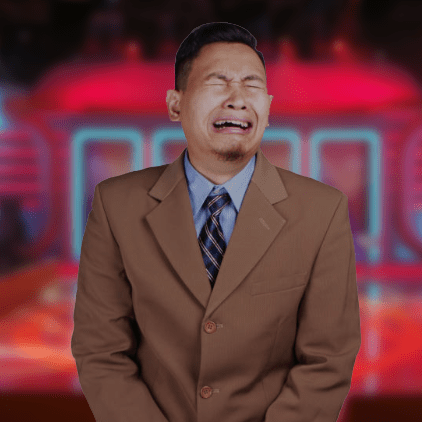
A long time ago I visited Tokyo and glimpsed the future.
Walking around Shinjuku felt like being on the set of Blade Runner, right down to the massive videos and advertisements on the sides of skyscrapers. In 2002 mobile phones looked and behaved like ours do today. I felt like I was witnessing what we would eventually catch up to.
It wasn’t all the same, of course, because cultures evolve differently. For example, the giant 7-storey record stores frequented by vinyl enthusiasts are apparently still going strong there, while music on a physical platform and it’s retailers have all but gone extinct over here. But there were still some indicators.
After watching some of their television I asked a friend there why they had so many cooking shows when most homes barely had anything resembling kitchens. He told me it was probably the same reason Aussies love home renovation shows so much when most of us rent. Touche. That was a pretty good point.
Japan seems to have pioneered the sadistic reality TV show, also. Takeshi’s Castle was showing us the insane physical challenges since the eighties. A long time before The Voice, X-Factor and all of those other singing shows, there was NHK Nodo Jiman which must have been what I saw when I thought I was watching a singing competition called “Take It Easy”
The reason I thought of this title was because of a scene I saw with a little english in it. I don’t speak Japanese. The contestants were given a mere 60 seconds to impress us and after a minute someone would gong them off with a number of bells between 1 and 11. 1 bell meant you were awful and a brutal critique would follow.
I saw this guy who introduced himself as Raymond sing terribly, really terribly before getting a single bell and then a panel savagely told him how bad he was on national television as he burst into tears. The host then came over and put his arm around the crying contestant and said “Now, Raymond… Take it Easy.” Then, with tears streaming down his face, Raymond joined the host in a big fake smile and thumbs-up to the camera. Both of them said in unison “Take it Easy.”
A quarter of a century later I still remember this bizarre scene.
Which brings us to Kill Tony. It’s a show that’s grown massive over the years and has a huge fanbase. It’s so big that it’s managed to convince the main guy behind it, Tony Hinchcliffe, that he’s a comedian – not just a comedian, but a excellent top-tier comedian who’s qualified to judge other comedians – even though he’s a deeply unfunny shitty comedian.
Now, I know I’ve been a bit mean to Tony Hinchcliffe this year (here and here) and some of you don’t think I should be doing that. But guess what? My site. Your commitment to free speech sometimes needs to be tested along with everyone else’s.
His success and money that he craps on about all the time means I’m not exactly punching down. He has rich friends like Joe Rogan telling him that anyone who criticizes either of them is mentally unstable and unqualified to judge. And he’s already rebutted all of it by saying “Suck my fat cock” which I think we can all agree is a persuasive and rational argument that proves everyone wrong.
But I digress. There’s lots of other shitty comedians out there (they’re easy to find because they’re mostly in Joe Rogan’s circle) but I really want to discuss Kill Tony. It’s been on my mind for a while. I have several half-written blog posts at any given time, and there’s one called “A shitty open mic, but with more bullying” that I started in 2023.
I tell myself I need to go back and complete it every time I see him claim that he “creates 3 hours of stand-up comedy material every week” by hosting the show (that would make every crappy open mic MC a prolific joke-writing prodigy), Every time someone tells me they’re a fan of the show and presents it as proof of their enthusiam about live stand-up I remind myself to finish the blog.
By now you know how I feel about Tony, but that doesn’t matter. There’s lots of comics I don’t like. I think the bigger problem is his show and what it’s doing to live comedy all over the planet.
The format of Kill Tony isn’t rocket science, but the execution was pretty brilliant. It’s a spectacle now, a massive event with a big audience and a long reach. Hinchcliffe regularly compares his act and the show to WWE Wrestling, which is valid and kind of brilliant. People attend for that experience, the spectacle and the Kayfabe – and they come in droves. Wrestling has a great formula to borrow.
Kill Tony definitely captures that WWE vibe. I feel like KT audience are more like WWE audiences than comedy enthusiasts. The only real difference is the kind of Kayfabe. I don’t know who to credit it to but I heard someone observe that WWE wrestling is entertainment pretending to be violence, while Kill Tony is violence pretending to be entertainment.
Also clever is the comedian reinvention move. I’ve seen it in local scenes: Someone struggles to be funny. They can speak confidently. In fact, I find that they’have an abundance of confidence that doesn’t seem to be linked to their skill-set at all. They’re ok with the performing part of the job.
It’s the being funny part – recognising and writing effective jokes, timing and understanding what makes people laugh out loud – that they struggle with. I’ve known many people over the years who perform regularly and be part of the scene but have never killed. They don’t know what killing is like and think their ability to be comfortable with banter to be the same thing or good enough. Yes, a lot of these people – comedians who haven’t yet worked out how to be really funny – often focus on crowdwork.
Mostly though, there will be a moment of reinvention. One of those “step up or step aside” moments where it’s apparent (ok, to be perfectly honest I have no idea of how conscious these guys are about it all) that they can learn to get funny and “move the needle”: from amusing to funny, to quit, or to resign themselves to being part of the scene without ever being vital to it…. or they can gatekeep.
When I see someone hang around for a couple of years and never really did better than amusing/ok it’s not uncommon for them to suddenly take an interest in developing the MC skill. It’s a great way to keep getting maximum stage time without ever threatening to be a headline act. Better still, some people open their own rooms in their own venues.
If you can’t be a peer, you can be a supervisor. If you take on a gatekeeping role you no longer have to worry about whether you’re good enough to keep the company of other comics. Suddenly they’re all focused on whether they’re good enough for your approval. Having examined specimens of Tony’s stand-up and knowing he’s never been particularly well respected, I can’t help but wonder if that’s a factor in his decision to cofound Kill Tony. He’s never been good, but it doesn’t matter when he’s the one sitting in judgement and everyone else is seeking his approval.
If you’re room-running or MC-ing I’m not calling you out. I know of a couple of instances where talented friends of mine have initiated events that were good for the scene. I’m just saying they’re exceptions and that in my experience it’s typically been the weakest link who decides they want to focus on the special craft of MCing etc.
Also, and this is one of those aspects of the scene that drives me fucking nuts, you can be a podcaster. If you’re amusing enough to be an MC you can certainly shit-talk on a podcast. You don’t have to be comedian-funny. Again, some extremely skilled comics run podcasts, but I suspect they’ll agree when I say it’s much easier and more profitable to fill two hours with banter than it is to write a tight killer 15 minutes of comedy. The result is a lot of comedians who will never, ever write a tight killer 15 minutes of comedy with podcasts.
And make no mistake, Kill Tony is a podcast. It’s more like a show about comedy than it is a comedy show. Watch a live comedy TV show like Live at the Apollo and you’ll see about an hour of stand up comedy for every hour of show. Watch 3 hours of Kill Tony and you’ll be lucky to get minutes of stand-up comedy – while Tony and other smug blowhards actively heckle and sabotage it.
Which, by the way, is exactly what happens. I’ve heard fans say the show democratises comedy with it’s random selection, and that it makes careers for up and comers. I’d contest that personally, Actually, I’d say that most talent shows only actually make stars of their hosts, and that any successful career coming out of them is a rare exception.
I’d also question the Kill Tony experience’s value in terms of development. I’ve heard that comedians regularly turn up to the show, waiting in long lines every week for the better part of a year, just waiting to be chosen from a bucket to do sixty seconds and get ridiculed by the panel.
Look, if you think there’s no such thing as bad publicity and want your name to get a ton of views, there’s maybe some value in it. Tony and co throw an act a bone for every 20 they shit on, so sure. But even a best-possible outcome is just internet clout. It’s not developing you or your act.
Developing your act might be spending all those nights working out your material at a local open mic. Hanging around a game show waiting for a lucky ticket to get exposure is just a short cut past developing your act. It won’t make you a better comic. I’ve never seen any genuine developmental feedback given to a contestant. They’re not promising to nurture or develop you, just to give you exposure while they try and humiliate you.
I’ve watched enough talent shows to spot an inherent difference between singing and stand up. I believe that it is possible for a singer to impress people and win hearts and minds in a mere sixty seconds. Regardless of your style, you’ll need more time to bring people into your world and around to your point of view in comedy – even if Tony wasn’t heckling or talking over you.
From the footage I’ve witnessed, he usually is. If a contestant articulates an opinion Tony disagrees with he will happily waste that person’s sixty seconds talking over and arguing with them. This, by the way, should be your first clue that Tony isn’t a real comedian because that’s something no real comedian would ever do to another comedian during their limited time and in front of their audience.
That time limitation is a good gimmick, but it’s got some issues built in. If you’ve been to a few scenes and participated in a few open mics, you’ll know that different time frames nurture different material. New York, for instance, has loads nof places to perform comedy but many of them only offer two minutes. 120 seconds isn’t much time at all, and it’s created a culture of “writer” comics who just do one-liners.
There’s no story-telling. There’s no crowdwork. There’s no improvisation or “writing on stage.” It’s all maximally-efficient misdirects from rapid-fire comics obsessed with word economy. That’s what an impatient 2 minute limits nurtures.
Where I am now the time alloted in most open mics has expanded from five minutes to ten minutes. I suspect this is a bit to do with the number of decent and active comics in our local scene. There used to be a lot of comics on any given night, so the five minutes was earned, enforced and respected. I hated the limitation personally, and struggled with it every single time. But I loved that all of us worked hard to make our five minute set as powerful and memorable as possible.
Now that there’s less of us on any given night, and we’re all given a relaxed ten minutes, I see different material breaking through. I see people I come up with going deeper, trying to be clever with the extra time and implement callbacks and complex ideas, and invest in building rapport. But I also see the newer generation who’ve never had real time limits take the ten for granted and give us unfocused meandering indulgent ramblings.
There’s a spectrum of styles and they respond to different time constraints. Two minute limits are brutal and exclude a lot of valuable content. But it does produce efficiency and word economy. What does a one minute limit encourage? Slurs, mostly. Slurs and attempts to shock.
It might be possible to do more. Most of us know how to come out and get a couple of quick laughs at the top of our sets to open strong, so we’d probably be able to make a good impression with sixty seconds, but not under Kill Tony conditions. With your own hosts heckling and arguing with you, it’s impossible to make a good impression in that time without resorting to shock and awe.
I think in the Kill Tony environment, with the time limit and everyone being nasty, the only thing that works is attempts at shock and awe. You know what I mean by that. Nasty stuff said in a fast brutal way. And it’s clear to me that this has trained new comics to act in a shitty way, being offensive in a desperate way. It’s also trained audiences to expect shitty stuff from all participants.
And by passing off slurs and zingers and podcasting banter as “live stand up comedy” it’s taught everyone that weird unfunny and distasteful bullshit is what comedy is. The more successful Kill Tony is, the shitter I see open mic participants and audiences being. So thanks. Tony, for turning everyone’s experience of live stand up into your shitty version of it.
It’s not making anyone better. Comedians who want to become better comedians should practice their craft. If you spend that time loitering around for months waiting for your chance to be shit on in front of a large audience, you’re not looking to get better at it. You’re just hoping to be discovered and win internet clout.
Lets’ dispense with the claim that as a platform it’s giving more people opportunities and careers, too. It’s absolutely not. As with most game shows, it makes celebrities of the hosts and that’s about it. It’s the new gatekeeper and it’s a lot nastier and more abusive than the old gatekeeper. I don’t see Kill Tony as democratising open mic comedy, which was always pretty democratic when it was evenly dispersed all over the globe.
By setting yourself up as the main platform, it’s gone from a free market to some kind of fucked up pyramid scheme where aspiring newbies are brutally and publicly sacrificed to make Tony and his podcaster buddies look like dominant winners. Everything funnels up to the top and nothing trickles down.
It’s not even that I hate it, though I do find the show stomach-turning. It’s that it pretends to be nurturing and developing new talent when all it does is devour it to get bigger.
What it reminds me of is one of my favourite movies, Rollerball. I’ve seen this film many, many times. And I recalled it when I heard that “WWE is entertainment pretending to be violence and Kill Tony is violence pretending to be entertainment” quote.
There’s a scene at the end of Rollerball (the original, please – the remake is trash) where the corporation that runs the bloodsport explains that “This wasn’t meant to be a game!” and was never about providing a platform people could develop in. He goes so far as to admit “The game was created to demonstrate the futility of individual effort.” The idea is that the entertainment is for the nourishment of the machine, not the players.
And that’s where I land on the Kill Tony thing. It’s not just that I think Hinchcliffe is a lazy, shitty unfunny comedian. It’s that I think the show is bad for the comedy scene while pretending to be good for the comedy scene. It’s bad for the contestants while pretending it’s good for them. It’s not that I dislike it. I know how to not watch stuff I don’t like. It’s that I hate what it does to the entire industry.
You are welcome, of course, to your own opinion and tastes. And you can accuse me of “sour grapes” or being less successful, but you’re not going to convince me that the comic or his shitty special or his shitty show are good.
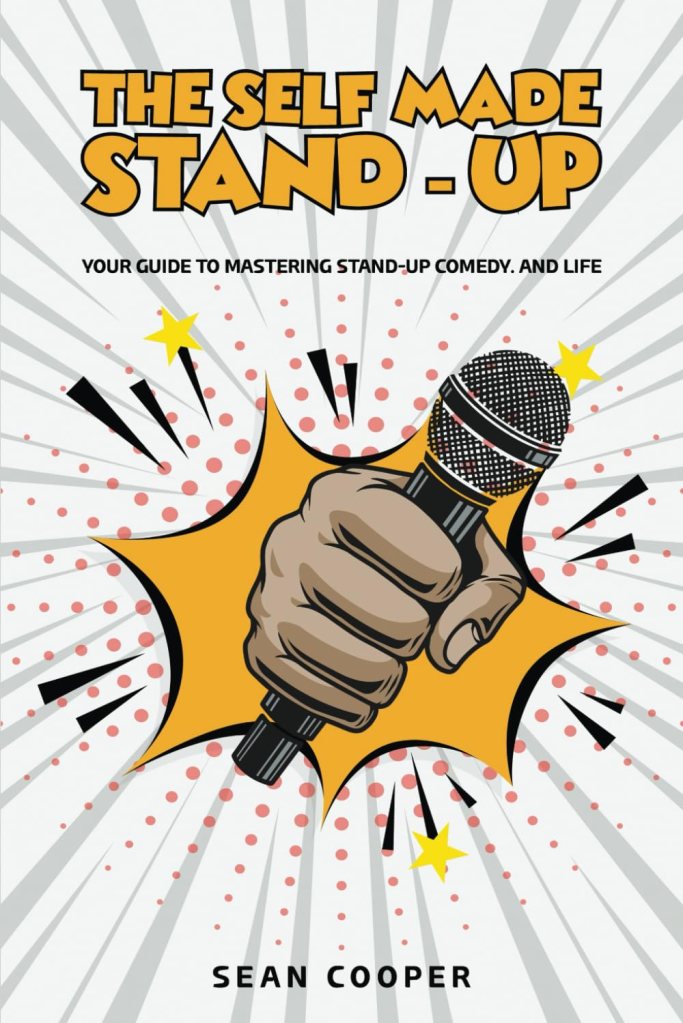
The Self Made Stand Up is available as a paperback or e-book from Amazon, Barnes and Noble and lots of other places.
More than a how-to book, The Self-Made Stand-Up is an essential resource for developing yourself as an effective comedian. If you’re a comedian, or looking to become one, The Self-Made Stand-Up is the emotional support animal you need.
You might want to consider joining my mailing list (I promise I won’t spam you)

