
This is a tip I picked up from instructional material about the craft of writing novels. If you’ve followed this blog for a while, you’ll already know that I borrow tips and techniques from other disciplines to use for stand up comedy.
I’ve been inspired by the rhythm and energy of Aaron Sorkin’s screenwriting, philosophers, art, writers like Checkov and Hemingway, rappers for the musicality of their sentence structure and even baristas.
I think the optimal way to be a comedian is to look everywhere for inspiration – not just about subject matter and joke premises, but also for the techniques and tools everyone else is solving their problems with.
This, by the way, is a cornerstone of my personal philosophy of comedy that I’ve developed over the last 7 years. Living in the world and taking inspiration from everywhere, the importance of consistency and congruency for trust, and the “Four Noble Truths” of stand up that I identified and described in my book. Follow this blog if you’re interested because I’ll be outlining it properly in a future post.
The Pope Shift might be something you do already without being conscious of it. It’s a comedic technique developed by Alexander Pope in his 1727 essay “Peri Bathous; or, The Art of Sinking in Poetry.” The word Pope used was Bathos.
What is Bathos and how does it work?
It’s kind of a Misdirect, so it’s perfect for comedy. We immediately switch from lowbrow to highbrow, or vice versa. Actually, let’s take the definition from Wikipedia:
In literature and the arts, bathos (UK: /ˈbeɪθɒs/ BAY-thoss;[1] Ancient Greek: βάθος, lit. “depth”) is the use of a lofty, elegant, or elevated style to present silly, vulgar, or trivial subject-matter, or a sudden transition from the former to the latter, thereby creating a ludicrous or comedic effect.
Highbrow to lowbrow is easy for comedy:
Imagine a dramatic and serious academy award winning speech, but the speaker farts loudly at the most emotional part.
Or a romantic scene in a movie where the protagonists are about to kiss passionately for the first time. The camera captures their intense gazes and the music swells up as they lean in, but one of them slips and they both end up tumbling into each other catastrophically.
Or that scene in The Princess Bride where someone is eloquently describing the sublimity of love before comparing it to a mutton, tomato and lettuce sandwich.
That’s Bathos. And like every other comedy technique, it requires contrast and timing. Make it a big dramatic switch, make it instant and people will laugh – even if it’s not particularly insightful or clever.
That’s the easy way to do it. Extra points come from doing it the other way – lowbrow to highbrow. What might that look like?
It could be presenting something really banal, base or mundane in a pretentious or elevated way.
Like composing a fancy sonnet to toilet paper.
Or something I did in my teens as an art student. I took a bunch of pages from a children’s colouring book, some with scrawl on them. I framed them and wrote pretentious art critic essays about them, projecting all kinds of clever meanings, references and statements about society that clearly weren’t intended in the creation of the images. By the way, I submitted them as an art project and got maximum scores for these 🙂
Or when Miles Anderson adopts his “professional joke explainer” character and explains why Joe Rogan’s objectively terrible special is profound and hilarious against footage of Rogan simulating sex with the stool on stage. That video is here if you want to see it.
Or even listening to Joe Rogan talk about himself and his own comedy. Arguably, he does it better than Miles Anderson does.
Again, it’s about juxtaposition and contrast. But the secret ingredient the lowbrow-to-highbrow version of The Pope Shift is insincerity. The contrast fuels sarcasm and irony.
Either version of The Pope Shift is a ridiculously easy way to write jokes. Give it a try.
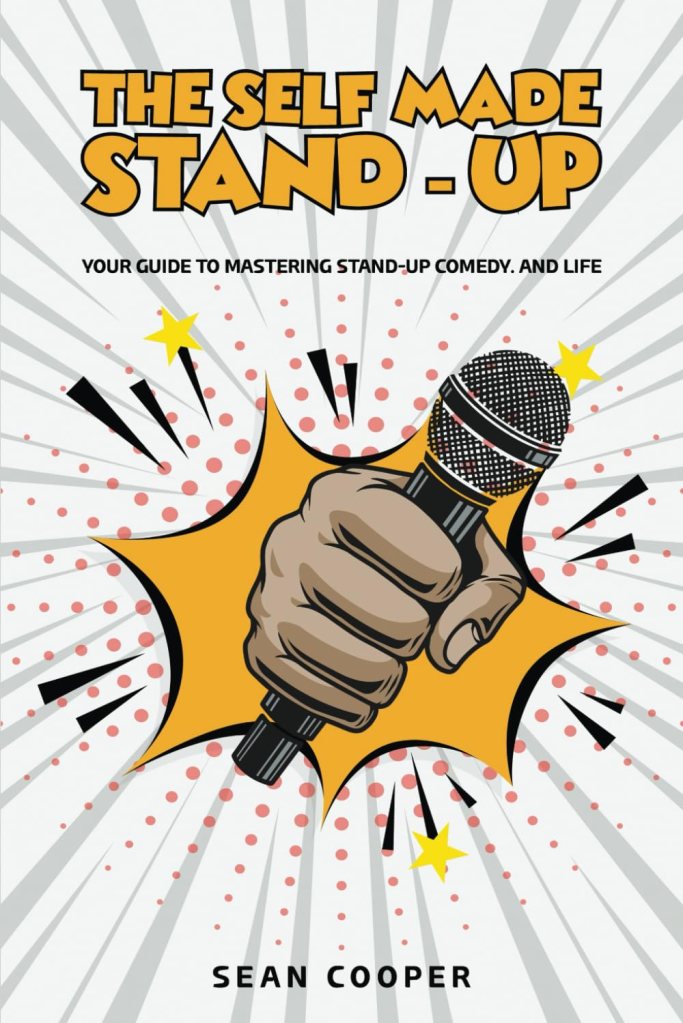
The Self Made Stand Up is available as a paperback or e-book from Amazon, Barnes and Noble and lots of other places.
More than a how-to book, The Self-Made Stand-Up is an essential resource for developing yourself as an effective comedian. If you’re a comedian, or looking to become one, The Self-Made Stand-Up is the emotional support animal you need.
You might want to consider joining my mailing list (I promise I won’t spam you)
 Sean Cooper, Comedian