I’m taking a break from writing thousands of words a day on my book to write a couple of thousand words here. It’s still the same process but it feels indulgent to be avoiding my primary task.
That’s how dysfunctional I am: I’ll even procrastinate with the thing I’m trying to avoid. (Note to self – potential joke here)
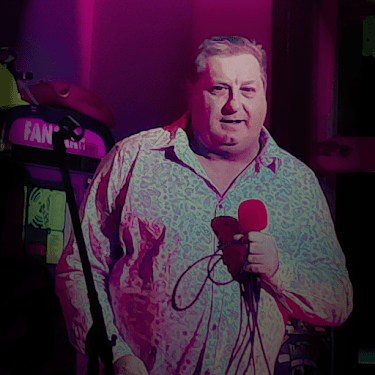
First, a little housekeeping. NAFA, the North Australian Festival of the Arts, is on right now and there’s heaps of fantastic shows and talent going on every day in Townsville. It’s cool, and my own appearance is part of the NQ Comedy Showcase. There’s two shows – tonight and Sunday – and I’m in the Sunday one.
I just want to make sure there’s no misunderstanding. Tonight you’ll see some of my favorite comedians in a thrill-packed show. If you go you’ll see some amazing talent, but I’m in the Sunday show. I encourage you to check it out tonight, but don’t be mad if you assumed I’m in this one. That would be on Sunday. Both shows are going to be awesome and you can get your ticket here.
Now to the task at hand. I want to talk about what we can learn from great writers like Anton Checkhov and Ernest Hemingway, and suggest an unpopular opinion that challenges one of the sacred cows of Stand-Up dogma.
What Hemingway was famous for is his incredible word economy, which is something we should all care about. Trimming the fat from our jokes makes them punchier and more effective. What Hemingway could communicate with a just a few words was incredible, and that’s our Holy Grail.
An example: He was once challenged to write a story that communicated a history and evoked emotion with less than ten words. Here’s the six word story he submitted:
“For sale: Baby Shoes. Never worn.“
Holy fuck. Is that amazing, or what? If you’re a joke writer you want to be paying close attention to this guy and how he executes his craft. If Hemingway were alive and giving a word economy masterclass I’d be telling every comedian I know to attend it.
It’s not just about using less words. It’s omitting bullshit details and choosing better alternatives for the words we do use. Russian playwright Anton Checkhov also had a bit to say here. His advice to dispense with bullshit details that don’t matter is now a principle we call “Checkhov’s Gun.” Here’s what he said:
“One must never place a loaded rifle on the stage if it isn’t going to go off. It’s wrong to make promises you don’t mean to keep.”
Every detail you give us in your joke setup better be necessary for the punchline, otherwise your audience will think about it and look for it in the punchline.
This will make them feel ripped off, and undermine your punchline because your audience’s cognitive bandwidth will be spent on alternative punchlines that don’t exist. If the rifle isn’t part of the punchline, you sabotage yourself by making your audience think about it.
One of the mistakes from new comedians is thinking that they need to flesh out their stories with details to make them more visceral and credible. You really don’t. Hemingway explains why:
“If a writer of prose knows enough about what he is writing about, he may omit things that he knows and the reader, if the writer is writing truly enough, will have a feeling of those things as strongly as though the writer had stated them. The dignity of movement of an iceberg is due to only one-eighth of it being above water.”
That’s right – omit those details and we’ll fill them in ourselves. The detail we insert will actually feel realer and more detaily. And you don’t risk making us think the rifle is important when it’s not.
Hemingway didn’t use a lot of words. He thought shorter sentences were stronger. What he did do was make sure that they were the right words.
Comedians should care about this. Even the “loose” ones who boast about how unscripted and improvisational they are should understand that some words are more effective than others.
Words with plosives and harsh consonants always get better laughs than words without them. Alliteration is effective. Specific is more powerful than general. You get the idea.
Also, choose your words so that you can say them. Make sure you’re not giving yourself a tongue twister because stumbling over an important phrase will step on your joke every single time.
With all that said, I want to offer an opposing opinion as a caveat.
You know how much we hate hearing “Oh you’re a comedian? Tell me a joke.” It’s annoying on many levels, but the main one is that what people are asking for isn’t what we do. What they’re asking for is a short chuckle that’s generic and attributed to nobody so they can use it for their friends.
The name for a joke like that is “Street Joke.” Nobody comes to live comedy to see someone do street jokes and no comic likes doing them. If you saw a comedian who did five minutes of street jokes you’d be unimpressed.
I’ve heard a lot of comics say they write tweets (or whatever you’re supposed to call them now Elon wants us all to call it “X”) and say that the character limit trains them with the discipline for good word economy. I definitely don’t subscribe to this kind of thinking. I don’t use Twitter (or whatever), I’m not trying to be on an endless content creation cycle for social media, and I don’t love most one liners that are written for it.
I think if you’re writing jokes for Twitter (or whatever. We’re not calling it X, Elon) you’re not working at great bits. You’re not consolidating your act. You’re making tomorrow’s street jokes, and they will be copied and shared exactly as you designed them to be. If the context and provenance of your material doesn’t matter, your work is going to be copied and forgotten like the thousands of other shitpost memes on the newsfeed (or whatever Twitter calls it). Save your breath for when you have something to say.
Also, and I’ve learned this the hard way, live on stage – you don’t always want to cut away every bit of fat. People don’t come to comedy for laugh-nutrition. Fat is where the flavour is. Serve people the bones of a joke and you’re going to get the reaction from people who came looking for flavour and got served bones instead.
The fat, the flavour, is the character and colour of jokes. Word economy sometimes forgets that the seemingly redundant adjective is sometimes the secret sauce, without which the joke doesn’t quite land.
The audience doesn’t want irrelevant details, but they do want character. They do want a sense of you. They want cadence and inflection and tone and character. They want the equivalent of what are called “Grace notes” in music. Grace notes aren’t strictly necessary but they humanize the performance and give that “X Factor” (No I’m not talking about you, Elon. Stop trying to make X a thing).
Word economy and Tweet nerds love to strip a joke down to the bone and believe it always makes it better. I say that’s wrong. At best you get a sad malnourished version of an appetising joke. At worst, you get a street joke that can be plundered and plagiarized because you were never in it.
Learn from Hemingway and Checkhov. They’re brilliant. But sometimes Hemingway used more than six words. Some of his stories had several words, as many as it took to evoke the visceral sense you get when reading them.
Sometimes less is more. But, controversially, sometimes less is less.


[…] is to mine adds nothing to the desired outcome, but word economy and punchy delivery does. Do the Hemingway thing – describe the tip of the iceberg and let them fabricate the rest themselves. People […]
LikeLike
[…] been inspired by the rhythm and energy of Aaron Sorkin’s screenwriting, philosophers, writers like Checkov and Hemingway, rappers for the musicality of their sentence structure and even […]
LikeLike