Pip: Sean Cooper, Comedian — a site where the coffee analogy does more philosophical heavy lifting than most ethics syllabi.
Mara: This episode covers two connected territories: what dark roast coffee reveals about comedy craft, and what the comedy world’s track record reveals about its own moral claims.
Pip: Two subjects, one throughline — the gap between the image something projects and what’s actually inside.
Mara: Let’s start with the coffee.
Dark Roast and the Comedy of Hiding Bad Material
Mara: The post “Bad Coffee” opens a question that turns out not to be about coffee at all — it’s about what happens when technique exists to obscure rather than reveal, and whether comedy has the same problem.
Pip: The analogy lands hard. Here’s the spine of it: “Over-roasting coffee causes damage but hides and compensates for shitty content. So you can probably guess that what I’d like to argue today is that over-roasting in comedy also causes damage while hiding and compensating for shitty content.”
Mara: What this means in practice is that shock and aggression can function as a roasting technique — not to develop flavour, but to make weak material taste the same as strong material.
Pip: The edgelord at the open mic, in other words, is just running his beans too hot. The bitterness reads as boldness, and most people in the room can’t tell the difference.
Mara: The post makes that explicit — the comedians using excessive heat and pressure, as the analogy goes, aren’t even skilled enough to recognise they’re masking bad product. The example given is a visiting comic whose main credential seems to be telling an audience member they’d all be dead within three weeks.
Pip: Hero story, apparently.
Mara: The post asks exactly that — whether that anecdote was shared as evidence of cleverness. The conclusion is that the magic of excessive heat is that nobody can easily tell whether the content has any value, and that funny becomes an optional extra that isn’t included.
Pip: And light roast, by contrast — the comedy that doesn’t hide behind shock — more honestly reveals its origin. That’s the standard being argued for.
Mara: The post also draws a clean distinction on what’s worth roasting: punching at ideas, phenomena, and cultural absurdities rather than at specific people. That’s where the craft question and the ethics question start to overlap.
Pip: Which is exactly where the next post picks up.
Comedy’s Ethics Problem
Pip: “Comedy is not pretty” — that’s both a Steve Martin album title from 1979 and the frame for a harder question: why does a profession that positions itself as truth-telling produce so many people who fail basic decency tests?
Mara: The post works through a long roster — Cosby, Louis CK, Russell Brand, and others — before landing on what it actually wants to argue. Here’s the line that carries the weight: “Some comics defend their egregious material by minimising our role. They’ll tell us it’s just words, and words have no power. It sounds persuasive, but I’m calling bullshit. I’d tell those people that they’re either lying or not very good comedians. If your words don’t have any power, you need to work on your act until they do.”
Pip: The rebuttal writes itself — the same people claiming words are harmless also claim credit for getting a president elected with their podcasts. You can’t hold both positions.
Mara: The post identifies several structural reasons comedy breeds this: the outlaw mythology, the “it’s just a persona” escape hatch, echo chambers that comedians refuse to call echo chambers, and lifestyle conditions that don’t support healthy choices. The closing line is the title restated as a real claim — comedy rewards violation and meanness, and having that power doesn’t automatically make anyone a superhero.
Pip: Dark roast, meet the ethics section.
Mara: Both posts are really asking the same question from different angles — what are you actually serving, and are you honest about it?
Pip: Turns out the gap between the label and the contents is the whole problem, whether the cup says “rich and sophisticated” or “free speech warrior.”
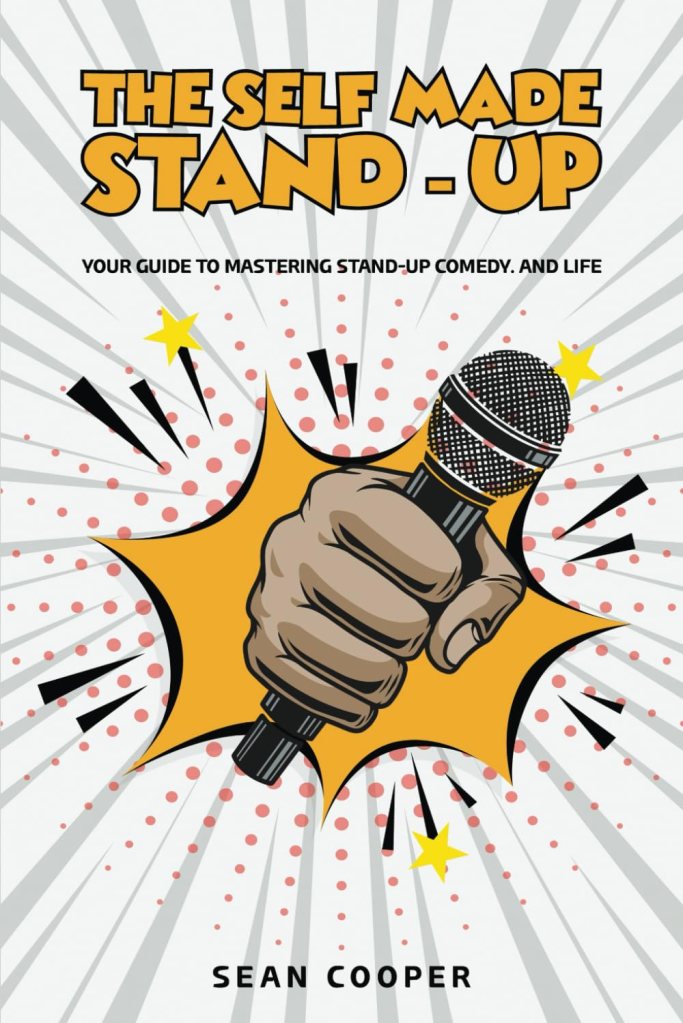
The Self Made Stand Up is available as a paperback or e-book from Amazon, Barnes and Noble and lots of other places.
More than a how-to book, The Self-Made Stand-Up is an essential resource for developing yourself as an effective comedian. If you’re a comedian, or looking to become one, The Self-Made Stand-Up is the emotional support animal you need.
You might want to consider joining my mailing list (I promise I won’t spam you)


I really like your stuff Sean and you’ve inspired over the years to try comedy. I wrote a paper for the international of journal of humour stating “why punching down is ok…sometimes”
I’d love to challenge this prose and what Mara particular has to say about defending dark material. I think it’s not academically robust in the least.
Kind regards
Max
Sent from my iPhone
LikeLike