I’d like to discuss another way in which stand up comedy is different from other art forms. Let’s start with a statement from respected art critic Clive Bell, who said this just over a hundred years ago:
The representative element in a work of art
may or may not be harmful; always it is irrelevant. For, to appreciate a work of art we need bring with us nothing from life, no knowledge of its ideas and affairs, no familiarity with its emotions.”
There’s a bit more nuance to this statement than placing it out of context here implies, and something that’s essential to understanding it is a postmodern concept about how art (and everything, actually) evolves away from basic existence into representation.
I’ll quickly explain this one, if nobody minds me geeking out for a moment?
Lets’ look at a tree. It exists. It’s a tree and if it could talk it might tell you it’s Groot.
Someone paints that tree and they do their best job to render it accurately, with all of the details they can see. That’s a representation. Along comes the camera and suddenly people don’t see so much value in making perfect copies anymore.
Suddenly we’re interested in interpretations and impressions of things. And the next logical step is abstraction. We’ve gone from a reality to an impression and then to an abstraction, something that doesn’t even need an original tree.
To show you what this looks like it helps to know that Piet Mondrian, the artist famous for those geometric lines and colour blocks, was painting trees a lot of the time. He was fascinated with them and wanted to simplify and break down the essence into something that didn’t directly refer to the tree anymore. Take a look at his body of work to see how he got there:
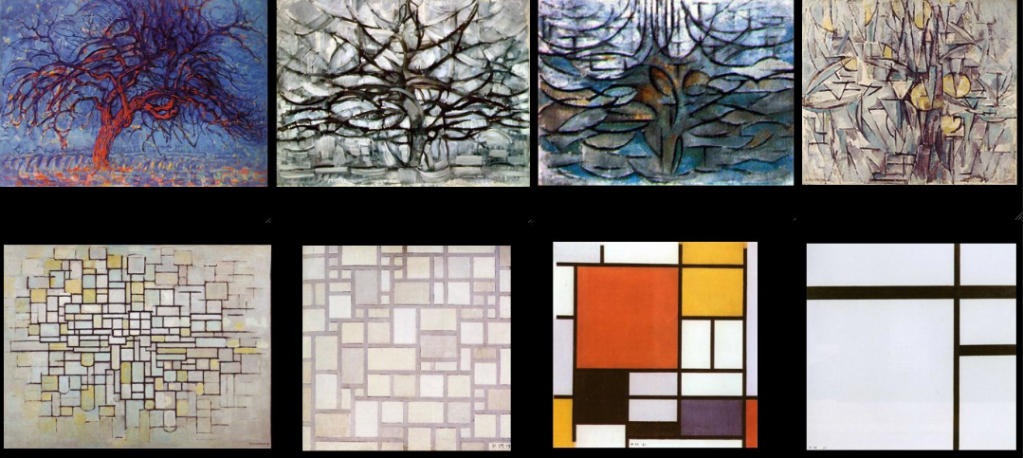
So, yeah… we need nothing from life to contextualize and enjoy the work.
This doesn’t just happen with art. Money is a favourite example of mine. Once upon a time we bartered goods and services for other goods and services. Then we used gold as a placeholder to determine value and trade. After that we switched to paper and coin, and liberated currency from the gold standard. And after that? Digital transactions where we don’t even need real money. Don’t even get me started on Bitcoin and crypto-currencies.
And yes, it extends to our selves. Our real footprints have been displaced by our digital ones. Now, in a post-truth era where most of our online conversations might be happening with bots and AI algorithms, it’s easy to see how a lot of modern existence depends on nothing from life.
Now let’s take a look a stand up comedy.
Comedians are purveyors of fiction. We tell stories that aren’t necessarily reflections of factual events. Nobody asks us to swear on a stack of bibles or cite our references when we do our thing. We might be justified in feeling that our craft never cared about reality and that our art has always depended on nothing from life.
Except for resonance. Resonance changes everything. Without the power to resonate with people’s reality, comedy won’t work.
We rely on context. We might be slinging fiction, but if it doesn’t relate to anything it won’t resonate with people and it won’t get the effect we’re seeking. I did a performance last week at the North Australian Festival of the Arts and was approached afterwards by lots of fans who told me that a chunk I did (about the drive-through experience of McDonalds) was incredibly relatable. I swear I heard the word relatable about 20 times in the hour after the show.
Relatable is a bit of a magic word in comedy. It’s an important ingredient in every successful formula. Relatable means that what we’re depicting resonates with you – thoughts or experiences that you’ve had – and enables you to reach the conclusion we’re trying to lead you to.
The situation with art might be that it’s validity and ability to stand on it’s own doesn’t rely on any kind of resonance or recognition from it’s audience, this is not the case with comedy. For our material we work, we absolutely need it to connect to something from life with the people who hear it. Unlike other forms of art, comedy absolutely needs to resonate with a reality. No matter how surreal or fictional we get, our comedy only works when it links to something real.
Something else that’s pertinent to the whole stand up comedy project, something I also discuss in my book, is that being an effective comedian means being real. Being a whole person grounded in our world is essential to doing good comedy.
If we somehow were able to transcend or isolate ourselves from the tasks and challenges of life we’d find ourselves unable to write or present comedy that resonates with people. This includes all the annoying tasks and obstacles that actual living in our world presents – everything from applying for jobs to sitting in traffic to haggling over prices, messy relationship stuff or interacting with health professionals.
A painter or musician might be able to sequester or quarantine themselves from society and still create valid works of art but that will never work when building a comedy routine. I suspect the greatest threat to grounded existence comes from extreme success. When a comedian becomes so wealthy that they no longer have to do their own shopping or brush their own teeth they lose their ability to create anything that resonates with their audience.
I’m thinking about Tom Segura as I write this, someone who’s comedy I used to enjoy but now find unrelatable. I’m recalling the moment his wealth turned him from comedian into podcaster, someone who complains about “the poors” that he has to share flights with, and now lectures his fanbase about how their lack of obscene wealth is a symptom of a loser mindset.
Reflecting on his body of work I see now that it all punches down, and without a trace of irony, but his new obsessions (luxury sportscars, expensive watches and having full time personal trainers) have made him a lot less funny. I suspect that his newfound wealth has elevated him beyond a work that relatable resonant humour can be created in.
Art in ivory towers works just fine, but comedy is only comedy when it resonates with people. It needs to link directly to a life that we have a shared experience of. The only way to be effective as a comic is to commit to living fully in this world and making sure that, no matter how speculative or surreal your comedy is, it draws everything from life.
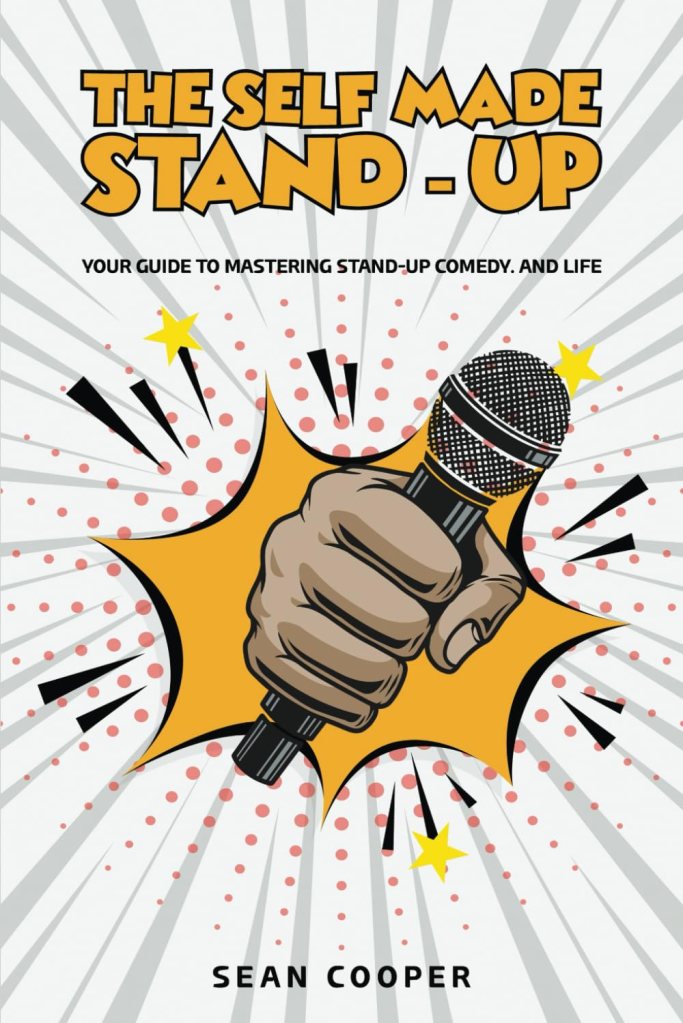
The Self Made Stand Up is available as a paperback or e-book from Amazon, Barnes and Noble, Books.By and lots of other places.
More than a how-to book, The Self-Made Stand-Up is an essential resource for developing yourself as an effective comedian. If you’re a comedian, or looking to become one, The Self-Made Stand-Up is the emotional support animal you need.
 Sean Cooper, Comedian
[…] In my last post I talked about the power of relatable ideas. When you select a book or movie you might feel that you’re looking for a concept you’ve never imagined before, but the reality is that you’re probably looking for stuff you already know you like that resonates with you. Sure, we want to see something new; But we’ll generally choose a comfortable action flick, a fantasy story with all of the tropes we enjoy, or a formulaic rom-com over an experimental avant-garde film with nothing but originality going for it. […]
LikeLike