
If you’ve been following this blog for a while you’ll know that I’m a fan of philosophy, which sometimes informs comedy and often overlaps it. Philosophers offer some of the most salient theories about how comedy works. Many comedians, including me, consider ourselves street-level philosophers.
We tend to think of philosophy as abstract and irrelevant, and for good reason in some cases. You don’t need to read much logical positivism or advanced phenomenology to conclude that it has no bearing on or benefit for your life.
I’ve got an article about Wittgenstein planned for the future, but trust me when I tell you I appreciate what you mean. But there’s lots of practical philosophy out there.
Most of the important jobs in our society wouldn’t work at all if it weren’t for a strong contribution from rigorous philosophical and ethical thinking. It’s not all abstract, especially in areas like politics, medicine and the law. Some philosophers will surprise you.
Michel de Montaigne was one of these. In the 16th century he was interested in the philosophy of being a human and what it means. He might be the first philosopher to open the door for psychology to exist a couple of hundred years later.
He’s also the one who asked when, while we’re playing with our cat, whether it’s really playing with us.
Montaigne also wrote about bodies and bodily functions. Even his own. He went so far as to publish a diary of his bowel movements – describing the colour, size, consistency and how they made him feel.
Why? Because Montaigne remembered something that philosophers keep forgetting, that the human experience is one of the most important things to understand.
He rejected a lot of the abstract rationalism that philosophers indulged in. We can’t learn or understand truth by calculating our way to it, and our concerns shouldn’t be about theoretical abstract speculations in imaginary dimensions.
We’re animals, not angels. We may or may not have souls but we definitely have bodies, and our physical experience on this earth is as relevant as anything Socrates talked about.
We all live, we all die, and we all shit. It’s the realest and truest thing, and something that unifies all humans. Why is nobody talking about that? Why do philosophers talk about existence from the outside in objective terms. like they were impartial godlike observers of existence?
We’re not. We aren’t outside looking into existence. We’re in it. We don’t have any right or ability to talk about it in objective terms. So let’s look at the human experience. Let’s talk about enjoying our food, skinning our knees, sexual drives, getting old, shitting.
And let’s make it personal. No anonymous hypothetical bullshit. Montaigne thought the very least he talk about his own experiences on the toilet. So he did. He thought it was the most basic thing he could do to examine existence, and the most basic thing to remind us that we’re the same, that we’re all in it.
‘On the highest throne in the world, we are seated, still, upon our arses.’ — Montaigne.
Over a century later, Jean-Jacques Rousseau would make another important contribution in this tradition. Rousseau made some incredible contributions to ideas of freedom with his own take on social contract theory, which many consider to be an early blueprint for the kind of freedom that America embraces, but his most interesting publication was his Confessions.
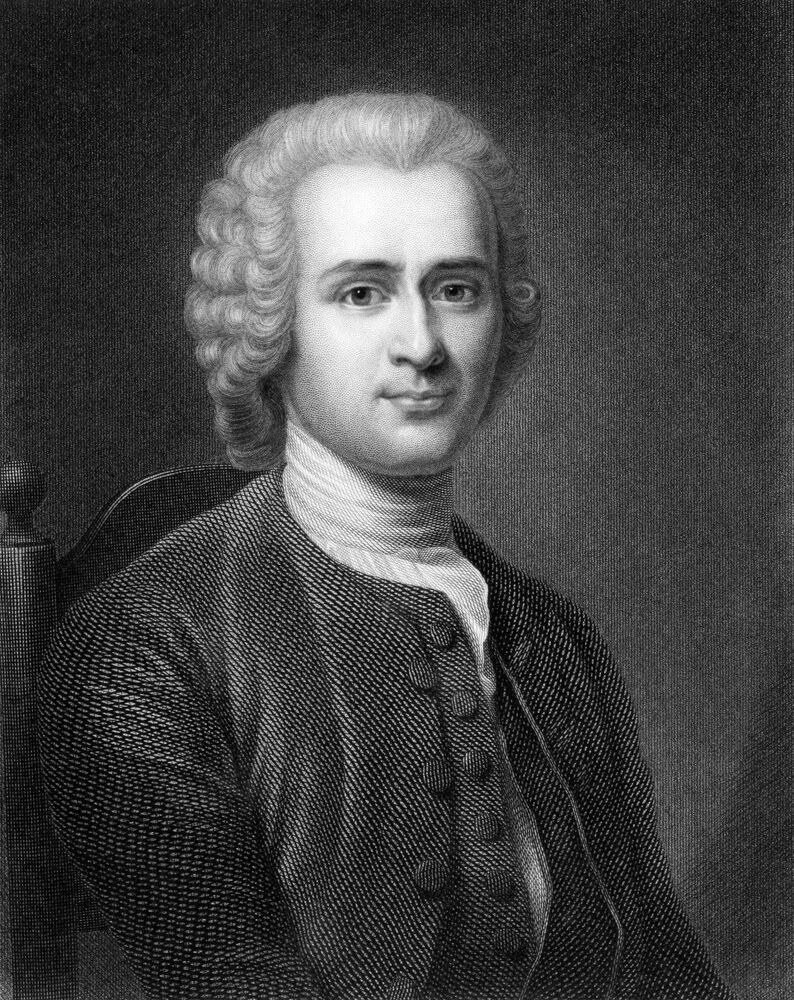
He said “I have resolved on an enterprise which has no precedent and which, once complete, will have no imitator. My purpose is to display to my kind a portrait in every way true to nature, and the man I shall portray will be myself.”
Then he went on to examine all of the most private and shameful aspects of himself, trying to understand “Why am I like this? Why did I do that?” He reveals getting aroused when getting spanked, and admits he framed a local girl for stealing a ribbon that he’d taken and didn’t want to face the consequences for. He talked about his own mother-figure issues centuries before Freud came along.
Socrates hypothesized indulgently about abstract worlds while his slaves toiled in the background, but it was philosophers like Montaigne and Rousseau who did the heavy lifting in this world.
They sifted through their own metaphorical and literal shit, trying to understand what it is to be a human, a flawed animal stuck in a sometimes disobedient body and driven by notions and desires we don’t understand.
They knew that the difficult problem of understanding humanity starts with individuals being radically honest, presenting themselves as they are and not just the way they might want to have been seen. Modern psychology owes these two a great debt.
As Comedians, we don’t all have to bring our toilet diaries on stage with us. We’re not obliged to make things awkward by baring our souls and oversharing to a point of discomfort for everyone.
But it’s useful to keep their lessons in mind. Everyone shits. Everyone fails. Everyone worth knowing has a shameful secret or two. We all wonder why we do some of the things we do. The part of us that knows this is the part that empathy comes from.
Jerry Seinfeld’s most known for a style called Observational Humour. It might take the form of “have you ever noticed…”? It’s success is based around the stuff that we all share. His sitcom was populated with petty and obnoxious characters with moral failings, and we recognized those too.
George Carlin once said that all of his jokes fall into three categories; Wordplay, “The Big World” where he discussed politics and social issues, and “The Little World” which looked at silly things we all share but rarely discuss. Like farts. He said that his “Little World” material might not be as ambitious or clever, but was as important as the rest because it’s what unifies us as a species.
Unifying us as humans is part of what makes comedy work. It’s the schtick to Observational Comedy, but it’s also why we go to live comedy events and share in communal laughter.
It’s easy to dismiss comedian who talk about things we describe as “lowbrow,” assume they’re all going for “cheap” childish laughs. It might be true but there’s another subtle truth inside, which is that we all understand it because we share it. We all shit.
The agenda to take “The Little World” off the table, to discourage toilet talk and keep shame secret is divisive. It keeps us all separate and selfish and inhibits our empathy for others. It obstructs the psychological project of examining and understanding ourselves.
Even philosophers need to stop being airy and pretentious once in a while and admit that they’re not detached objective angelic spirits, but involved subjective physical creatures.
And even more so for comedians.
 Sean Cooper, Comedian