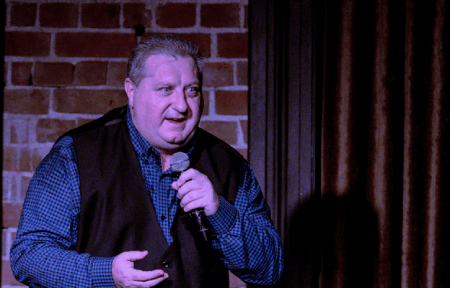
When you enter the world of standup there’s no shortage of advice. It generally reflects the common wisdom in the industry and we tend to accept it without question – partly because it’s from experienced people in the industry and partly because it’s consistently repeated everywhere.
Being a difficult and contrarian person I’ve tended to question most of what I’ve heard, and this has made me pretty unpopular at times. I’ve been called ungrateful for it. Apparently everyone in comedy is heavily invested in prevailing dogma
Why would I question what’s accepted sector-wide?
Well… Some of it’s old information that only applies to a bygone era and some of it’s just overdone and won’t work now. Audiences have heard yesterday’s tricks. The industry’s changed in the last couple of decades, so pre-streaming pre-social media pre-podcast comedy advice might actually be wrong in 2024.
Also; I question widely accepted dogma because that’s what comedians are supposed to do.
But today I wanted to talk about one idea in particular, the one that’s pushed to everyone. It’s an idea that, like all the best lies, has truth in it’s foundations.
Here’s the idea: All stage time is good. You have to take every opportunity that’s available. You’re not going to be good without practice, practice, practice and it only counts on stage. There’s no such thing as a bad gig because even the worst ones are great experience and you’ll never become a decent comic without thousands of hours of stage experience.
Yeah, like I said, there’s some truth in the heart of that. But there’s aspects of it that are kind of bullshit. There are assumptions built into it that need to be challenged. And just accepting this idea could get you hurt.
Before I unpack it, let me just give you the background for why I wanted to discuss this idea. It comes from a recent online chat between local comics.
One of them told us about a gig on Australia day. It’s in a regional area requiring a couple hour’s drive. The gig apparently pays shit money but accomodation and an unspecified allowance of alcohol is included. It’s at a pub, opening for a punk band. He said it will be an experience but the comic would be performing alone in a strange place to an intoxicated crowd who aren’t that interested. But it’s a gig.
So full credit to the comic who shared the opportunity with all of us. And props for being completely honest about it. That was good of him.
A few of the comics expressed interest, started exploring the logistics of doing it. Then another of my peers, someone who’s also got a few years’s experience, noticed that the interested comics were the new ones on the scene and pointed out that some of these gigs are problematic and can be soul-destroying for reasons to complex to state in that chat.
She explained she was just being protective, not trying to discourage anyone. Personally, I was really glad she said it because I agree 100% and that’s what I want to talk about today.
A bad gig I experienced was an unconventional one a couple of years ago, at a transitional time in Townsville Comedy. It was a late gig (10.30pm) at a Folk Music event. I don’t know why they called it that because the band was loud prog rock and ran overtime. And again, the audience weren’t there for us and weren’t expecting comedy. They weren’t interested and actively turned their back to us, talking over us, etc.
The experience wasn’t fun. All of us agreed it was the hardest and most unpleasant gig we’d had, but we were prepared to write it off as experience. Except the fun didn’t end there. Lots of those audience members took to social media the next day and said horrible things about us and Townsville comedy in general, and they all added their weight to each other’s stuff. That night didn’t just hurt our feelings, it hurt the whole scene for a few months there.
Not all gigs are great. Anyone who says there’s no such thing as a bad gig is either gaslighting you or is fucking stupid.
There’s gigs that are not only unpleasant but can be actually dangerous. As a young musician a gig in Toowoomba ended up in an unpleasant scene with a local biker gang and our lives were threatened. It was a scary night that could have gone very wrong. Even though it was 30+ years ago, it’s an experience I still remember vividly when considering going to some bogan pub on Australia Day to make jokes to an audience who are there for a punk band.
Obviously not all of it’s that dramatic, but lots of entertainers are familiar with the physical stand-off that sometimes happens when someone doesn’t want to pay us what they’d agreed to.
And sometimes it’s not even that dramatic, but still fucking awful. I’ve talked about how awful bombing feels, which is something you can’t even begin to explain to people who don’t know it first-hand. And while I agree that bombing is an inevitable and developmentally important part of being a comedian, it’s not always good for you.
These experiences can leave emotional scars, and can shape our act and careers in negative ways. Bad experiences are one of the main reasons why a lot of promising comedians quit. And the rest of us? Have you ever hung around experienced comics and noticed how angry and bitter most of them are?
The industry dogma says new comedians should expose themselves to and experience everything as frequently as possible. I’m calling bullshit on that. I think that, especially in our developmental years, we need to realise how fragile our psyches are and be careful about what we expose ourselves to. We need to work out how to get the experience we need without accumulating too many scars.
Especially when I’m being this generous with the word “careers” because most of us aren’t paid most of the time. We’re doing this for fun, and absolutely no good will come of unpleasant experiences that make us not want to do it anymore.
We can become bitter and twisted. We can develop an us-versus-them mentality about audiences even about other comics. Comedians don’t need to actively look for bad experiences. Most of us should probably be more concerned about our trauma than our development.
Not all gigs are great. It speaks volumes that in the example I’ve given it was the new and inexperienced comics who were expressing the most interest in this one. It reminds me of a time in my life, one I’m not particularly proud of, decades ago when I found myself selling cars for a living.
What we were told, as newcomers to sales, is that all customers are potential buyers. We were told it’s a numbers game and making a lot of sales was a result of jumping on as many sales opportunities as possible. We were told that we’d be smarter and more successful than experienced salespeople who were all tired and cynical.
We believed it. We were young and hungry and thought that was enough to compete with these old guys and their old ways. We fought each other to attend to every single customer who stepped on the lot. We didn’t notice that the experienced salesperson weren’t fighting us for these customers. We just figured those guys were tired and lazy.
What we didn’t know, what we wouldn’t have believed, is that the experienced salespeople knew that time is finite and most opportunites aren’t promising. They knew what we discovered: that if we spent eight hours taking to people who were never going to buy, we’d end the day empty-handed and having an pleasant conversation with a manager who wanted explanations about why we didn’t convert the conversations into sales.
Enough of those conversations and you’re unemployed. Experienced salespeople know that a bad gig won’t just waste your time and block you from profitable opportunities; it could actually end your career. Experienced staff know that a long and prosperous career comes from avoiding most of the opportunities that pop up.
So why were we told to approach every customer? Because someone’s got to. And because even if we personally fail, the dealership still wins. They need fools with enthusiasm to handle the jobs that the smart ones don’t want. The industry profits from this narrative, even if it doesn’t work for you.
I think this is true of Hustle Culture in general. There’s a massive industry invested in telling you to “rise and grind,” and to invest “10x” the effort into everything you do. Employers and Corporations profit from hopefuls who don’t put any value on their own time, energy, sanity and safety. Guru wankers like Gary V and Grant Cardone make millions selling you this toxic bullshit.
Productivity is up and wages are down If you’re not doing well it’s because you don’t have enough side hustles and not working hard enough. Like most bullshit religions, this one tells you it’s your fault when it doesn’t deliver what it promised.
I know I’m sounding more like a Marxist with every blog post, but I think the “Do every gig, no matter how shitty/you’ll never be a real comic unless you’re doing 20+ gigs a week” narrative is a bullshit lie that the industry profits from.
It’s like social media: Venues and open mics and underpaid bad gigs all do well when everyone’s cranking out so much content that the content becomes worthless and the platform becomes valuable.
I think the reason why shitty gigs exist is because everyone’s saying there’s no such thing. I think that the people who first said “there’s no such thing as bad sex” (or pizza) were the people who were offering bad sex (or pizza).
If I could give advice to new comics that might be heard over all the bad and outdated advice they’re already hearing, it’s that maybe they shouldn’t grasp every opportunity but maybe evaluate them instead. I’d encourage them, particularly in the formative period of their careers, to not just do anything in front of them but to make conscious choices.
Don’t just assume every gig is a good experience. Ask yourself if it’s going to be good or bad for you. I’m not even talking about your safety, your profits or your emotional fortitude. Ask yourself it it’s on-brand or off-brand. You actually don’t want too much of the wrong kind of experience. You could become scarred or bitter or, worse, pigeonholed in a direction you don’t want your comedy career to grow.
Be judicious. I know that’s hard in a world that’s telling you to take every gig and be grateful for it. It takes more confidence and self-belief than you probably have. But I believe in you, and hope you can too.
 Sean Cooper, Comedian
[…] I digress. What I’m challenging (and this is something I’ve discussed before) is the notion that all gigs are good gigs and that you have to take every single gig. I’ve […]
LikeLike