In my twenties I studied some martial arts and quickly discovered that each style has a core philosophy. Aikido was about flow, Tae Kwon Do was about efficiency, Silat Perisai Diri was all about reflexes, Kung Fu was focused on conditioning, and my own sensei had developed a doctrine about commitment.
Being a philosophy nut (Schopenhauer, Camus and Foucault are faves if you’re interested) I found the idea of every discipline having it’s own philosophy to be salient and I’ve found this extends to careers. Every sector I’ve worked in or with had it’s own values, methodology and point of view.
Given this, I shouldn’t be surprised to know that Comedy is imbued with ideas and points of view, that being a comic inevitably means adopting philosophical attitudes. This isn’t so much about philosophies of comedy as the mindsets adopted by comics.

Obviously, not all comedians agree on every world-view. The rich tapestry of styles and political leanings in comedy are a clue to the different ways we all think. But there’s some pervasive values that come with the territory, ideas that we either adopt or develop a response to.
Freedom of speech, for instance, is something we all value extremely highly. The ability to be able to freely express is the cornerstone of what we do, and we are all extremely mistrustful of anything or anyone who seeks to constrain it. The whole idea of the jester was originally someone with the freedom to safely mock the king without getting crucified for it. The jester’s price was high – they lacked social mobility or participation in society in any meaningful way, and had to reinforce the idea that they were not to be taken seriously – but the ability to freely express ideas was worth it.

This idea is closely linked to people’s sense of taboo and offense, their ideas about what comedians should and should not say. People think there’s lines that comedians should never cross, which to comedians feels like an imposition on the freedom of speech that they value.
Most of us view comedians like Lenny Bruce as heroes who were persecuted and prosecuted unfairly. The “morals” they transgressed were silly and don’t matter anymore. Lenny Bruce was on the right side of history and his attackers were not.
It’s still the main issue in comedy now, and the “cancel culture” conversation is still pervasive. The big difference between 1961 and now is that in the sixties the cops cared and the audience didn’t – but in 2022 cops don’t care about what Dave Chapelle’s saying and the audience are acting like cops.

An aside: I mentioned before I’m a fan of Michel Foucault’s philosophy. He correctly predicted, back in 1975 (In Discipline and Punish: The Birth Of The Prison) that the time would come where the state wouldn’t have to surveil us because we’d be filming ourselves, and the state wouldn’t have to police us because we’d be policing each other. Foucault deserves heaps more credit for predicting the future.
Anyway, a common idea from comedians is that there is no line over which we should not cross, that none of the cows are sacred, and that there is no subject or object that should be considered immune from critique or ridicule. Comedians generally view sacred cows are mere social constructs (which they are). Comedians view their function as questioning what isn’t questioned, challenging what goes unchallenged and showing us that the ideas and items we regularly take for granted probably shouldn’t be.

Comics also believe that people are responsible for their own feelings and reactions. If you feel personally offended by something, that’s probably on you. Offense is something that happens personally and internally, something you brew inside. It’s your feeling, and you’re the one responsible for managing and regulating your feelings.
If a chef prepares a dish you don’t enjoy, something you might be averse or allergic to, avoid the restaurant. That’s a responsible way to manage your feelings about it. Attacking the chef, burning down the restaurant, trying to prohibit them from earning their livelihood and blocking other people’s access to the cuisine is not a responsible way to manage your personal distaste.
Sometimes you’ll be offended and that’s OK. Comics tend to agree that feeling offended isn’t the worst thing that a person can experience. We actually consider it a requirement for emotional growth and the small price of allowing art to exist in the world.
We also don’t think that “offended” has any particular moral dimension. I’d be willing to bet that most comics prescribe (at least partially) to the philosopher A J Ayer’s theory of Moral Emotivism. This is the when we deem ideas and actions as “good” or “bad” we’re really just expressing our emotional reaction to it.

It’s a response to John Stuart Mill’s ‘Moral Sentiments’ idea. I think we can all agree that a lot of our feelings, good and bad, react to things that don’t have any moral dimension at all – like warm temperature, bright colours and anchovies. I think we can all agree that everyone’s reactions are individual and subjective just like comedy is.
You and I might be repulsed by cannibalism but there’s always some creep who’s mouth is watering. How you feel is completely independent of what just happened. Moral Emotivism argues that ‘good’ or ‘bad’ isn’t in the thing, it’s in the eye of the beholder and totally based on feelings. Comedians generally subscribe to this idea and therefore reject your ideas about what is right or wrong to say.
One important comedian philosophy is the idea of Undeniability. This idea’s been a bit of a game-changer in my life.
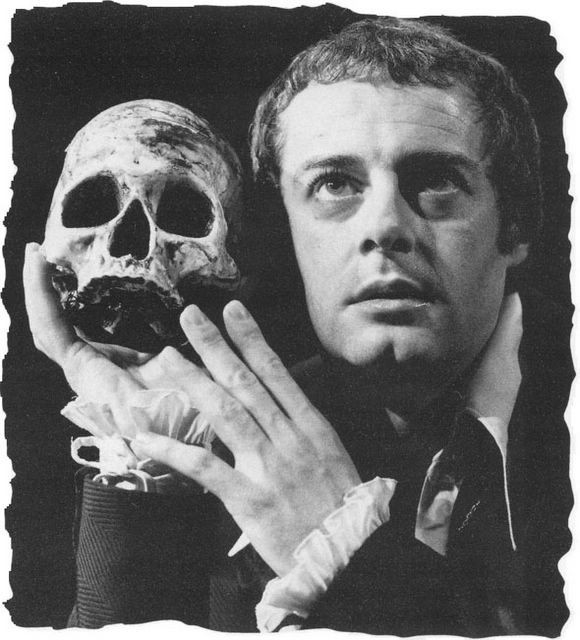
Shakespeare’s Hamlet asks ““Whether ’tis nobler in the mind to suffer The slings and arrows of outrageous fortune, Or to take arms against a sea of troubles, And by opposing end them?”
Great question. What do we do when life isn’t fair?
Let’s have a massive reality check here. Life is not a meritocracy.
Sometimes bad things happen to good people and good things happen to bad people. The race isn’t always won by the fastest and the battle isn’t always won by the strongest. The job often doesn’t go to the most deserving and the best employee doesn’t automatically get the promotion.

Comedy is usually the most absurd kind of reflection of reality, so you can probably imagine that inequity (real or imagined) looms large in the mindsets of comedians. Comics often feel raw, exposed and vulnerable. It’s by-product of doing comedy. A sharp eye for injustice is in the selection criteria.
There’s a scene in the pilot episode of I’m Dying Up Here (which I recommend you watch. Even better, read the book) in which one of the main characters gives a speech justifying his jealousy and bitterness. One of his colleagues just got a big career boost and he gets chastised for bitching about it.
He argues that comedians should be bitter and bitchy, that they should be angry every time a comic gets an opportunity that they believe they deserve. He says any comic who’s OK about that just doesn’t care enough, isn’t passionate enough to be a committed comic.
OK, to be clear – this guy is a dick and that’s a dickish way to act. This is not how comedians, passionate or otherwise, are supposed to feel.

That said – maybe only other comedians will get this – it’s an understandable way to feel. It’s a competitive game that’s completely indifferent to the emotional needs of the comedians playing it. I saw Ricky May in his video masterclass tell people who aren’t 100% serious to “stay the fuck out” of open mics, that ‘tourists’ are taking openings and opportunities from the serious comics who fight for them. Having been bumped by hobbyists dicking around at open mics, I’m actually not unsympathetic to that point of view.
We see the bitchiness and jealousy from a distance and it looks ridiculous. Lots of comics look like children the way they respond to setbacks, competition and perceived injustice. But I’m pretty sure we all know the feeling. I’ll confess I know what it’s like to seethe, screaming internally while watching a disinterested hack fuck around onstage, taking a slot I was denied after breaking road rules to try and get. I admit I’ve felt a twinge of jealousy seeing gigs go to comics who seem more focused on at networking than craft. I’m not proud of it, but I know what it’s like to feel resentful because “politics.”

But, like the guy in I’m Dying Up Here, I’m being a dick when I entertain those feelings. I’m being petty and small and wrong. Even if I was right it’s still the wrong way to feel. Entering that emotional black hole (and believe me, I know all about the gravitational pull that it has) cannot possibly end well. Nothing that comes from it will ever be good for my emotional health, my comedy, my creativity or my standing with other people. There is no pot of gold at the end of that rainbow.
This is where the Undeniable idea comes in. The in-a-nutshell version is this:
Life is not a meritocracy. Sometimes it won’t seem fair to you. If you compare yourself with your peers you’ll get mad and sad. If you compare what you get with what you think you deserve you’ll get mad and sad. The only thing to focus on is becoming better. Concentrate on improving. Try to become undeniably funny. When you’re undeniably funny, it’ll be very hard for the world to not give you a break. When you’re undeniably good, it’ll be embarrassing for people to not give you a chance. If you stop expecting the world to give you what you deserve and just focus on being as deserving as possible, you’ll have a chance. Become undeniably good and things will happen for you.

I’m guessing that sounds really banal and obvious. I’d typically be the first to agree. I personally hate self-help BS and I’m famously cynical about pseudo-philosophy that’s aspirational or revolves around ‘being positive.’
But, working under this world-view for the last 18 months has been a huge game-changer for me. It sounds similar to most of positivity rhetoric but the stand-up version, Undeniability, has been of real practical benefit to me.
As I mentioned. I know exactly what the dark and unpleasant feelings are like. I’m the furthest thing from a “think positive” guy but choosing to focus on just getting better/being better has been invaluable in my life. Adopting this mindset, working towards “levelling up” (instead of “getting a break”) has been fulfilling and resulted in big improvements -not just in comedy. My career, love life, home situation, creativity and comedic skills have all improved dramatically while I’ve been focusing on that “undeniable” mindset.
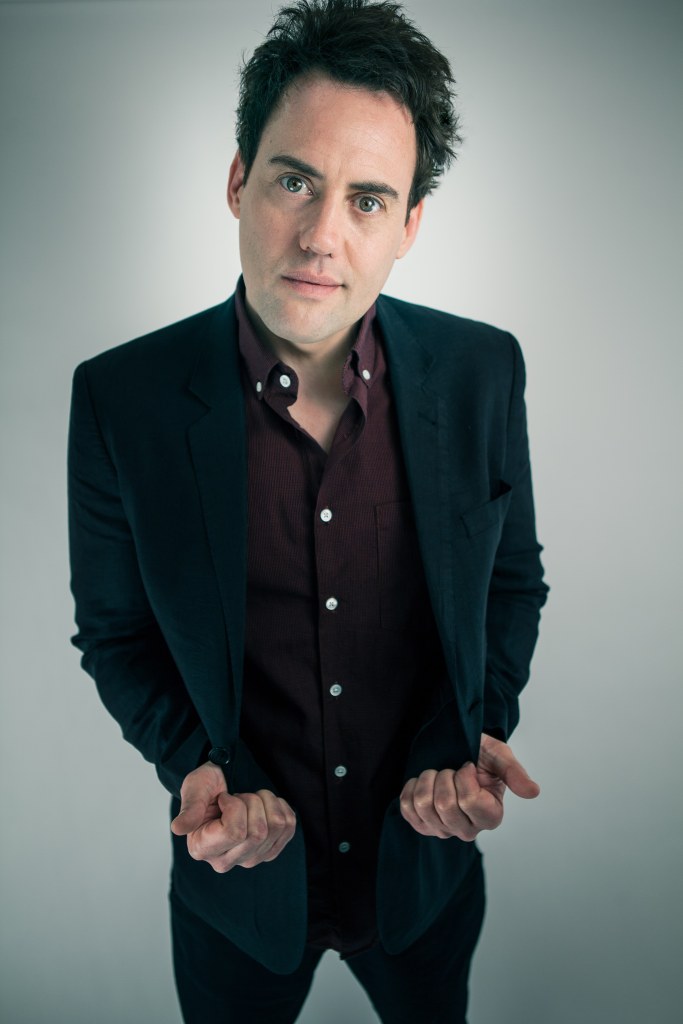
But enough about me. The documentary Comedian is probably the best way to illustrate the two different ideological responses in the comedy world. It follows two comics, Orny Adams and the legendary Jerry Seinfeld, and the attitudes of both characters are starkly juxtaposed.
Orny Adams is bitter, not unlike the Bill Hobbs character in I’m Dying Up Here. He’s been grinding in comedy for ages, performing multiple times every night, dedicated to the craft and firmly believes that he is owed success by now.
He bemoans the success and opportunities enjoyed by the comics around him and talks about how haters want him to fail, that the politics of the industry are his main obstacle. His success strategy is to try and find an influential agent who’ll promote and make opportunities for him.

At the time this doco is being made, Jerry Seinfeld has been out of stand-up for a long time. Having the most successful comedy TV show ever run for a decade and then just enjoying his success (and wealth etc), it’s been a long time since he went to an open mic like the one at the beginning of the film.
It doesn’t go particularly well. Everyone claps and cheers, excited to see comedy legend Jerry Seinfeld perform, but the audience doesn’t really respond to the jokes. That material doesn’t really make anyone laugh. They’re polite and it’s not a complete disaster, but the consensus is that he “bombed.”
How does Jerry Seinfeld respond to this? He’s gracious and philosophical. He’s not butthurt or bitter. Instead, he invites feedback about what worked and what didn’t. It’s the beginning of his project to make the act better, polishing and refining what works and replacing what doesn’t. Over the next year he perfects his act and at the end of the doco (a year later?) he presents a well crafted set to a packed theater crowd who give him a standing ovation.
The two approaches could hardly be more different, and it’s illustrated in this two-minute exchange from the film. This conversation happens right after Jerry’s “bombed” but his attitude doesn’t reflect it.
The “undeniable” mindset really focuses on the process, not the result. Do what you want to do, do it as well as you possibly can, concentrate on mastery instead of keeping score with the competition or what you believe you’re owed. I hate to be any kind of self-help evangelist but this attitude works for me and my brain, and it’s helped me navigate past a lot of bullshit in the last 18 months.

This way of thinking is so important to me that I’m aiming to get an undeniable tattoo at some point when I can afford it. What I have managed to do is put it on a T-Shirt, which is much cheaper and more practical (because I need a T-shirt anyway… mostly to cover up my other tattoos).
Interestingly, when I recently wore it in the company of fellow comics one of them commented that it’s a ‘bold statement’ and I realized that they chose to construe it as an ego claim. I just said “yeah,” unwilling to enter that particular conversational minefield. I suspect that if it was a tattoo they might have interpreted it more generously, but whatever…
Finally, and in my humble opinion, this one is the cornerstone of all things related to comedy: Life is Absurd. This idea is one I’ve always held well before I got into comedy and might be the reason I got interested in comedy – and I’m guessing that I’m not alone. This idea is the basis for comedy and might attract people who hold it.
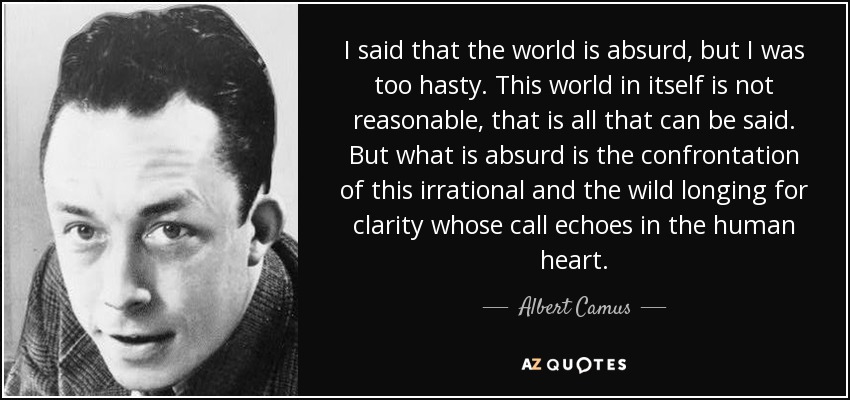
When I say absurd, I’m talking about Absurdity in the sense that existentialist philosopher Albert Camus used it. Life is not a meritocracy. It’s not fair and it doesn’t seem to operate to any rules or laws that align with how we believe it should. The universe is utterly indifferent to our ideas of how it’s supposed to be.
There’s a difference between how we think things should be and how they actually are, and that’s actually the structure of most jokes. It’s how the misdirection technique works – the set-up which establishes your assumptions (how things should be), and a punchline which shatters them by showing how things are.
The vast divide between how things should be and how they are is where we find humour, and it’s often what impels us towards comedy in the first place. I never met a comic who didn’t have an innate sense of justice that had been affronted by the unreasonable nature of the universe, and who wasn’t using comedy to reconcile the absurdity of it. It’s our motivation, our inspiration, our source of creativity and ultimately our salvation – because accepting the absurdity is the only mental health survival tactic we can prescribe to ourselves.
In my own stand-up I frequently state that life is absurd/ridiculous/pointless or without reason. It’s a through-line through everything I do. I’ve said before that I’m trying to make sense of things that don’t make sense. It’s my theme for everything.
But in a lesser way it kind of underwrites everyone’s comedy, and life itself. Life is crazy, the universe is irrational and everything is absurd. Once you peer through that lens, you reach the same conclusion that comics do about sacred cows: You can make a joke about anything, because everything is an affront to how things ought to be.
So when you say “you can’t joke about xxxx because xxxx is never funny” we’ll strongly disagree. What you’re saying is that you think xxxx is wrong, an affront to fairness and reason, and we’ll tell you that’s precisely why it’s absurd and needs to be viewed through that lens. We’re not minimizing xxxx or being flippant about it. We agree that it’s not right, and haven’t you noticed that everything we talk about is not right?

Every sector, trade, discipline or group has it’s own philosophy that underpins how it views and solves problems as well as interact with the world. The tenets that come with comedy are ones I like a lot, are very much aligned with my own world-view. Perhaps that’s why my favourite philosophers’ ideas are complementary to the ideas that underpin stand-up.
Life is crazy but we commit to it anyway, and that’s why we need comedy in our lives.
 Sean Cooper, Comedian
[…] or committing to improving oneself instead of comparing or projecting expectation, and others that I’ve described in a separate post – are extremely important to […]
LikeLike
[…] a lot about developing bravery and authenticity and resilience, getting the right mindset to become Undeniably Funny, but we don’t pay enough lip service to the necessary sense of detachment that we also have […]
LikeLike
[…] Comedians tend to have a competitive streak we’re not especially proud of, and engage in more comparison than is good for our mental health. Sometimes this is even while we’re advising not to and offering better philosophies. […]
LikeLike