
Today I want to explore a little trick that might help your bits come together better. I call it Vantage Point Theory.
If the title of my theory sounds familiar to you, it’s because I’m referencing the 2008 film of the same name. It’s a thriller that switches perspective a few times in the story, with each switch bringing new revelations that make you go “wow!” as you get more of the truth when you see the bigger picture.
It’s not the first time it’s been done, and my first reaction was that it reminded me of the old (1950) Akira Kurosawa film Rashomon which used the trick to brilliant effect. It made us all think of how our own vantage point shows us only a small part of the truth, reminded us of the old Nietzsche quote that “There is no truth, only perspectives,” and inspired generations of complex and layered films like Pulp Fiction and of course Vantage Point.
Is Vantage Point a great film? Honestly, I can’t remember. I’ll probably watch it again tonight after I get home from work. But thinking about it this morning, I also reflected on what a useful tool that whole perspective shift thingy is. Yes, even for comedy.
For my example here, I’m going to use Louis CK’s bit “Everything’s Amazing and No one is Happy” which I’ll put on this page. He talks about what we take for granted and responds to an entitled interlocutor. It’s a good bit.
But what a lot of people don’t know is that for the real event that inspired the bit, he was the entitled interlocutor. He was whining internally about technology letting him down. This might have been the basis for a lot of stock stand up bits. How many comedians have you seen griping about how some widespread service or product isn’t good enough? It would have become a serviceable bit, but very standard and unlikely to make much of a lasting impression on anyone.
Then he stepped outside himself and viewed the imaginary scene from the vantage point of a witness, laughed at how petulant he was being, and created a beloved bit that still holds up.
No doubt you’ve got a few ideas in your bag that don’t quite work yet, are still waiting for the secret sauce or ignition point to turn it into a workable bit. Try looking at the story from the perspective of another character. You might find that it pays to see whether you might get a more creative, funny or functional bit by changing your own vantage point.
I did something like this a year ago, looking at a modern retail transaction. I’m a lefty with some shit jobs in my resume and experience as a union delegate, so it’s probably natural that I approached it from the perspective of the retail worker. That’s probably my default position.
Consciously switching my perspective to the customer’s, though, got me thinking about how customer’s aren’t always the entitled ones – and that sometimes the attitude and gaslighting are baked into the design of the transaction itself. And that’s the story of how I developed my “McDonalds Drive-Though/Wall-Mounted EFTPOS” bit that’s gotten a lot of positive feedback over the last year.
Getting outside ourselves is good for empathy and thinking, but it might also be the missing ingredient that elevates our bits. It’s something to think about.
In the meantime, enjoy this classic bit:
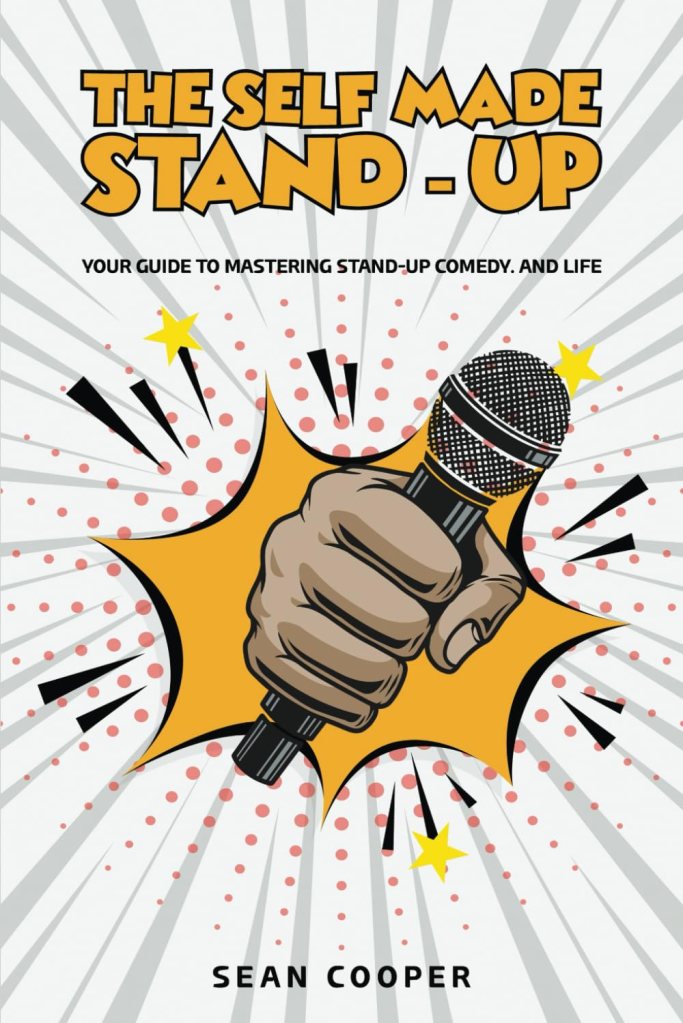
The Self Made Stand Up is available as a paperback or e-book from Amazon, Barnes and Noble and lots of other places.
More than a how-to book, The Self-Made Stand-Up is an essential resource for developing yourself as an effective comedian. If you’re a comedian, or looking to become one, The Self-Made Stand-Up is the emotional support animal you need.
You might want to consider joining my mailing list (I promise I won’t spam you)
 Sean Cooper, Comedian