
The other night I was listening to a podcast from a few years ago, an interview on Hot Breath! between Joel Byers and Jerry Corley, the “Joke Doctor.” I’ll link the footage below.
In this discussion, Corley talks about meeting the late great George Carlin. At one point he asks Carlin for advice about how to be a better comedian. He says two things, both of which are insightful and genuinely useful, as opposed to the stock things many comics offer when responding to this question.
I’m not sure why people even ask most of the time. For starters, and I talk about this in The Self Made Stand Up, the only thing a massively successful comic really knows about making it applies to them in the time and place they did it.
I’d suggest that a comic who made it big during the eighties might struggle in the years after the alt comedy scene bypassed the traditional comedy-club-to-television pipelines that were heavily gatekept during their ascension.
I’m not even sure a comedian who came up in the early nineties could navigate the internet era. I’d go so far as to say that even a comic who got big ten years ago would not fare as well in the post-COVID years where social media and crowdwork clips dominate the scene.
I know this because I do see these comics grumbling about it, And almost none of these people seem to be comfortable with “cancel culture” and progressive “wokeness.” I wouldn’t personally be asking most of the big names how to get successful like them in 2026 because they genuinely don’t know.
That’s a big theme in my book – you can’t ask the tribal elders for the cheat codes. You have to go out there and work it out yourself by defining your own thing. That’s what the book title means.
But people ask, always have done, and they almost always get the same answer which is basically to work a lot. The standard wisdom offered by comedians responding to this question is that you have to write for five hours a day, get as much stage time as possible, hustle and try to do 20 open mics a week.
There’s something to it, although it’s limited in value (are there even 20 open mics a week in your part of the world? Or do you not live in New York?) But so many comics are cranky about the current comedy scene because the success of crowdwork-oriented social media phenomenon comics defies “rise and grind” narratives.
Anyway, much as I’ve always loved and respected Carlin, I apparently still underestimate him. Because I wasn’t expecting his comedy advice to stray far from the ‘work ethic’ standard, and I definitely didn’t expect evergreen advice that would be valuable for everyone – even fifty years later.
The first thing George Carlin said to Jerry Corley was, “There’s a line. Cross it.”
That may not sound like much, but I’ve been reflecting on it for the last 24 hours and it’s pretty fucking good.
The second tip was more focused and practical. He said, “Raise the bridge.”
When I understood what he meant by this, it blew my mind and solved a comedy question I’ve had for over five years.
“Raise the bridge” referred to eyebrows. He advised to adopt a facial expression of surprise. Specifically, he was talking about the correct tone to take with topics that are about injustice or stupidity.
I’ve said it before but it’s important enough to repeat here: Almost every joke is a response to something that’s wrong, unfair, or dumb. If you want to know how to write jokes, looking at what pisses you off or makes you ask “what the fuck?” is an excellent place to start.
You’ll see it in ranty comedians like Bill Burr, but if you look for it, you’ll see it everywhere. If you take out the puns (which are mostly inspired by how similar-sounding words can be) you’re left with jokes that are about stuff that’s unjust or just plain stupid. This is from all comics, not just the outraged ones.
But getting the tone right is difficult, especially if you’ve chosen ranty or outraged as your style. I did earlier. It’s aligned with the inspiration, so it seems both correct and optimal. But as I’ve often mused, going “ranty” is walking a tightrope and putting a lot of effort into getting your balance right.
When you talk about stuff that’s stupid or wrong, there’s a real danger of looking angry. Nobody wants to see you genuinely struggling with anger. Going back to my book again, I discuss four “noble truths” which are super-important laws of comedy we have to acknowledge and work with. “You Have to be OK” is one of them.
People don’t enjoy your genuine anger, especially if you’re not demonstrating complete control of your emotions. If you show anger or lack of emotional regulation, it has to be performative and cartoonish. Then it can be funny. Fail to do this and people will worry about you. Or they’ll read your message like a debate point, fact-check it, and maybe even argue with you in their heads. None of this leads to laughter or a successful show.
Carlin’s suggestion was “Raise the bridge.” Express surprise and puzzlement. By swapping out anger for astonishment, you can point out the most problematic and ire-inducing things and still remain likeable, still get laughter from people. As pointed out in the interview below, Jon Stewart has been successfully employing this technique as an opinionated political comedian for decades.
Is that fucking brilliant or what? Three simple words hold an important and powerful secret to comedy performance. George Carlin still has the power to astonish and impress the hell out of me, even 18 years after his death.
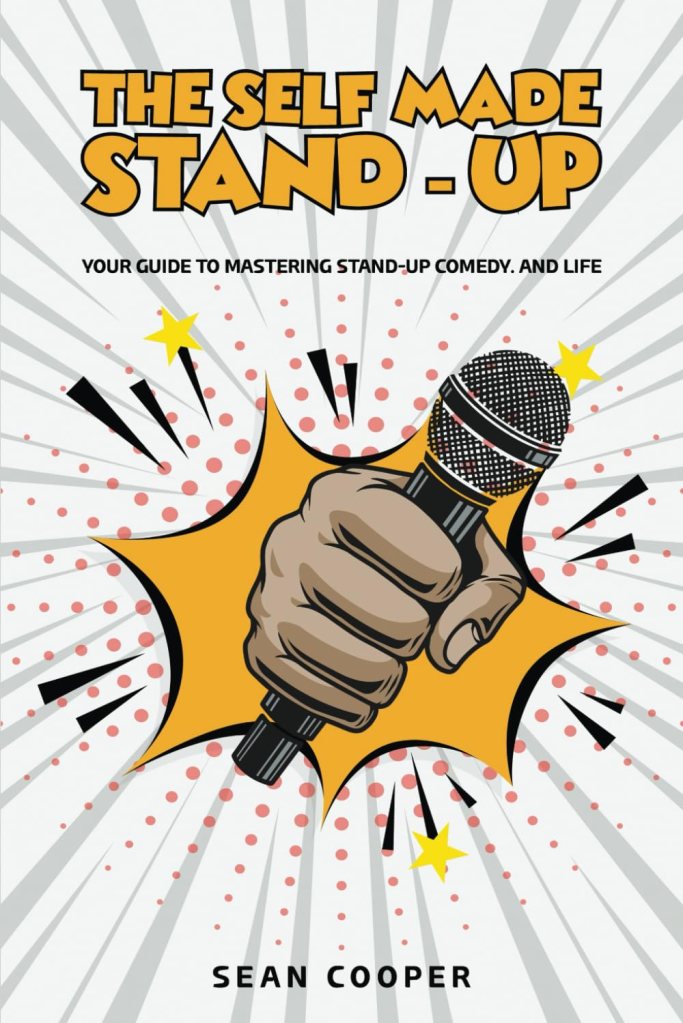
The Self Made Stand Up is available as a paperback or e-book from Amazon, Barnes and Noble and lots of other places.
More than a how-to book, The Self-Made Stand-Up is an essential resource for developing yourself as an effective comedian. If you’re a comedian, or looking to become one, The Self-Made Stand-Up is the emotional support animal you need.
You might want to consider joining my mailing list (I promise I won’t spam you)
 Sean Cooper, Comedian