In 2006 a woman I worked with asked me to check out this new thing, a book and a video called “The Secret,” which promised to give us some insight into the way the universe really works and make us all wealthy beyond imagining. It works on something called “The Law of Attraction” and it’s been talked about for a couple of decades so you don’t need me to explain the premise.
My initial reaction? “Bullshit.” Any church that tells you their doctrine didn’t work for you because you weren’t doing it well enough is a sinister and dishonest one. The universe isn’t unjust because the poorest people on the planet weren’t wanting wealth enough, and “greed is good” doesn’t become virtuous or true just because some opportunistic grifter frames it in the language of new-age spiritualism.
With that disclaimer out of the way, I’m going to talk about abundance and scarcity mindsets. The word “mindset” always makes me cringe, but I think there’s some ideas we can direct to our work as comedians.
I’m not sure my attitude is helpful anyway. I’ll admit that I’ve always worked from what buzzword-loving psych-speakers call a scarcity mindset. That is, a pessimism and fear that anything good I encounter will be rare and short-lived, and that the prevailing trajectory is downward. This negatively inclined disposition has dominated and doomed most of my relationships, jobs and transactions of all kinds for most of my life, as well as fucked with my mental health a lot.
Without giving into new age psych talk buzzword wankspeak, I’ve actively tried to get past the scarcity mindset that – for various reasons – has coloured my thinking and expectations for my life. I haven’t donned rose-tinted glasses, but I’ve definitely spent the last few years trying to remove all of the unwarranted pessimism and desperation from all the dark corners of my consciousness that it hides in.
But let’s talk about comedy. There are two ways I can immediately identify where a scarcity mindset shapes a comedian’s approach in sub-optimal ways. These are about opportunities and inspiration.
Let’s tackle opportunities first, because the inspiration for this discussion came from a question placed in one of the online comedian forums.
A comedian had an ethical dilemma. One of their peers turned out to be extremely problematic, with jokes and opinions that are antithetical to most of us who aren’t racist, sexist, homophobic and fascist. This peer was failing as a comedian but turned out to be a very successful room-runner/producer/promoter, and they offered this comic a spot on one of their shows. The question was whether it’s worth compromising their moral sense for $50, some stage time and building a relationship with someone who might offer them more opportunities in the future.
As you might expect of any online community, the range of opinions and advice varied wildly from “Take the money, who cares?” to “Don’t sell out, man.” Some of the answers were more creative and involved taking the money and using the show to verbally condemn the promoter and their opinions. There were also the predictable tirades about how entertainers shouldn’t have or express opinions, to keep politics out, etc.
That’s right. I said fifty bucks. We’re not exactly talking about the Riyadh Comedy Festival here.
My general feeling is that if you do it, you’re endorsing it, even if you’re only endorsing it for the money. So on a moral level, I’d be inclined to decline. But my response to them wasn’t about the morality. My advice was based on considerations related to perceptions about scarcity. My questions were about the value of the proposition, how scarce the proposition is, whether the same or better value could be sourced or replicated elsewhere.
My response was basically that gigs and stage time aren’t that rare and magical, even here in Townsville which doesn’t offer nearly as many as New York or other cities where hustle culture is preached. Hell, it’s even possible to create your own gigs. This other guy was apparently able to do it, and he sounds like a wanker, so we needn’t treat a few minutes of stage time like a celestial event that only occurs once in a millennia.
I also questioned the value of the gig. We discussed the fifty bucks. I’ll be the first to admit that in times of hardship I become deeply ashamed and concerned thinking about the things I might hypothetically do for fifty bucks, but we can all agree that in a cost of living crisis, fifty dollars spends so fast it probably won’t change your life in any significant way.
The exception to this is whether it’s the first time you’ve been offered money to do comedy, because smashing the unpaid-to-paid barrier in the arts is a big psychological milestone.
No, the real value built into the proposition is the stage time and potential relationship with the promoter. I propose that the value and scarcity of stage time is artificially inflated most of the time. The industry is really invested in that perception so that they can underpay performers and even encourage pay-to-play through scams like “bringer shows.”
Yes, we need exposure and experience, but the scarcity of performance opportunities is over-emphasized. As I’ve hinted, one can create their own opportunities. The most successful comedians from my own local scene have done this, chatting with venues and even putting on gigs in their literal backyards.
In The Self Made Stand Up I talk about the Alt Comedy scene, in which comics made their own gigs in bookshops and whatever venue they could find. It’s only a scarcity mindset that has comics paying to perform or compromising their values for gigs that don’t even pay much, if anything.
There’s another potential benefit to taking the gig, which might be cementing a relationship with someone who puts them on. But if that person is the problem, maybe you shouldn’t? Maybe you’d do your brand more harm than good by siding with people and shows that don’t align with your brand. More on that later.
I mentioned on that forum that I made a decision about that stuff at the end of 2023, and ceased participating in my city’s largest regular open mic. It was regular and established, the go-to place for people who want to see live comedy in Townsville, and I pulled out of the whole scene. There was a feeling that we had to do that one, that all stage time is good and if you weren’t doing that one you’re not even in the game and not going to develop.
Fuck that, I pulled out anyway. Because not all stage time is good. Because gigs aren’t as scarce as we think. Because quality (what aligns with my audience and my brand) is more important than quantity (frequent, well-attended gigs). I’d rather do 15 small good shows a year than 40 big bad ones. For me it isn’t about racking up meaningless numbers. I’m aiming for gigs that will actually contribute to my act and help develop my following.
That’s my philosophy: If you’re doing a fuckload of open mic gigs, most of them won’t do that much for you. Sure, there’s a cumulative effect of experience gained during stage time. The tribal elders in comedy liken it to doing lots of “reps” in the gym… and there’s something to that.
But what if each of those reps had a chance of doing you harm, like a back injury, and the reps were of an action that might develop you in ways that are the opposite of what you’re trying to achieve? Every professional arena recognizes how harmful it is to develop deeply ingrained bad behaviours and how it’s harder to unlearn them than it is to develop good positive experience.
Employers know that the type of experience is more important than the volume of it, and bringing loads of bad experience that’s developed bad behaviors is impressive to no-one. I think there’s some value in querying the value of most gigs. I like doing a lot of gigs, but 90% of them don’t make that much impact individually and I think regarding each one like a rare and finite event is potentially harmful as well as mistaken.
So here’s what happened in the year after I decided not to keep burning myself out doing frequent gigs in a potentially toxic environment:
I still worked. I got gigs, a couple of regular monthly gigs in an environment more suited to the style of comedy I wanted to develop. I found my own following and developed my own brand and reputation. I also got paid for every single gig that year, so even though I was working less nights, I was getting paid more.
Also I got more stage time, not less. Those open mics were imposing and enforcing strict rules about how many minutes you got up there. Again, the idea of scarcity prevails in that environment. At my regular cocktail bar gigs they trusted me with more time and often needed me to go longer. I clocked a couple of my gigs there that year as close to a full hour, which would be unthinkable in most of the places I’d previously worked.
By refusing to accept the scarcity concept and the prevailing obligation to grab every single opportunity with both hands, I actually made more money and got more experience, and shaped my act better. My peers who dropped in to try and convince me to return to the gigs I walked away from told me they were blown away at how far I’d come and how strongly I’d developed. None of them could even imagine doing an hour-long show.
Meanwhile in that other place people audibly commented about a drop in quality and an increase in ‘political’ squabbling and infighting. At the end of that year the room and show were formally dissolved by the venue host, who said it no longer had value for them either.
I feel that whenever you’re being asked to hold a scarcity mindset and award undue value to something that you could make yourself, you’re being gaslit. Also, I feel that we need to think of costs as well as rewards before we treat something like it’s rare and irreplaceable.
The other scarcity mindset I see affecting comedians is about ideas. This is an even more salient example of how crazy it is to treat something like a precious gem when we can literally create our own, completely free.
It’s also an idea I discuss in my book. Treating jokes or any other kind of idea like they’re the most valuable and finite thing in the world is another scarcity mindset error that handicaps comedians.
Yes, jokes are our stock. Yes, they don’t always come as easily as we’d like. Yes, we can get a lot of use and value out of good ones. Yes, friends of mine tell me that they’ve sold some of theirs for thousands of dollars. I’ve never done that but I’ve made money from using mine myself. I’m not going to tell you there’s no value in a good joke or a good idea. Of course there is.
BUT… Ideas are free to create. You don’t need expensive tools or ingredients to make them and there’s literally no limit to the number of ideas you can make. Given this, wouldn’t it be silly to fight someone over one of them?
We spend a lot of our time squabbling about the provenance of jokes and expressing moral indignation about respecting ownership of jokes. And it’s all true. Stealing jokes is shitty, I’m never going to contradict that idea. But if one of your jokes gets stolen my advice would be to write another better one. It won’t cost you a cent and you will be better off.
Mostly what I want to emphasize is that a scarcity mindset isn’t an appropriate thing to apply to ideas that you can literally create out of thin air with no effort. Feeling all those scarcity vibes about ideas is where writer’s block comes from. It’s not healthy to think of ideas as finite, difficult, rare, or scarce… and it does not help you create them.
The biggest trap when I see a comedian with a scarcity mindset about jokes and creativity, is that they end up believing that jokes are more rare and precious than the comedian’s brand and reputation. When that happens, comedians end up doing jokes that hurt them, jokes that contradict or undermine the comedian’s image or reputation, jokes that lower our value in people’s minds.
If you think jokes are precious and impossible to write, you’ll end up presenting jokes that you know are kind of shitty. You’ll present jokes that don’t align with the image and reputation you’re trying to create. When a comedian thinks a misogynist joke is worth more than their reputation as a feminist (or vice versa, my point works the same when you swap the words), you’re starting to damage your own progress.
The consistency of your act – the self you present, your values and reputation – are more valuable than any of the jokes. You’ll have developed as a comic when you recognize that some jokes might be good, but they don’t make any sense coming from you. A scarcity mindset will prevent you from ever achieving the ability to recognize that.
The idea of scarcity has people doing gigs that don’t help them, forging alliances that hurt their reputation and presenting jokes that undermine what they’re trying to build. You’d do well to replace it with an abundance mindset that prioritizes correctly and is comfortable and confident about getting more gigs and generating more material. Once you do, you’ll find your choices of gigs increase and the jokes come more easily.
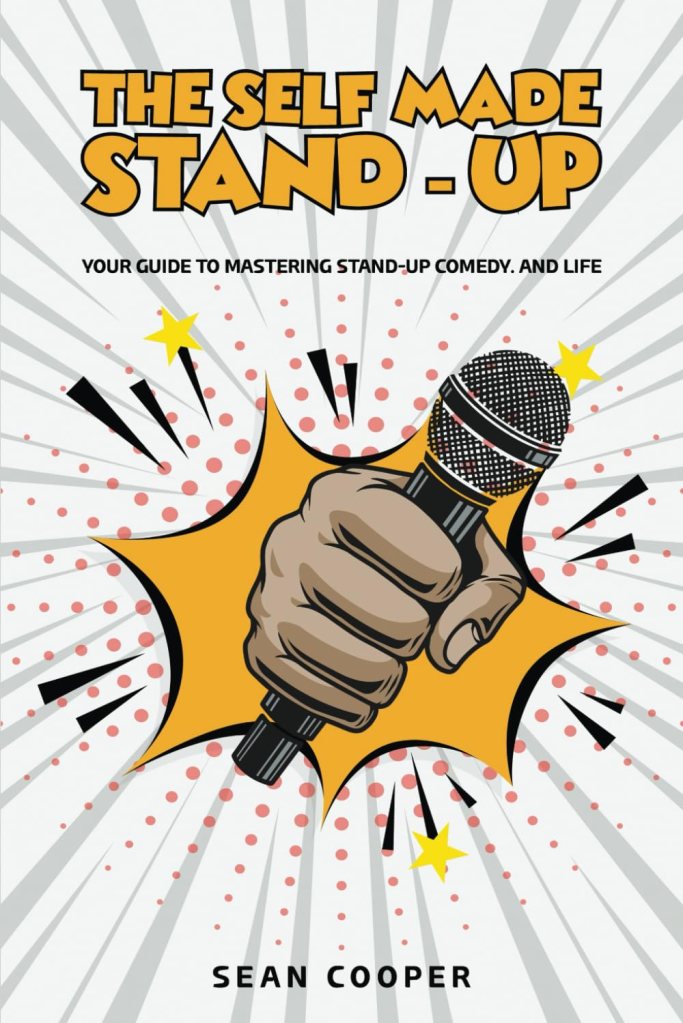
The Self Made Stand Up is available as a paperback or e-book from Amazon, Barnes and Noble and lots of other places.
More than a how-to book, The Self-Made Stand-Up is an essential resource for developing yourself as an effective comedian. If you’re a comedian, or looking to become one, The Self-Made Stand-Up is the emotional support animal you need.
You might want to consider joining my mailing list (I promise I won’t spam you)
 Sean Cooper, Comedian