At the beginning of this century I was a musician and started a tiny boutique record label. It wasn’t successful.
There’s no way it could have been. Selling CD’s at a time when people were moving away from CD players and selling music ownership while people were embracing the idea of renting access to music instead was doomed.
That’s OK. I knew it was at the time but it was still a necessary expression. I never intended to get rich from the exercise. But now it’s 2026 and you’re sick of renting your whole life, spending all of your income on subscriptions that give you nothing for your money in the long term, I fucking told you so 🙂
But I digress. I want to discuss something I saw a lot of at the time, an idea that’s still relevant even if I don’t see it articulated in quite the same way. This was the claim of a musician or other artist that they were created, and themselves create, in some kind of intellectual vacuum. “I don’t have any influences,” they’d say. I’m original.
What a load of bullshit. By failing to acknowledge what inspired them, they were communicating both arrogance and complete lack of self-awareness. Did these people really believe that, through some act of divine auto-genesis, that they were born free from external stimuli and somehow empowered to create, inspired by nothing, works of art so incredibly unique that there is nothing in human history that they could reasonably be compared to?
“Buddy, who the fuck do you think you are?” is what I’d think when this claim inevitably showed up in their promotional text. Denying everything that came before them wasn’t just an incredibly disingenuous claim, and it wasn’t just an expression of unjustified arrogance, it was fucking stupid. Unbelievably fucking stupid.
For context, let’s look at the time I was getting these emails: around 2005. For starters we’ve got centuries of artistic expression that this self-important douche was building on, even if they fail to recognize it (the expression “you’ve forgotten the face of your father” from Stephen King’s Dark Tower books springs to mind).
But more importantly, they’ve prioritized their ego over their success. Why the hell do they think I would even ask them a question like this? Why are all the other labels asking them? Did they honestly believe it was some kind of trap we were all trying to “get them” with?
What else was happening in 2005? Amazon was, for better or worse, taking over the world. There are many reasons to not be happy with Amazon the book company (which appears to be incompatible with Amazon the rainforest, which it appears to be at war with), but we must acknowledge that they brought some brilliant ideas to the table.
They were more than a company trying to flog shit over the internet, which is more or less true of most companies, but they did so with some unprecedented and very successful ideas. One of these ideas was affiliate marketing – which to my knowledge, they did before anyone else, and better. Another of their ideas – the one that’s relevant here – was the idea of linking comparable products and suggesting “if you like that, you might like this” to people.
Of course it’s not that new. I’d worked in a record store and knew that if someone was really enjoying Nine Inch Nails, I might be able to sell them on Sister Machine Gun or KMFDM. Their loyalty and enthusiasm would increase, and so would my profits. In this way, Amazon would turn a single sale into a rabbit hole that would grow their business.
It doesn’t take business genius to see that, if you’re not a household name, your best path to success is to be found by people with tastes approximate to what you’re offering. Everything cool I ever found was somehow adjacent to something else I liked and I’m sure your experience is similar. If a record label is asking for your influences, they’re trying to find customers and fans for you. There’s no advantage in pretending you don’t have any.
Comedians need to know their influences for other reasons. At the beginning, you need to know them to avoid showing them. It’s said that any comic in their first year is probably presenting an inferior version of their favourite comedian.
We generally consider Mark Normand to be unique but in an interview he recounted an early situation where a heckler pointed out that he was imitating Jerry Seinfeld. It was true, but he wasn’t conscious of it enough to avoid sounding like Seinfeld. After that painful epiphany, he worked on consciously developing a voice and cadence of his own.
I’m not saying we all sound exactly like our favourite comics. My own influences aren’t necessarily in my top five. I’m self-aware enough to know that I couldn’t replicate them even if I tried. I remember twenty years ago enjoying the comic stylings of Doug Stanhope and contemporaries of his like Andy Andrist.
I am so incredibly glad that I didn’t have the courage to attempt stand-up during this time, because the notes and comic ideas I was jotting down were cringeworthy. They were jokes I’d have spent all of my time defending, which would have been weird because they didn’t even reflect who I am. As impressed as I’d been with Stanhope, I’m not him and don’t hold his values. It’s a relief to have moved on past that before trying to do comedy myself. I regularly see fans of volatile comics make their debut at open mics with tricky material that requires experienced hands, and it’s not pretty.
At the time began my comedy journey, I’d probably have told you my favourite comics were Gary Gulman, Kyle Kinane, John Mulaney, Greg Giraldo, Anthony Jeselnik and Louis CK. Or something like that. Most people’s top five lists fluctuate, as does mine (though, surprisingly, it hasn’t changed as much over the last six years as I’d expect). Some names have slid down the list a little, mostly because as my knowledge and experience increase, the impressive tricks that these comedians use hold less mystery and power for me.
Would I have called them influences on what I do? I wish. One of the reasons I’m in awe of Gary Gulman is because no matter how I try, I can’t do that. I admire John Mulaney, but I actively avoid integrating his techniques into my act. Greg Giraldo was known to many as a skilled roast comic, which depressed him. If he developed in the direction he wanted to, I might have adopted more of his influence, but I’ve always avoided the roast format. Similarly, I don’t do one-liners of the type Anthony Jeselnik is known for. I’ll eagerly watch anything he does, but it’s not something I’d ever try to emulate.
I’m not so naive as to believe I’m not influenced, though. I can see where other comedians’ styles have contributed to shaping my own. Patton Oswalt, for instance, is not someone I’d immediately cite, but I can see how his act has informed my approach more than anyone on my top five list. I don’t think anyone would compare my act, which is occasionally filthy and never self-deprecating, to Brian Regan’s, but if I mention his impact, it might become impossible to unsee.
That’s just what I’m aware of. It occurs to me that we’re not always conscious of what informs our creativity. I did a lot of thinking on this topic before I was able to acknowledge the contribution of Oswalt and Regan to my style. I have a friend who, if I were to ask him about his role models, might never mention Shane Gillis… but if he were to watch a video of himself next to footage from Gillis’ shows, he’d have to admit that his body language is uncannily similar – right down to the very specific way that they both hold the mic. Actually, I should ask. The answer could surprise me.
I find this fascinating. There are a couple of comedians I’ve identified as having similar styles or approaches to mine or having written similar jokes, and I wonder if their points of reference are the same as my own? Or is it the case that all of us have developed past our influences and found our own voices, and that any perceived similarities are only the product of what exists right now? I wonder how much of us is derived from what inspires us and how much is a product of our experiences – the rooms and peer groups we’ve done comedy in and what kind of audiences it was for?
I have to accept that these elements are too complex to ever cleanly separate out, and that we can never truly know. That’s probably a good thing. I don’t want to ever be dissected that easily… and no matter how analytic I get, I still want a good amount of mystery and magic in the whole process.
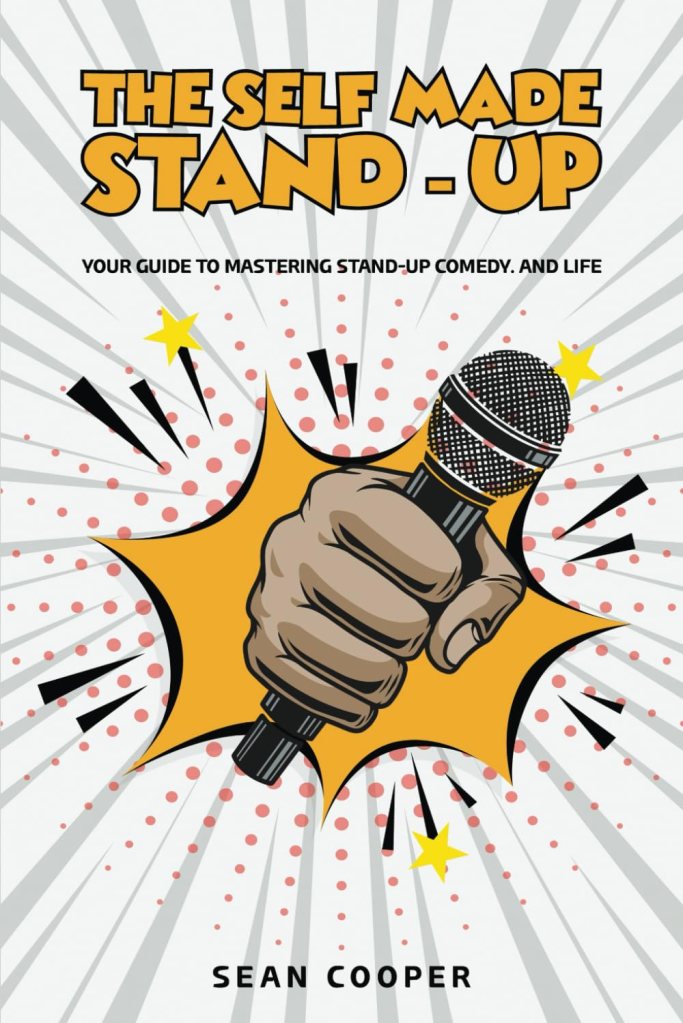
The Self Made Stand Up is available as a paperback or e-book from Amazon, Barnes and Noble and lots of other places.
More than a how-to book, The Self-Made Stand-Up is an essential resource for developing yourself as an effective comedian. If you’re a comedian, or looking to become one, The Self-Made Stand-Up is the emotional support animal you need.
You might want to consider joining my mailing list (I promise I won’t spam you)
 Sean Cooper, Comedian