What could stand-up comedy possibly have to learn from the world of architecture? On the surface, I think we’d all agree that the answer is “not much.”
But when performing comedy becomes addictive and you become obsessed with learning the craft, you find inspiration coming from interesting and unlikely sources.
Let’s look at a 1896 quote from Louis Sullivan, the “father of skyscrapers” and mentor to Frank Lloyd Wright :
It is the pervading law of all things organic and inorganic, of all things physical and metaphysical, of all things human, and all things super-human, of all true manifestations of the head, of the heart, of the soul, that the life is recognizable in its expression, that form ever follows function. This is the law.
He was actually referencing Vitruvius, who wrote De architectura in ancient Rome about the philosophy of building design just a couple of hundred years after Aristotle write Poetics in Greece and gave us the philosophy of drama and comedy. De architectura built on an idea that Aristotle had introduced – the idea of Teleology. The simplest version of this idea is that you can infer the purpose of a thing from it’s design. Even if you’d never seen a fork before you still might work out that it’s optimal use is for eating food with; and the more likely you are to work that out, the better your fork probably is.
Louis Sullivan (who was also named “father of modernism”) pushed architecture to it’s limits and gave us the blueprint for a lot of what we have today, and it all came out of the philosophy that something is beautiful when it’s optimally functional. He reasoned that the form (appearance, construction and shape) isn’t separate or bolted on to function (content, use and intention) like many would assume. In something that’s working optimally, form and content are inexorably bound and impossible to separate.
This is the bit where I have to stop my conspiratorial brain from jumping to the German Bauhaus school of design (who made Form Follows Function the cornerstone of everything they did), and then to the batcave-era goth band Bauhaus who have been one of my favourites for most of my life, and then down an endless musical rabbit-hole.
Nope, let’s stop that runaway train of thought right at the Form Follows Function concept and ask ourselves about the relationship between content (the text and narrative of the joke, or “Function”) and presentation (all of the physical presence, movements, vocal inflection and other stuff we do when presenting out material – the “Form”).
Yes, these things are different. There’s an inclination for those of us who concentrate on the writing to separate these and treat the finished result as a result of writing the material first and adding the presentation elements later. Chris Rock famously tests new material by delivering it “flat,” with all of his trademark inflection taken out of the delivery. It’s only when the content proves itself worthy that he injects his legendary cadence and elevates the joke to it’s final form that we see on his specials.
Comedians who are more performative and less “writerly” – the ones who riff and improvise onstage – are less likely to see this distinction or to order those functions like writers do. They are more likely to understand that form and content are intrinsically linked.
I’ve written extensively in both my book and here on this blog about the impact of effective word choices on the delivery of jokes. I’ve discussed the effect of using plosives (words with hard P or K sounds) and alliteration on punchlines. Fuck is an effective word, more than it’s synonyms.
Most of the naughty words are, because they have plosives, and they tend to make jokes more powerful when they’re deployed strategically. Similarly, when I worked the phrase “furious frog fucker” into one of my earliest jokes I knew that the laughs were coming as much from the alliteration with a plosive at the end, as from any plot twist revealed in the punchline.
I’ve had the chance and just enough experience this year to reflect on some of the differences between newcomers to comedy and their more seasoned counterparts. When I originally wrote my 10,000 Hours piece, for which the original idea came over four years ago, it was because I genuinely couldn’t see what all of that extra experience was doing. In 2025 I’m a bit embarrassed to admit I was so naive, but I also feel like that failure to notice what the experience does is one of those shortcomings corrected by experience.
For the record, I’ll quickly iterate what some of those differences between newcomers and seasoned veterans is… because I appreciate that to the untrained eye, it looks like they’re both doing the same thing, even though that’s definitely not the truth.
For starters, there’s the perception of time. Newbies think their job is to fill time, and expand their ideas to fill it, while experienced comics see time as the precious limited opportunity to get their ideas across. Secondly newbies tend to view challenging premises as easy laughs, while experienced comedians know that risky topics are harder to get away with.
But the main difference, the one I’ve really been appreciating over the last 18 months or so, is that veterans aren’t just streaming the data. They are also delivering the metadata, consciously integrating form and function. They’re not just using principles of word economy to structure their sentences and deliver the content, but they’re also thinking about Sybillance and Assonance and plosives as well as the rhythm and musicality of the chosen words.
This stuff isn’t visible, certainly not to comedy acolytes who will acknowledge someone’s clever words but not be able to appreciate that the skilled comedian is consciously fusing form elements into their content delivery.
I can geek out and talk about this all day but the best demonstration is visual, so I’m going to share a video by another fellow comedy geek who talks us through live examples from skilled comedians. This is from the brilliant Comedy Without Errors channel on YouTube which I cannot recommend highly enough, run by Josh Kingsford.
If you like deep dive analysis on the nuts and bolts of comedy craft, and I have to assume that if you’re here you’re probably a little bit into it, you’ll want to check out all of the videos on the channel. But don’t take my word for it. Check this video about the power of effective word selection and you’ll see exactly what I mean:
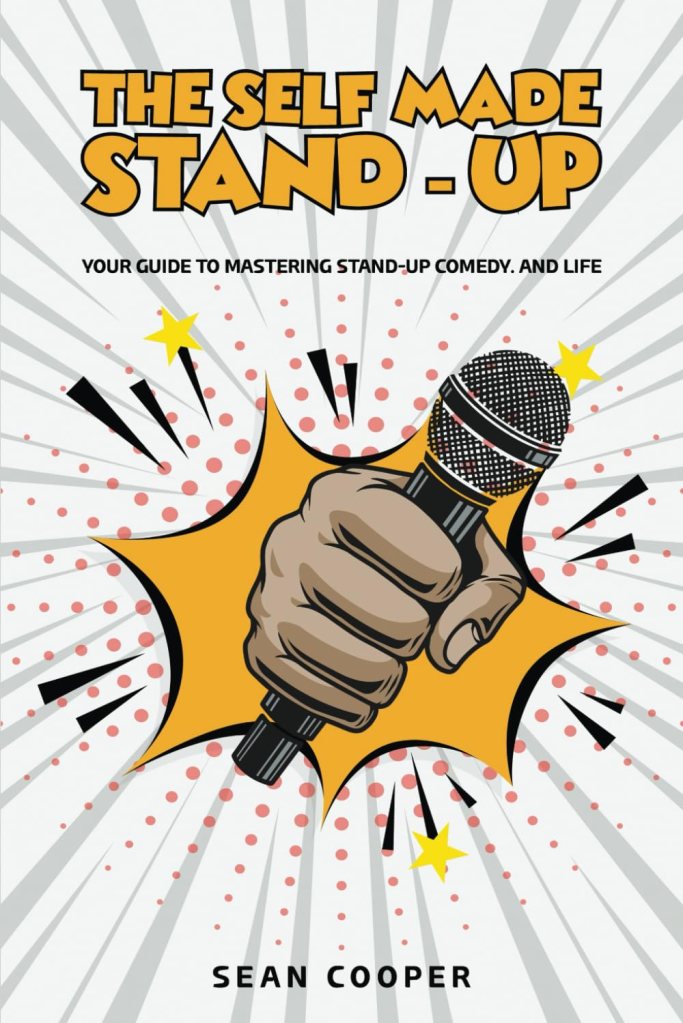
The Self Made Stand Up is available as a paperback or e-book from Amazon, Barnes and Noble and lots of other places.
More than a how-to book, The Self-Made Stand-Up is an essential resource for developing yourself as an effective comedian. If you’re a comedian, or looking to become one, The Self-Made Stand-Up is the emotional support animal you need.
You might want to consider joining my mailing list (I promise I won’t spam you)
 Sean Cooper, Comedian