Lately there’s been a lot of discussion here about the writing and creative process, but today I’d like to focus on the stagecraft element of stand up comedy. In particular I’d like to share an easy tip that can turbocharge your performance and set your set up for the best possible results.
In the world of competitive Chess there’s a lot of emphasis on opening moves. So does the world of business, where the “first mover advantage” is acknowledged as a thing. Similarly martial artists and physical combatants know that the first to strike is frequently the last to, and it’s acknowledged that effective strategy in any challenging situation is primarily a matter of making sure you’re acting instead of reacting.
For our purposes as comedians, we know that the first 30 seconds we’re onstage are critical and will shape the rest of our time up here. First impressions count. What we need to do in our first few seconds is establish trust, establish authority, communicate likeability, and demonstrate how funny we are.
I know that seems like a lot to achieve in a few mere seconds, but I’d suggest to you that you can very easily get the opposite outcome in a few seconds with absolutely no thought or effort. Like it or not, you’re communicating something in your initial moments with the mic and that communication can make the rest of your show harder or easier.
Comedians know this. If I had to make a generalization about the difference between a newcomer and an experienced comic it’s the appreciation of time. Newbies believe their role is to fill five minutes, while their more experienced counterpart will view their time as precious seconds that have to be optimized. The most valuable of all these precious seconds are the first ones; they inform how effective all the others are.
Comics know that their first joke counts. Comedians aim for their first laugh within 10-20 seconds. This is to let let our audience know we’re funny straight away. If you believe that people in comedy audiences keep an open mind and withhold judgement for two minutes before deciding to become a supporter or a detractor, I’d suggest that your view of human nature is based in optimistic fantasy.
The technique all comics use to make a quick and powerful positive impression at the beginning is to open with a short and effective joke. Save your story with the 2 minute setup until after you’ve earned their trust. Make sure your first line is the shortest joke possible.
Especially if it’s effective and also builds likeability, which is why so many comics open with the “I know I look like…” joke. This one is quick to tell because it uses evidence already at hand and increases likeability through self deprecation.
It’s not required, though. I believe that your first joke should be the promise you make to your audience, and it’s more important that it reflects and communicates your style and tone than something that just pragmatically ratchets up likeability.
Lately I’ve been opening some sets with “Comedy’s great, but how many grams of protein does it have?” It’s not joke of the century, and it doesn’t even come packaged in a format that everyone might immediately recognize as a joke. But it works for my purposes. It literally takes less than two seconds to say and does a lot in it’s short duration. It lets everyone know a bit about me, what I’ll be talking about (modern obsessions) and the particular position I’ll be taking with it, as well as letting anyone know I’m a real comic who understands the principle of getting the first punch in early. If I quickly follow it up with something more substantial it works very well.
The tip I wanted to mention today, though, is more about what we do up there than what we write beforehand. I owe it to Jacques Barrett – an excellent and experienced comedian who knows what he is talking about. I tested it immediately and saw instant noticeable results, and you’ll see me use it in my sets whenever I have the opportunity to.
The tip is to Speak Immediately. Get your first words into the mic as soon as you possibly can, preferably while there’s still lots of applause. Do it straight away and surf on the momentum of the applause you enter the stage with, and your show will get a turbo boost that will last the duration of your performance.
When I say immediately, I mean it. You can fuck around with the cord and the stool and the mic stand later. Nothing else you can do will have as much positive impact or plant the idea that you’re a professional as much as getting that first word out while everyone’s still cheering.
It doesn’t even matter what you say. “Hi” will do just fine. It might even be better if you need people to hear the first words of your opening joke. Just say something, as soon as possible, while there’s still volume and approval.
You don’t even have to wait until your next show to test this. Get on YouTube and watch a bunch of comedy sets. You will notice that the comedians who wait for the applause to die down have to work much harder when they start cold. Professional comics frequently do it and have great sets, but I can tell you from experience that getting that first word in while there’s still noise helps a lot.
And if the applause finished first because you were at the back of the room and you’re now making everyone wait while you negotiate an obstacle course to the start that you didn’t even start preparing for until your name was called, I will definitely fucking judge you.
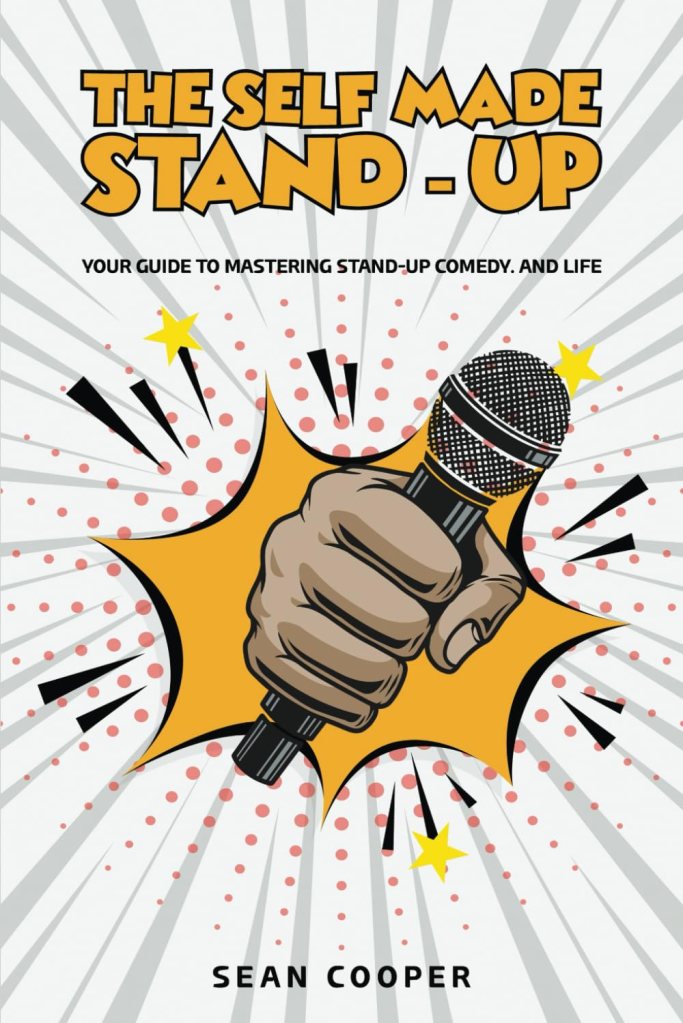
The Self Made Stand Up is available as a paperback or e-book from Amazon, Barnes and Noble, Books.By and lots of other places.
More than a how-to book, The Self-Made Stand-Up is an essential resource for developing yourself as an effective comedian. If you’re a comedian, or looking to become one, The Self-Made Stand-Up is the emotional support animal you need.
You might want to consider joining my mailing list (I promise I won’t spam you)
 Sean Cooper, Comedian