
Earlier this week I discussed the value of ideas and how to balance originality with tropes and concepts we find relatable. The question I’ve heard most often since – and this is probably the most asked of all questions related to comedy – is where we can look to generate these ideas. Today I’d like to list a few ways we can get started with joke ideas.
The first of these is something I’ve touched on recently – prompts. Writers use prompts all the time to inspire them. They might be a question like “what’s something about public transport you find infuriating?” to stimulate the creative process.
I don’t use these, although while I was writing my book I purchased a book of prompts for comedians as part of my research. Spoiler alert – it was shit, a total waste of my money, Basically every single page was blank (I guess I was supposed to do my writing there) except for a line at the top with a vague question.
You don’t need to buy a book like this – nobody does. A guick Google search will show you that there are free prompts everywhere. My personal recommendation is to watch this video by Gary Michaels. It’s brilliant and guaranteed to give you lots to think about.
I don’t really do the prompt thing myself, and I’m more likely to use everyday life as a source. I jot down any weird thoughts, frustrations, contrary aspects of daily existence and other stuff I experience from day to day. I find that this works better than prompts for my own process.
Another popular starting point for a lot of comics is to reflect on their own life. Their family, their upbringing, any weird habits or experiences they have are all a rich source of funny stories and jokes.
Another form of finding stuff to joke about is a combination of prompt and life experience. Ask yourself about things where the way things are supposed to be is the opposite of the way things actually are. What’s weird about the usual ways people answer questions in conversation? What strange customs do we have that might seem strange to alien visitors?
That’s also a filter you can apply to things in news and current events, too. What’s going on in the world out there that is just plain weird? I just found out that in America there’s no law against cannibalism in 49 of their states and the one state that has a law about it is in response to something very specific that happened one time. I also saw that the only legal issue is about how you get the meat. If you buy it or obtain it legally, you can grab a knife and fork and dig in, right in front of a law enforcement officer. You can bet I’m going to develop something around this in a future set.
Speaking of current events and customs, think about what time of year it is and what events happen then. I am hoping to present a Halloween themed set at a gig this Friday. It’s not too difficult to think of jokes based around Christmas, Easter, any significant holiday or local event. In Townsville we have annual shows, an annual car race that’s a big deal, big sporting events, etc. Even if I can’t comment on the motor races or football events, I can talk about the impact it has locally in terms of hysteria or traffic or office conversations.
It’s also good to juxtapose unrelated ideas. Now, typically a comic might try to juxtapose unrelated imagery to create something absurdist – like picturing Hitler in drag or something. I don’t find a lot of value in this concept and it never seems to land as well as the comedian expects it to – not in the 21st century, anyway.
But juxtaposing ideas? OMG, this can be so good. I saw a comedian (I wish I could remember who) present “Mindfulness Yoga for Alpha Males” and it still makes me laugh to recall it. You might do something similar and talk about Social Media for your ancient ancestors, religion for atheists, or teaching household chores to billionaires.
I’m also a strong advocate for going through your old ideas. I’ve revived a couple of old bits recently, ones I knew I didn’t do proper justice to when I developed them because I have skills and perspectives now that weren’t there at the time. But it’s not just old bits… there were ideas I had at the time that never got turned into jokes because I hadn’t found the right angle.
Maybe now I do? Maybe there’s something else I could combine that idea with to give it life? Five years ago I made some notes about having to pass a criminal history check and ensure I have a clean police record, and the need to have a Blue (working with Children) card for jobs that didn’t necessitate it. At the beginning of this year when a convicted felon got the American President job and we ended up with a brand new Pope, these ideas suddenly got a new context and because very strong material.
Something else I like to do, and this is a magical cheat code for adding depth and profundity to your material, is to take simple and banal ideas and see if there’s something deeper in it. I guarantee every small idea has a big idea’s DNA in it. At least it does for humour.
Take something small and seemingly without meaning and ask “What does this really mean?” It might be a cultural practice like how we instinctively comply with direction from people in uniform. When people blindly interpret a silly or pointless instructions from bureaucracy as law, you can ask yourself “What does this say about us as people? What does it say about society?” When you find yourself getting angry and outraged about something tiny that doesn’t matter much, you can ask “What does this say about me? What does it say about my values and priorities?” When you see some peculiar aspect of a product’s packaging, elevate the observation by asking yourself what it says about the company or what widespread social agenda they might be trying to advance with this little decision. Basically, take something trivial and make it profound. It’s often funny and not as difficult as you suspect.
I’ve also mentioned that imposing some restrictions can actually free up the creativity. The freedom and limitless potential of the blank page isn’t always as inspiring as we might assume. Making up some constraints or rules to impose on yourself is surprisingly good for generating material.
What sort of rules and restraints? Some examples might be that your joke has to start with “I used to believe…” or maybe something like a requirement to write a joke in which you only refer to yourself in the 3rd person. Or that you have to do a whole set with jokes relating to one book or movie. Or ten jokes that are all based around workplace grievances. Or that you have to use alliteration in every line. Paradoxically, the types of restrictions are limitless!
Finally, have a think about your own personal brand or identity that you’ve built as a comedian. Sometimes I’ll take a topic and think “What’s the sort of thing that I would say? What’s my character’s take on this?” Even though I go for an authentic representation of who I am with my comedy, it still helps to think in terms of the sorts of things I am known for.
But now it’s your turn… got any favourite approaches to generating comedy material? I encourage you to share it in the comments or drop me a line.
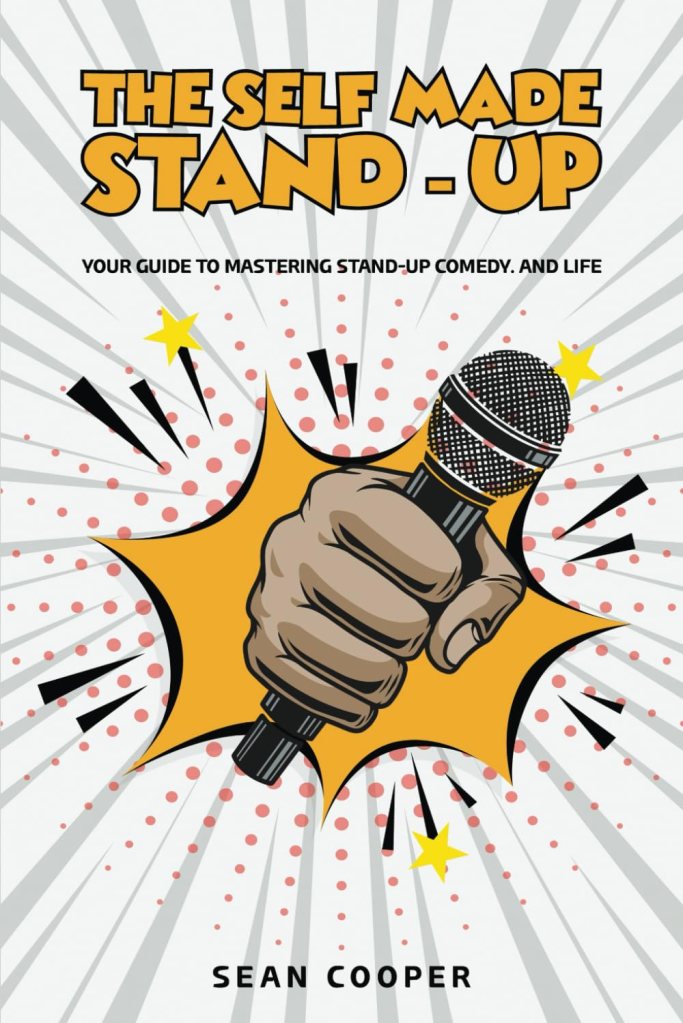
The Self Made Stand Up is available as a paperback or e-book from Amazon, Barnes and Noble, Books.By and lots of other places.
More than a how-to book, The Self-Made Stand-Up is an essential resource for developing yourself as an effective comedian. If you’re a comedian, or looking to become one, The Self-Made Stand-Up is the emotional support animal you need.
You might want to consider joining my mailing list (I promise I won’t spam you)
 Sean Cooper, Comedian