
There’s a notion that pervades so much of society that it seems banal. Under scrutiny, though, it feels crazy just how integral it is to every single aspect of modern life. I’m talking about the belief that an idea has the most potential value of anything in the galaxy.
The widespread suspicion is that for everyone in society, one good idea is the only thing standing between them and unlimited success. I suspect this is because we’re live in an age of invention.
Once upon a time someone might enter the annals of history by being the fiercest warrior, or the most prudent governor of the state. Lately our legends are about people who invented stuff. Fair enough too, because many of them have undeniably changed society.
I might suggest that the original idea might not be the root of all success that popular mythology suggests, but that the perception of it is undeniably powerful. This might be why obscenely rich modern pharaoh Elon Musk, who has never really invented anything and only ever bought other people’s ideas, works so hard at spreading an alternate history narrative in which he invented Paypal (no he didn’t) and founded Tesla (nope), etc. Deep down he knows the power of this perception and knows that a reputation as an inventor invokes even more Kudos than acquired wealth does.
His example should show you that, while there’s a lot of social capital in the reputation of inventiveness, it’s probably not what’s generating the wealth or value. People love to point to the iPhone and cite the incredible creativity of it as the rightful source of Steve Jobs’ success, even though almost nothing in it was invented by him or his company.
You might be astounded to learn that just about every part of it – from gps tracking, the AI voice part, cellular technology, touchscreen technology, pretty much everything – was not an Apple creation and didn’t even come from the private sector. They’re all government inventions. Did the government get rich from these creations? I might suggest that they didn’t even receive taxes for them, and actually paid Jobs big development grants to stick all the ideas in a single box and claim all the rewards.
What did Apple contribute? It looks like the only “Hey that’s ours, you can’t use it” lawsuit they ever initiated was about Rounded Corners on the device casing. That’s their bit. Literally everything else was created by the public sector.
I think we can agree that the big dollars don’t necessarily go to the people who come up with the original ideas. The big dollars go to the people who execute those ideas. Creativity is nice, but execution is everything.
When I was an aspiring musician I sent a lot of my band’s demo tapes to record labels. The advice everyone gave me was a cheap legal hack – send it via registered mail so the receiver has to sign that they got it from you on a certain date, and also send it to yourself in this way so you have evidence for court after the big bad record label steals your idea and makes a smash hit record with it.
The writers magazines I was reading advised to do the same with your manuscripts before you sent them to publishers and agents. It sounds like amazing advice, but it’s predicated on a bunch of very wrong assumptions.
This realization crept in after most of my submissions were returned, unopened.
Record companies and book publishers weren’t looking for big new ideas, and they weren’t willing to expose themselves to vexatious legal action to get them. If I imagined studio execs hungrily scouring their mail for originality to steal, I was very wrong.
It turns out that they’re not looking for ideas, they’re looking for execution. They reviewed submissions with an eye and ear for acts with public appeal and a work ethic. When they selected one of these acts they would assuredly replace that act’s original ideas with their own, and if they wanted to rip them off they would do so with an unequal contract and a loaded profit-sharing proposal.
If you believe that Hollywood’s movie offerings look the way they do because they don’t have exposure to original ideas, you’d be wrong. They get a crazy number of pitches of bizarre concepts all the time. They don’t want original ideas. They want tried-and-true tested and proven ideas. They want relatable ideas.
In my last post I talked about the power of relatable ideas. When you select a book or movie you might feel that you’re looking for a concept you’ve never imagined before, but the reality is that you’re probably looking for stuff you already know you like that resonates with you. Sure, we want to see something new; But we’ll generally choose a comfortable action flick, a fantasy story with all of the tropes we enjoy, or a formulaic rom-com over an experimental avant-garde film with nothing but originality going for it.
Relatable is important. What we see and hear needs to align with the mental blueprints we have or it just won’t work. This is true of all ideas, and jokes are no exception.
Originality is also important. If your act doesn’t have it, you’ll struggle to do well. Our challenge is to balance the two essential elements of relatable and original in our jokes. How can we?
There’s lots of ways to ensure we’ve got both, but to me the most valuable way is to build it into the execution. I find it’s a lot easier to get it right when we assign the originality and the relatability to their correct parts. The simplest way I can explain this is that the set-up needs to be relatable and the punch-line needs to be original.
A common mistake I made when new, and I see a lot of relative newcomers make is to try and treat their setup, the premise, like a punchline. They try to make their premises wild and crazy because that’s where they think the funny comes from. Using a funny premise is a mistake for a few reasons.
First, it’s lazy. Expecting your bizarre premise to do the heavy lifting for the joke avoids the job of the comedian – to take a premise and then twist it to something unexpected – and it leaves no room for the punchline. OK, so you start your joke by saying Michael Jackson is reincarnated as a transvestite donkey, or whatever. Now what? You’re expecting the laugh from the set-up but that’s not what the set-up is for. That’s the job of the punchline, but you’ve left no room for a punchline. What could a punchline possibly do here? You need to watch more movies and see how the good ones leave the plot twist until the end.
Our job is like a chef’s – to take mundane or recognizable ingredients and elevate them with different processes or combinations. Any chef that just takes an exotic ingredient and doesn’t transform it is lazy and expects the ingredient to do the work for them. Even if you’re impressed, it won’t be with the chef’s part in the meal. You’ll get more credit for your transformation if you do it to something we can recognize.
Nobody minds a chef who starts with recognizable or relatable ingredients. Your topics and premises don’t have to be off-the-wall or alien to us. Actually, they shouldn’t be, or we’ll have a hard time coming along for the ride. No, save your originality for the punchline.
And that’s where you need it. It’s perfectly legitimate to talk about city traffic. Other comics have only discussed it because we can all relate to it. Just make sure your take on it is original and new. That comes from your punchline. Your punchline can be as counter-intuitive, unrelatable, bizarre as you want.
That’s the ideal formula: Relatable Premise, Original Punchline.
Just remember that the more relatable your premise is, the more original the punchline has to be. You won’t get called ‘hack’ for talking about inflation as long as your take on it is different to what we’ve heard or expect.
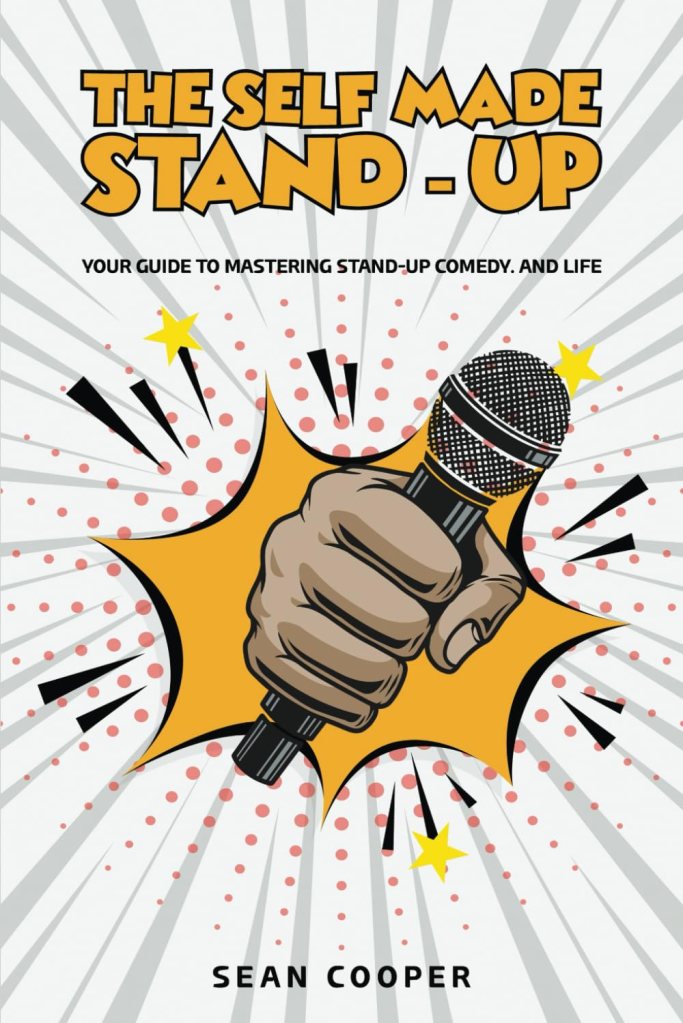
The Self Made Stand Up is available as a paperback or e-book from Amazon, Barnes and Noble, Books.By and lots of other places.
More than a how-to book, The Self-Made Stand-Up is an essential resource for developing yourself as an effective comedian. If you’re a comedian, or looking to become one, The Self-Made Stand-Up is the emotional support animal you need.
You might want to consider joining my mailing list (I promise I won’t spam you)
 Sean Cooper, Comedian