One of my favourite comedians, Anthony Jeselnik, made some observations in a podcast I heard that got me thinking. The podcast is Gettin’ Better, hosted by another awesome comedian – Ron Funches. The conversation from five years ago had me thinking about how we deliberately narrow the scope of our freedom with our project to define our identities.
It started with Jeselnik enthusing about the oeuvre of playwright/director David Mamet. Anthony Jeselnik seems to have very similar literary tastes to mine. Jeselnik quoted something Mamet said about how when you begin you have complete freedom and potential, can literally do anything, and this is reduced the more we define our identities with the narrow scope of what we choose to specialize in.
“Let’s say you’re starting out as a comedian,” he says. “You go onstage for the first time at an open mic. You have a hundred percent creative freedom. No one has any expectation of you. You’ve never done anything before, so you can do whatever you want.” The more we do what we do and define our brand and act, the less ability we have to contradict it with off-brand content or attitudes.
I’ve explored this idea myself. I’ve emphasized all the way through my book that consistency is crucial. I’ve made it one of my “Four Noble Truths” that’s the cornerstone of my comedic philosophy. Stand Up Comedy is a process of creating and shattering expectations; it’s literally the formula for more joke structures.
Consistency is not just a way to build a brand. It’s also essential to create those expectations in the first place. Without enough trust and consistency to build assumptions our punchlines don’t stand a chance. We can’t expect our jokes to work when they’re built on unstable foundations. Stable foundations come from defining our identity, style, values and voice.
Jeselnik, who’s been perfecting his style and act for two decades now, expresses the idea that successfully building an identity and fanbase can be limiting. He says that the success that comes from defining yourself strongly is something you can become “almost beholden” to. Twenty years in, known for a distinct style and voice, he doesn’t have the freedom to contradict his fan’s expectations with material that undermines the ‘brand’ he’s built.
I get it. Nobody wants to be pigeonholed, even if you designed the pigeon hole yourself. It’s a double-edged sword. But my sympathy for someone who’s a victim of their own success is limited. Anyone who becomes known is known for something. Nobody gets to be formless and ethereal and still expect the loyalty and rewards that come from building an identity that people can decide to like.
If that feels limiting, maybe it’s the cost of doing business. It probably shouldn’t be a cause for regret, because lots of artists and writers adopt pen names or side projects where they can explore different styles and voices. It’s also worth noting that these side projects are usually either not as good or not as different, and we’re left with the impression that the voice they’re known for might be the thing they do the best.
For what it’s worth, Jeselnik is just exploring an idea and not whining. He actually says that self-imposed limitations are extremely good for creativity, which is something that all good writers and artists know. He’s also regularly stated that complaining comedians is his pet hate. There’s no bitterness or regret when he talk about this. He’s just making a point about a salient aspect of art and celebrity.
He does say that “you spend the rest of your career trying to get back to a place where you can have a hundred percent freedom,” but it’s not a complaint. It’s an observation about how priorities realign when you achieve a degree of success. It’s not unlike how a business hustler might turn all their time into money but inevitably reach a level of success where they re-evaluate and then spent the rest of their years trying to turn their money back into time.
One day we might find we’ve painted ourselves into a corner with a rigidly-defined style. I don’t think there’s anything too limiting about that. As limiting as definitions are, we always have room to evolve and adapt our act We just have to do it in a way that doesn’t undermine our own foundations.
In this conversation, Ron Funches also offers a perspective on this idea. He likens it to surgery. A brain surgeon might feel like they’d like to work on feet or bones occasionally, but specialization is still required and has the most value. We still need to commit to a path and define ourselves if we want the reputation and riches that comes with being a great surgeon.
Every creative person should know about the magical effect of imposing rules and limitations on yourself. A “blue sky” approach where there’s literally no restrictions on what you can do is the enemy of writers and artists. Nothing is more intimidating than the blank page or blank canvas. Setting yourself a challenge or limitation provides the inspiration to break out of a holding pattern.
And sure – every word or brushstroke is a commitment to a path that might prove limiting later on… but unless you’re Kazimir Malevich you’re probably won’t get away with presenting a white space and enthusing about how limitless it is. Your art will come through building, committing and defining.
I sincerely hope we all get to regret how limiting our incredible success is.
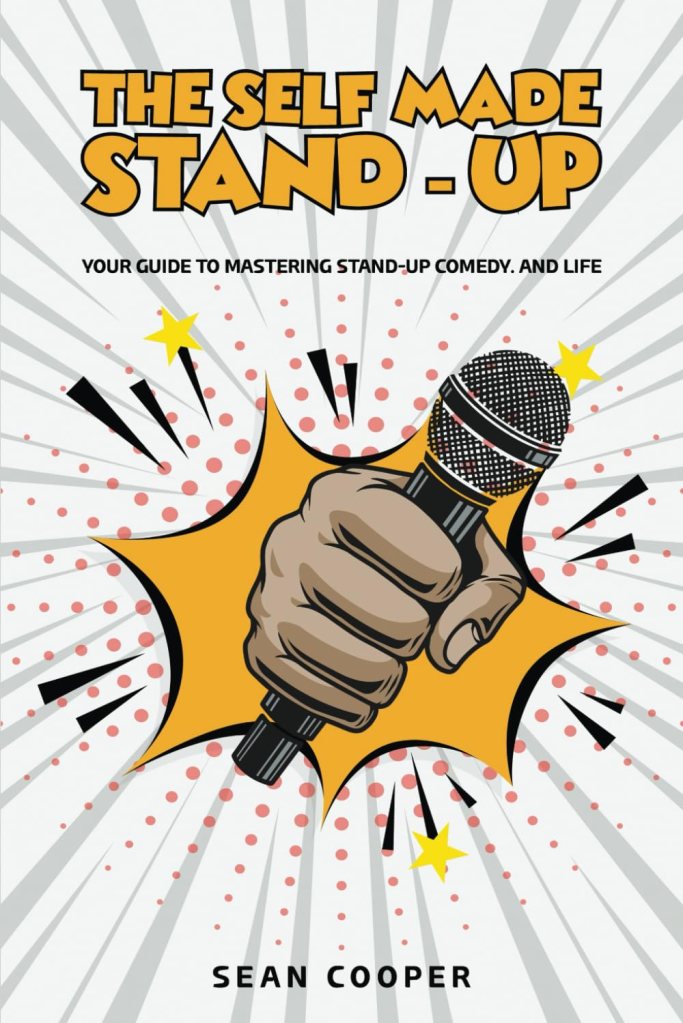
The Self Made Stand Up is available as a paperback or e-book from Amazon, Barnes and Noble, Books.By and lots of other places.
More than a how-to book, The Self-Made Stand-Up is an essential resource for developing yourself as an effective comedian. If you’re a comedian, or looking to become one, The Self-Made Stand-Up is the emotional support animal you need.
 Sean Cooper, Comedian