
Just as psychologists argue about whether nature (the way we are) or nurture (the effect our environment and experiences have on us) contribute more to our character, comedians have discussions about whether our comedic prowess is based more on how inherently funny we are or whether it comes from experience and learning.
I’ve touched on this matter previously but it cannot possibly be the whole picture. Having recently passed another milestone in terms of my comedy experience, I’m reflecting on some aspects in which sustained practice over time makes us better at doing stand up.
Before I continue I’d better address the elephant in the room, which is that six years isn’t considered a lot of experience in the world of comedy. People say that 5 years is beginner status and you can’t really consider yourself seasoned until about ten years.
I accept that – I’m definitely not claiming to be any kind of elder statesman. But I am noticing some things that make us better in terms of writing, delivery, insight and response can only be achieved with enough time and experience. Today I wanted to look at some of that.
OK, let’s get the obvious one out of the way first; Stagecraft. All the aspects of holding a microphone, being comfortable on stage, delivering the material smoothly and confidently handling anything that comes up are only improved through practice. For my first appearances I didn’t know what I was doing and very prone to nerves. The only way to get better at all this stuff is through repetition and as I’ve observed here as well in my book, is that you can only learn and implement it is to practice it on stage in front of people. So, yes… as far as Stagecraft is concerned there’s no substitute for experience.
The bigger impacts I’ve felt have come through the actual construction of material. I’ve heard experienced comics suggest that maybe new comedians should be given a very narrow list of things they can talk about – masturbation and iPhones – in their first year. I’m not unsympathetic to that. I cringe at some of the banality in my earlier sets but I cringe even harder when I see new comedians tackle Premises that are beyond their capacity to do justice to.
I mentioned last week that comedians need to think about their Premises, and to try and align those premises with their skill level. I cited an example of a newish comic who regularly tried to insert divisive and edgy material into their sets, jokes that are incongruent with the rest of their act and require a lot of skill to deliver in a way that doesn’t alienate audiences.
The required skill comes partly from that stagecraft experience, the ability to read a room and deliver a challenging premise effectively. The other part is how to write that kind of stuff, how we take those ideas and frame them in ways that are legitimate and thoughtful .
Another factor to consider is your identity. Something I talk about in my book, the actual reason it’s called The Self Made Stand Up, is that we comedians are constantly under construction. We’re discovering, developing and reinforcing our identities as we go. A salient point that comedians need to consider in their first two years is that we still don’t actually know who we are. As we learn and build who we are, our body of material can only get better – it’s more thematically aligned with our Act and more consistent, which means more impact.
Grizzled veteran comedians proselytize about the virtues of increased skill accumulated during logged hours of live performance, but there’s an important aspect of longevity that’s often overlooked. It is that sometimes good jokes take time to develop.
I’m not talking about grueling hours spent struggling. What I mean is, like aged whisky or fine wine, that it can take years for a joke to reveal itself in it’s final and most effective form.
I’ve implied before that I don’t believe in immediately rushing the seed of an idea to the comedy stage. I’ve got a folder filled with funny ideas that aren’t really jokes yet. It’s a full folder, but I’m adding to it constantly. I’m not troubled by the fact that ideas go into it faster than they come out. Some of them have been in there for years. They might never graduate from this folder and that’s OK.
Sometimes and idea is waiting for the right way of framing it. I’ve referred to Gary Gulman’s brilliant State Abbreviations bit, but this short video illustrates how he finally took this unformed notion and presented it as a fake documentary review. He carried this idea for literally years before he worked out how to present it. The 90 second video where he explains it is here. He knew the idea had potential, but he didn’t waste that potential by rushing it to completion. The time he spent developing it is reflected in the result, which is also packed with other ideas he had that were waiting for something to attach to.
Yeah, it can take years. I’ve got pieces of my own that have also spent years evolving into the form they are now. This is not something you can do in your first year, so it’s inevitable that time and experience will give you better material as well as a better sense of how to handle that material.
I don’t necessary believe that comics in their tenth year are always better than those in their third. There are people who’ve been calling themselves comedians for decades who I feel might never be funny. I’m trying not to be nasty, but Rob Schneider is very much in my mind as I type this. Decades of experience haven’t contributed any more to his act than his fame, contacts, money and opportunities have. If you’re immune to advantage, experience might not help you.
But the benefits of experience are undeniable. Accumulated stage time gives you more of the things you need to be an effective comedian. A larger library of material, and material that’s properly evolved are two of them. A sense of what works and what doesn’t is another. The more years you’ve been writing, the more developed your writing system will be. The experienced comic will have greater resilience when challenged, and more analogous situations to draw from when a strategic response is required.
This translates into less nerves and more confident delivery, but also more consistent delivery. The wisest use of your first few years will be invested in defining and developing your act, so you become a focused performer and everyone just gets you and your point of view. When your character, intention and focus are defined and focused your jokes will hit so much harder.
When you hear from comedy’s tribal elders that it takes a long time to become good at comedy, and that there’s no substitute for experience, it’s disheartening. When we begin, we’re not really capable of regarding our early open mics as beginning steps in a very long journey. Our early imaginings might include the highlights that come with an established successful career but we don’t – we can’t – imagine ourselves grinding away at it for a decade or more. That kind of talk doesn’t even seem real in our first six months.
But here’s the good news. It gets easier. So much easier.
You know how in video games you get more powerful as you “level up,” but the game also gets progressively more challenging? This means you have the sensation of progress, and your missions get more interesting, but the game doesn’t actually get any easier. More likely it’ll get harder as you go.
Comedy’s not like that.
As you progress and “level up” you get more skills and more tools. You’ll have a bigger toolbox filled with more effective material to use. Your knowledge and powers increase… but the challenge stays exactly the same!
That’s right. The difficulty level of comedy doesn’t increase as you level up. Getting better at writing doesn’t make audiences more difficult. Crowd members don’t become more resistant to laughter when you get better at telling jokes. Nope.
The difficulty level of the job stays the same over years. Getting better and more experienced only makes things easier for you. Comedy gets easier when you get better. Suggesting otherwise is some video-game bullshit.
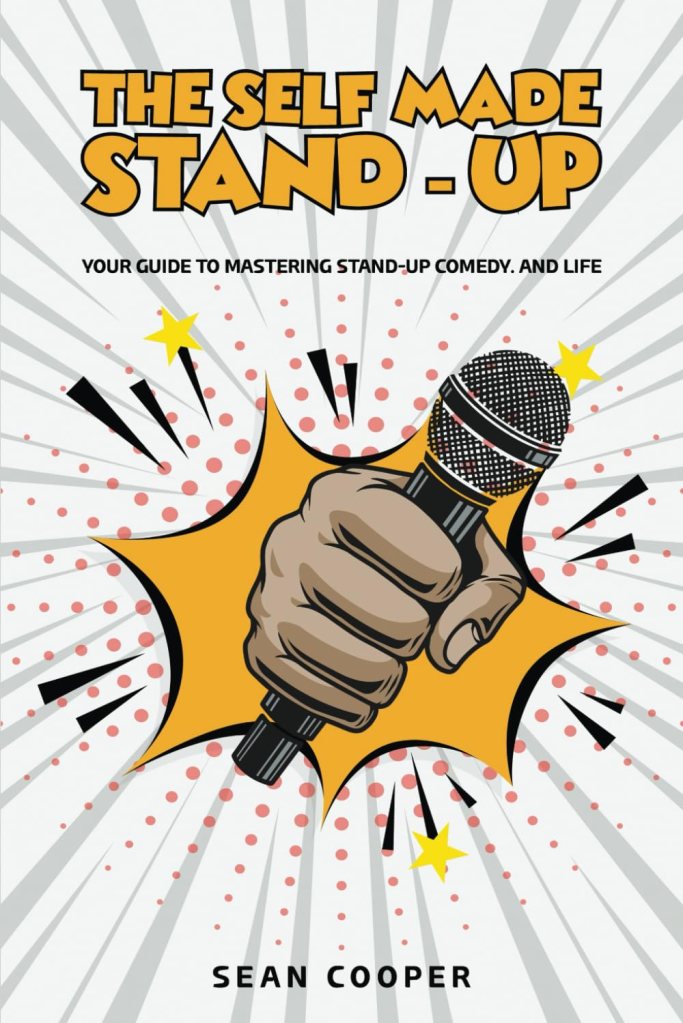
The Self Made Stand Up is available as a paperback or e-book from Amazon, Barnes and Noble, Books.By and lots of other places.
More than a how-to book, The Self-Made Stand-Up is an essential resource for developing yourself as an effective comedian. If you’re a comedian, or looking to become one, The Self-Made Stand-Up is the emotional support animal you need.
 Sean Cooper, Comedian