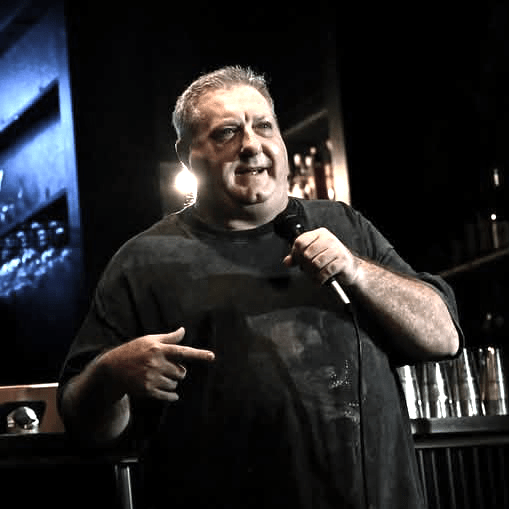
It’s weird when comedians give each other tips and advice. I’m not against it, but I take all of it with a massive dose of salt. What makes sense to you might make sense for your act, not mine. The thing you think I should do might be very off-brand for me.
It’s surprising how often newer comedians hit me up for advice or request feedback. I usually don’t have much to say there, having been put on the spot. Maybe I like your act and possibly I don’t, but I don’t think that telling you how to be you is fruitful for either of us.
One of the reasons I’m surprised at how many ask is because when I began lots of tribal elders in my local scene offered advice that I never requested. Most of the advice would have been a mistake to follow. When I rejected the advice the elders assumed it was a lack of humility in my character. There may or may not be something to that, but I hope I’ve demonstrated enough humility to not tell all of my peers how they should be doing their thing.
Anyway, that’s just some context for the conversation I found myself in a week ago after a gig. I was chatting with Elliot Ness after a show and we were joined by a comic we hadn’t seen in a long time. He had advice.
Basically he urged Elliot to tell more jokes about her disability. For this story you need to know that she has some form of disability. I don’t know the details. She has difficulty walking and uses a stick, but I’ve never asked her about it. I figure if she wanted to disclose the specifics to me, she would have by now.
It’s funny, he said. A fucking goldmine. He told her that her act would explode if she just made more jokes about her disability. Lots of them. Because her disability is hilarious, and she’s the only one who’s really allowed to do it.
Elliot looked stunned and skeptical, said she didn’t really want to do that, so he turned to me.
I thought I was going to be asked to back up his opinion, but he was actually about to use me as an example to reinforce his point. Our friend explained that it’s just like how I’m fat and that’s hilarious and how wouldn’t it be hilarious if my gigs were just me making fat jokes at my own expense?
Fat jokes are funny, he said. They’re objectively fucking hilarious and the only reason we’re not still hearing lots of jokes about fat fucks and cripples is because of the woke mind virus that’s turned everyone into sensitive snowflakes and now we can’t say anything anymore, but if we could you can bet that fat fucks and cripples would be right up there with the other things we complain about not being able to say anymore.
“Think about it,” he said. “A comedy goldmine that only you can use. The only thing stopping you is your fragile ego.” Then he left us to reflect on his wisdom.
Elliot then told me that she wasn’t interested in doing that, but now she was wondering if she should. She mentioned Steady Eddy who has built a comedy career on jokes about his cerebral palsy. I acknowledged that Josh Blue, his American counterpart, has done exactly the same thing and they’ve both had much bigger careers than we do.
I told her Adam Hills, another great comic with a disability, talks about it in his book Best Foot Forward. Hills’ revelation was that his disability is a personal and powerful thing, something that has shaped his world view, and that a serious premise like that requires skill and wisdom to do justice to it. The best advice he reckons he ever got was not to use his disability for humour until he had the skill and experience to do justice to it.
The results, as panel host on The Last Leg for a whopping 31 seasons, a regular correspondent for the Special Olympics and a role as an ambassador for the disability community, speak for themselves. None of these things would have been likely if he’d traded out his perspective to make easy cripple jokes in the early part of his comedy career.
We reflected on this for a bit, but we both agreed that self-deprecating jokes about our respective conditions was off-brand and not something either of us wanted to do. These premises, no matter how much comedic potential, aren’t interesting to us. Maybe it’s denial, but neither Elliot nor I identify closely with the thing you see that you might want us to crack jokes about.
I’ve worked in the disability sector for most of my adult life, and I can tell you with confidence that people generally don’t look to be defined by their disability. This is why “person first” language – describing someone as a person with a disability (a person who happens to have a condition) is always preferable to referring to them as a disabled person (a condition that happens to be attached to a person) – is preferable.
This applies to all kinds of disabilities, mental health issues, body attributes, everything. None of us are so one-dimensional that we’re willing to boil down our entire character, our perspective, our experience, our thoughts and feelings, our aspirations and insights down to a single factor.
It’s boring. It throws out a lot. Overweight is just one tiny detail about me. If I talked about my weight constantly you might think I’m boring and don’t have a lot going on in my life. Strangely, though, it’s what people seem to expect.
I loathed The Biggest Loser when it was on TV. The part I hated the most was the obligatory part at the beginning of the series where they’d all have to burst into tears while talking about how ashamed they were, how much they hated themselves, etc. I know that reality TV appeals to our shallowest and most sadistic instincts, but I still wonder what kind of person you’d have to be to find that moment satisfying and need to see it for your enjoyment of the show.
Does it make people feel better? I really hope not. This conclusion might explain why people might enjoy seeing a comedian attack themselves with self-deprecating mean jokes, especially the sort of nasty jokes we participated in at Primary School, but it’s a dark conclusion about people that I really don’t want to arrive at. Even if I believe this about people, pandering to people’s nastiest instincts isn’t what I want to do – no matter how successful it might be. It’s not why I got into comedy, not the message I wanted to express.
I could never have been on The Biggest Loser because, despite what it’s viewers might expect, I don’t cry myself to sleep every night. I don’t feel constant shame about numbers displayed on scales, I don’t obsess about my weight or size, and I don’t feel underserving just because I got bigger over the years.
I don’t care – not as much as you might expect me to, anyway. I have a full life with love and adventure and pathos and comedy and all kinds of highs and lows that have nothing to do with how much bathwater I displace. Why would I possibly be interested in talking about that and only that?
It’s boring. Yes, punching down on oneself might win short-term favour and get laughs for a set, and it’s certainly consistent with Aristotle’s Superior Theory of comedy – but I hope you’ve got at least two things to talk about. That applies to your set, and it sure as fuck better apply to your career.
No offense to comedians who talk about their disabilities or bodies, but if you’ve built a comedy career on milking a single attribute I’m probably not interested in hearing your fifth album or special. Especially if variations on the “I know I look like…” joke that most of us have a love/hate relationship with is the only thing you do.
I agree that it’s unwise to ignore “the elephant in the room.” I agree that aspects of ourselves are ingredients of comedy. That said I can’t agree on an assumption that reductive self deprecation, boiling ourselves down to a single attribute, is any kind of basis for a sustainable act. Most people don’t vote for single-issue political parties, and most audiences won’t keep coming back for a single-joke act.
Something I discuss in my book (which, statistically you probably don’t have, but that’s easily fixed thanks to modern technology – get your copy here), it’s crucial for your comedy act to be a whole person. Avoiding or transcending the minutia of life denies you the real goldmine for your material.
You can only get a three-dimensional, richly complex, nuanced and multi-layered act by being a three-dimensional, richly complex, nuanced and multi-layered person. Flattening yourself to a single attribute and banging on about it ad finitum is boring and limited, and you deprive yourself of the multitudes who might otherwise find you interesting and relatable.
 Sean Cooper, Comedian