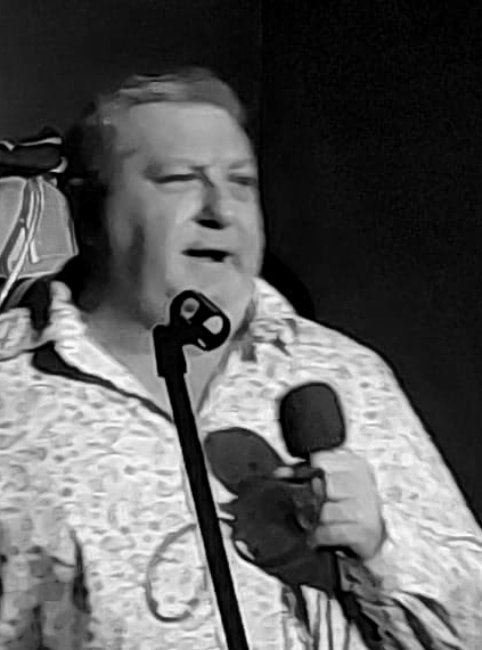
When referring to stand-up comedy people talk a lot about timing, but what they mean by that could be almost anything. Frequently they’re talking about cadence, the rhythm and intonation of a comedian’s speech. This is a form of vocal musicality that’s used to place emphasis on certain syllables and deploy strategic pauses that increase the effectiveness of punchlines and give comedians their unique voice. Cadence is important but today I’ll be talking about something else. (My soon-to-be-released book has a chapter on Cadence.)
I’ll be talking about the actual speed we speak at. I’ll be making the case for speaking more slowly when we perform. Adjusting our speaking velocity might be the most significant single change that will increase our effectiveness as comedians.
A performing comedian is running a few mental algorithms while they’re telling their jokes. This will (hopefully) be invisible to their audiences, but seasoned comics know what’s happening “under the hood” during a performance. One of these algorithms is memory; recalling the material and knowing what comes next.
Another is the “How am I doing?” algorithm that continually evaluates how receptive an audience is to the performance, ready to re-calibrate in real-time if necessary – much like GPS navigation software does when a journey deviates from the plan.
The most dominant of these algorithms is the Time-Keeper. Comedians are constantly managing time. From the outset we’re told that “Running the light” or going overtime is a cardinal sin, and there’s good reasons for that. The expression comes from the tradition where a light is flashed at the comedian. The first one is usually a prompt to start wrapping up when there’s thirty seconds remaining. The second is an indication that the comedian has used up their allotted time. After that, the flashes of light are angry ones that urge the comic to get the hell off the stage.
The system works but it’s far from ideal. If there’s a single change I could make to the world of stand-up, it would be to enforce the installation of easy to read clocks within the eye-line of performers at every single venue. I’ve always thought it ridiculous to have a workplace with this kind of emphasis on keeping time to be completely devoid of clocks.
It’s madness, and necessitates a dedicated person with a stopwatch and a flashlight, as well as placing an unmanageable burden on a performer who’s already running too many background processes in their heads. It’s hard for me to believe you’re serious about a precise timetable when there’s nothing to tell anyone what time it is.
The alternatives aren’t great. I’ve seen comedians check their watches onstage. If you’ve seen it too, you’ll know it’s not a good look. Nothing takes you out of the performance faster than seeing the performer who’s supposed to be “present and here in the moment” check their watch. It’s worse than seeing them check their notes. Seriously…. why no clock???
My point here is that comedians are encouraged to stress about time-keeping from their very first day. At our open mic we might be told that we have five minutes and not to go overtime under any circumstances. That’s a mere 300 seconds with the mic.
I can tell you from personal experience that using more time than you’ve been allotted will make you extremely unpopular with your peers. I made this error on my very first performance and it got me a reputation among the people I was trying to fit in with; a negative reputation that took me nearly 18 months to live down. In that 18 months I missed opportunities, including paid spots. You definitely don’t want to go overtime, not even once.
Given how strongly this is emphasized, it’s little wonder that time management is at the forefront of a comedian’s mind during their performance. The time management without a clock is tricky, but the subjective nature of time makes it so much more difficult.
Is time subjective? Readers of this blog will know that I’m keenly interested in philosophy, so it won ‘t be a surprise to know that I’ve studied time from a philosopher’s perspective and that there’s many points of view on the topic. Time isn’t a fixed and objective thing in the world, and many make a good case for the theory that time doesn’t exist at all.
For the sake of pragmatism we don’t need to worry about that, but something we do need to be aware of is that time has an extremely subjective quality. Time flies when we’re having fun but it barely seems to move at all in a boring doctor’s waiting room. It’s almost impossible to accurately measure the passing of time from feel.
This is especially true while you’re performing. Whether you’re having a great show and getting big laughs from an eager audience, or if you’re bombing hard and trying to get something positive back from an audience who are stingy with their engagement, your sense of passing time will be incredibly distorted. Using your senses as a stopwatch is a trap.
It’s better to trust your material. At the beginning, after my own overtime faux pas, one of the tribal elders in the local scene gave me some great advice. For five minutes, he said, write 4 and a half minutes worth of material. Why not five? Two reasons: First, we want to err on the side of caution, and secondly we have to allocate time for laughter.
If your audience starts laughing and cheering it will take at least 30 of your precious 300 seconds. If they don’t you’re probably going to want to back out thirty seconds sooner anyway.
Practice it at home, he told me. Time yourself doing your routine and aim for a 270 second set. This was very good advice. I can’t believe I hadn’t thought to do it already. There was only one thing that could fuck this up, and that would be if the speed I spoke onstage was different to the speed I spoke at home. Of course, it was. Everyone speaks faster when they’re nervous or excited.
Almost every new comedian speaks too quickly. Often it’s because of nerves, but don’t ever underestimate the pressure they’re under to finish within their allotted time. These too factors result in a lot of inexperienced comics talking too fast, sometimes so much that we can’t understand what they’re saying. The speaker usually doesn’t even realize they’re doing it.
It’s not just nerves and time pressure that have comedians speaking quickly, though. We’re frequently told that surprise is the secret ingredient in jokes, that it’s the element of surprise that evokes laughter and that every punchline uses the element of surprise. There’s some truth to this, but experienced joke writers know that the surprise comes from a clever twist.
Inexperienced joke writers think the surprise comes from sneaking up on their victim really quickly. If you’re relying on speed, and racing to beat your audience to the punchline, you probably need to write stronger jokes.
A similar error is when a comic doesn’t have enough confidence in their material, knows that deep-down it’s not as strong as it needs to be. Sometimes these comics will try to bluff, reasoning that if they rapid-fire material at the audience there will be the sensation of comedy and nobody will be able to slow down enough to discern whether any of it’s actually that funny.
It reminds me of badly-shot fight scenes in action films (I’m thinking in particular of the combat scenes in Christopher Nolan’s Batman trilogy) where you get a sense of violence and movement but it’s all a blur and you don’t get to appreciate the choreography or properly asses whether the fight scene is any good. It’s hard to not feel like someone’s trying to sneak something past you.
When a comedian does it they often look super confident, charging ahead at breakneck speed and giving the impression that they’re firing off more zingers than we can comprehend, and not slowing down for anyone. Truthfully though, it’s a lack of confidence underwriting this kind of performance, from a comic who doesn’t believe that they or their jokes can withstand much up-close scrutiny.
These aren’t the only reasons why a comedian might seem like someone’s pressed their fast-forward button. We’re all told to increase our LPM (Laughs Per Minute) ratio. We’re instructed to land our first punchline in the initial 15-20 seconds of our set. Everyone emphasizes the importance of Word Economy – finding the shortest, fastest route to our punchlines.
We’re always hearing about the short attention spans of audiences raised on the internet and social media. Inexperienced comedians seem to think that while they’re on stage it’s just a matter of time before everyone sees through their shallow shtick, and aims to wrap it up and leave before everyone loses their patience or sees through them.
With all this pressure to deliver our material in a prompt and speedy fashion, it might come as a surprise that I’m advising you to go slower…. but I am.
I’ve already hinted at some of the pitfalls for telling your jokes too quickly. People don’t hear or understand you. When you’re presenting stand-up you’re streaming information, and your audience is decoding and interpreting it in real-time. You don’t do any favours to the people trying to understand your jokes if you recite them faster than anyone can decode them. This is especially the case if your words or ideas are complicated. Seasoned pros like Chris Rock will do everything in their power to make sure you understand them, sometimes repeating their premise several times to give their jokes the best possible chance at being understood.
Actually, watch any seasoned professional comic to see how they manage the speed of their delivery. I don’t know who yours are, but I can watch all the specials from any comedian who has three or more and generally come to the same conclusion: As they get more experience and master their craft, they speak more slowly.
This isn’t a coincidence. The slower delivery is a sign that they have more command over what they’re doing. They’re not an out of control racer swerving all over the place, relying on momentum instead of precision: That’s the hallmark of newbies lacking confidence and feeling the time pressure, afraid that slowing or pausing will create space for heckles. Experience and confidence bring a sense of control that doesn’t need to race against their audience.
I once heard a old joke about a conversation between a young inexperienced bull and an older wiser one, where the young bull says “Why don’t we furiously charge into the field at full speed and take the lady cows by surprise so we can fuck one of them?” and the older experienced bull just smiles and says “I have a better idea… why don’t we casually stroll over, charm the lady cows and fuck all of them?”
Consider this an allegorical tale about the virtues of experience, control and a casual approach. Sorry if it’s too vulgar for you. I initially thought about invoking the relationship between Achilles and Agammenon from The Iliad, which is a similar story, but it’s too rapey, so I went with this example instead.
There’s no better way to inspire the confidence of your audience (and you need the confidence and trust of your audience for your set to work) than to speak calmly and confidently. Everyone will tell you to race to your first punchline to let them know you’re funny immediately, but being cool and controlled about it is a much more reliable way of letting your audience know they’re in safe hands with you.
One way to tell when you’ve leveled up is when you can see yourself making precise surgical strikes instead of scattering machine-gun fire all over the place. Another is when you’re mindful of time. but you can still deploy your jokes in a calm and measured way. The holy grail might be knowing you can let your material “breathe” with the knowledge that you have enough control of the room that interlocutors won’t ruin anything whenever you pause for a moment.
When you start out, everyone impresses a sense of urgency. You’re told about strict time limits, word economy, short attention spans, getting to the punchline as fast as possible, momentum and LPM… and this is all worth taking into account, but you might be better off observing and emulating what the masters do.
Calm deployment gives your material it’s best chance of being understood. It’s also your audience’s guarantee that you’re really there in the moment, and not just rattling off a memorized list. Mostly, though, it speaks volumes about your experience and level of control. If you can communicate these qualities, you’ll learn that trust and confidence are just as essential to laughter as the element of surprise.
 Sean Cooper, Comedian