
You don’t need props to tell a joke. That’s one of the salient and awesome aspects of stand-up.
Music acts might need instruments, other band members, lights, smoke machines, costumes, mixing desks, a big stage, backing tapes, roadies a sound crew and even dancers before they’ll even consider putting on a show. But we comedians find it pretty easy to perform “unplugged.”
For me, that’s part of the beauty of it. No disrespect to comedians who use props, or ventriloquist dummies, magic trick paraphernalia, the rest of your trio or improv troupe, or do music comedy with instruments or backing tapes; You’re all doing a great job.
But for me the appeal lies predominantly in the naked challenge of one person facing the opposite direction of everyone else in the room, creating the twin miracles of making people think and also creating visceral involuntary physical responses with nothing more than their words.

To me that is such a powerful thing. While other entertainers might be using skyscraper-sized speakers and million-dollar light-shows to try and create artificial emotions, a comic can make you feel differently about something significant, maybe even change the way you vote and treat people…. all while entertaining you and using nothing but their voice to do it.
And it means we can work without studios, dedicated clubs, massive stages, camera crews or any of that. It’s portable. We can theoretically work anywhere, though some locations are definitely better than others.
I’ve performed in all kinds of venues including but not limited to Comedy Clubs, Cocktail Bars, Circus Tents, Pubs and even the back yards of people’s homes. I’ve performed inside and outside, in person and online, at daytime and night-time, to massive audiences and also to empty rooms. They’re not all equal.
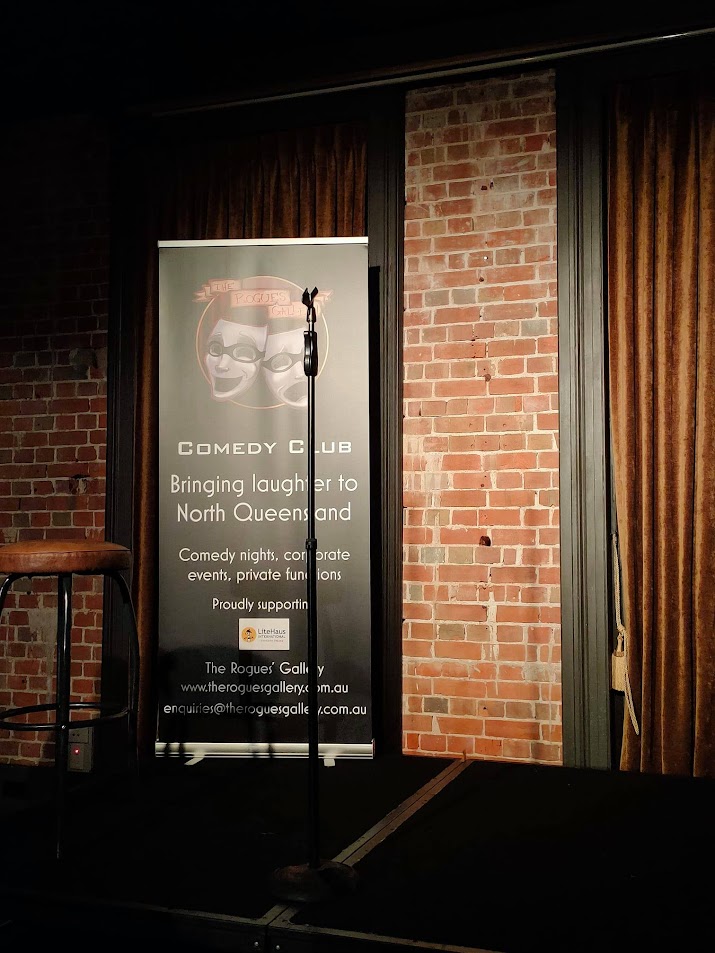
When we think about the success or failure of comedy we rarely consider the room. If it’s going well, the credit goes to the Comic and it’s all about the abilities of the performer. If it’s not going well, we might blame the audience and attribute outcomes to whether audiences are open or hostile, smart or stupid, “hot” or “cold.”
What we don’t consider is that the room, the space in which the performance takes place, will have a big influence on the comic and the audience and the performer. It’s difficult for the comedian to take this into account because we place so much emphasis on our own skills and delivery.
We also think it’s the only part we can control, but we also can contribute to a great outcome by considering environmental factors – even if our control is limited to choosing where we will and won’t perform.
If you’re a comic and you haven’t yet developed a shortlist of venue qualities you look out for, and set some boundaries about which gigs you will and won’t do, it might be time for you to start considering these things.
These days I’ve been pretty picky about which gigs I attend and perform at. I don’t have anything against open mics, and really enjoy some of them, but I haven’t done one in the better part of a year.
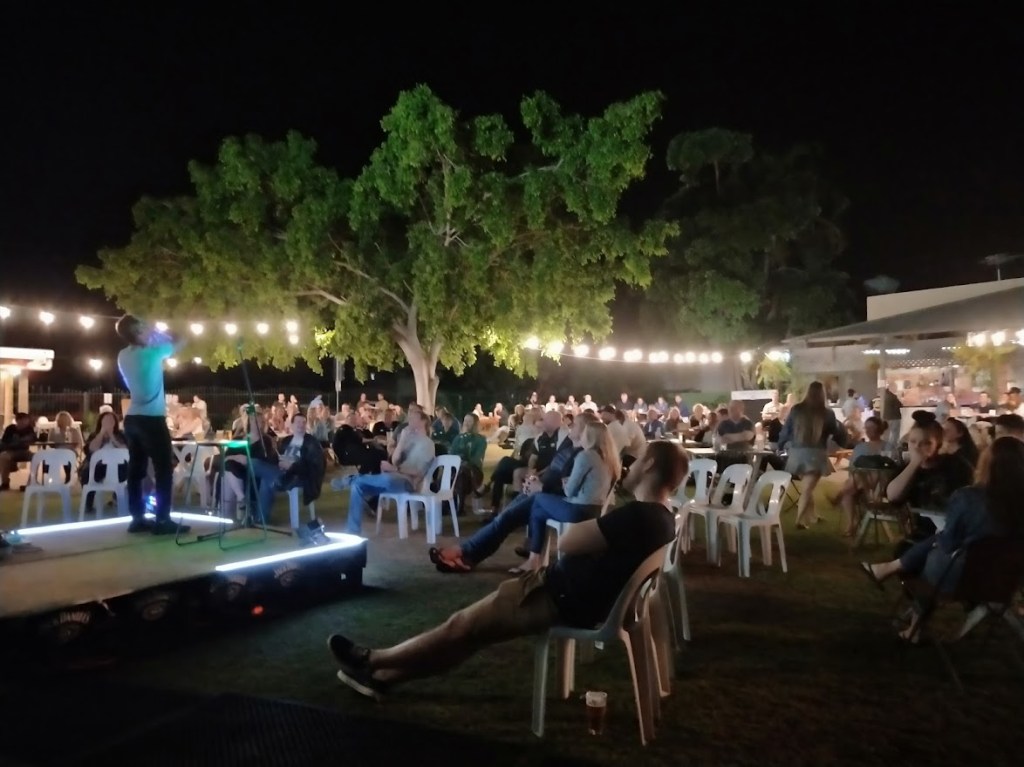
But some of the Open Mic venues are really good: I’m going to list some factors on what makes a room good or bad, and you’ll see that Molly Malone’s the primary remaining Open Mic in Townsville, ticks all the “Great Venue” boxes. It compares very favourably with some of the other places that have hosted Open Mics here.
Before I go into the features list I’ll quickly describe a couple of my least favourite venues, ones where I think the design of the place actively worked against the comedian’s success, and you’ll have a bit of an idea where I’m coming from.
I won’t be naming and shaming – it’s not that kind of article. But you will appreciate that I’m speaking with actual experience to back up the science.
Firstly, and most obvious, is the Sports Bar. This venue was pretty generous to Open Mic comics, offering substantial food and drink vouchers just for showing up and doing 5 minutes, and that always mystified me because they didn’t appear to actually get any extra business by hosting comedy nights.
There was no stage in this venue – just an area for us to stand, and almost any other spot in the place would have been better, Our spot was visible only to a couple of tables and most of the seats at those tables face away from the performance area. Most of the tables were a long distance from the performer, with about 80-100 meters between the guy with the mic and most of the families at booths. Yes, booths – most of the people had their backs to the performer.
“The Game” was shown on a few flat-screen TVs mounted on the wall right behind us: If anyone appeared to be watching the performer there was a 90% chance they were watching The Game which is why they were there. Nobody came for the comedy. Most of them seemed to resent it happening and would often respond with hostility when performers tried to engage them.
Oh, and did I mention it was a family venue? Sure, it’s a licensed bar – But there’s also a kid’s arcade and there would be children running amok while their parents glowered at us for performing adult comedy with robust language.

The next one that springs to mind is the Bogan Pub. Now, I’ve had some great nights there and so have many of my peers, but if you were designing a place to completely undermine and sabotage the performances you host there, you’d probably design something pretty close to this place.
For starters, it was unbearably hot. If you Google anything about designing a comedy club you’ll see lots of reports that the temperature should be cool, just under what people are comfortable with. People are 90% less likely to laugh when it’s warm. This place, in a hot tropical city, was hot and humid in the summer. It wasn’t tears of laughter that people were wiping from their eyes: It was sweat.
Also, terrible acoustics. And a really high ceiling. All the comedy club instructions recommend low ceilings. The sound is terrible in high-ceiling rooms and the laughter just evaporates. This venue also committed the other acoustic sin of open windows, including right on the stage. It might have mitigated the heat, but it also let all the noise from the street in (as well as all the other distractions that windows offer).
To make matter worse sound-wise, it was a wide shallow space with the bar so close to the stage that the performer was also competing with all the noise from drink orders.
If you think this adds up to a rowdy and difficult experience for performers, you’d be right. Many local performers were afraid to perform there, also because the loud drunken vibe encouraged loud boorish heckling .
One more thing worth mentioning – filthy. One time there, a night where my material didn’t seem to be achieving the desired effect at all, two ladies in the second row got my attention and interrupted my routine to point out a large cockroach crawling on the wall behind me. Yes, big enough to be seen by audience members in the second row. They told me to kill it, which I didn’t want to do in the middle of my set, so I responded that I’m not the resident fucking pest controller. The whole thing fucked up my jokes and threw me off my game.
Don’t get me wrong – I’ve had some great nights there, but it sure did feel like the venue itself working against us. Between the heat, the open windows, the noise, the hecklers (some of them would heckle you from the street outside through the open windows), the vermin and the drunken tone of the place, a good night was definitely not guaranteed.
The Renovated Pub was cleaner, but still far from an ideal comedy venue. Terrible acoustics (this time in the form of a harsh slapback reverb), open windows distracting us with the world outside, and the footy game left running on the screen right beside the performer is stuff I’ve mentioned before. Also, super bright.

For comedy, darkness is your friend. Nobody likes to laugh in a brightly lit room. It feels awkward and not anonymous enough. Darkness promotes laughter, and a lot of that is by promoting anonymity. People won’t laugh if they expect disapproval, and they usually subconsciously look around for permission to react with laughter. Especially if the joke has the tiniest hint of controversy or edginess. Make sure everyone in the room can see each other, and you’ve put up a huge obstacle to positive audience reactions.
And secondly, if the venue looks more like a waiting room or media/activities room in a care facility, bright illumination makes it almost impossible for everyone to feel like they’re participating in a comedy event.
No stage, no dedicated lighting, a harsh floodlit space with harsh acoustics. windows without blinds and a football game near the stage made this place and uphill battle. I saw lots of comics lose control to hecklers in that room. I always liked it there and did some killer sets, but nobody would look at the place and say it’s ideal for performing comedy in.
Another aspect of that venue was the difficulty of getting to and from the stage. It’s not cool to be pushing and shoving through a crowd to get to the area we have to be performing in, and it doesn’t bode well to arrive at the mic 30 seconds after everyone finished applauding. But that’s what could happen with this and other venues that don’t have a clear path to enter and exit the stage with.
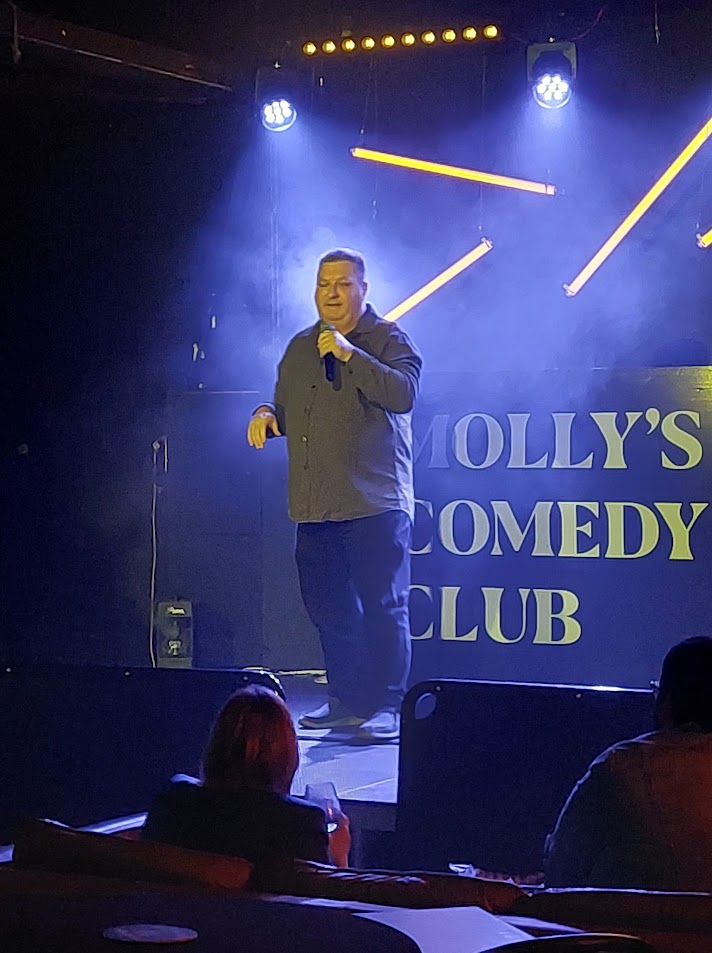
When we have to come up from the audience but there’s no space to do so the comics end up being the ones sitting in the front row. It’s not optimal. If I were putting a room together one of the first things on my list would be to make sure that the performers can get on and off the stage (and ideally without injury! One of my friends once broke his leg on the stairs leaving the stage).
What else do we look for? Fairly comfy seats. Not too comfy, mind you. We don’t want our audiences drifting off to sleep. But they should be pleasant enough to comfortably endure for the show. Discomfort creates distraction that undermines jokes. It also breeds resentment, especially for punters who paid to be there. Also, no soft furnishings. Too much plush fabric absorbs sound and fucks up the acoustics in the room.
We like the shape of the room to be rectangular but not too deep. A deep room means the people up the back start talking among themselves, which is distracting for us and worse for the rest of the audience. It undermines the show. Some of the worst gigs I’ve done were in long rooms where the people at the back were competing with the stage.
We like seats packed together. Social distancing inhibits laughter, and people close together encourages it. Small tables, for this reason (also less likelihood of any of the chairs facing away from the stage).
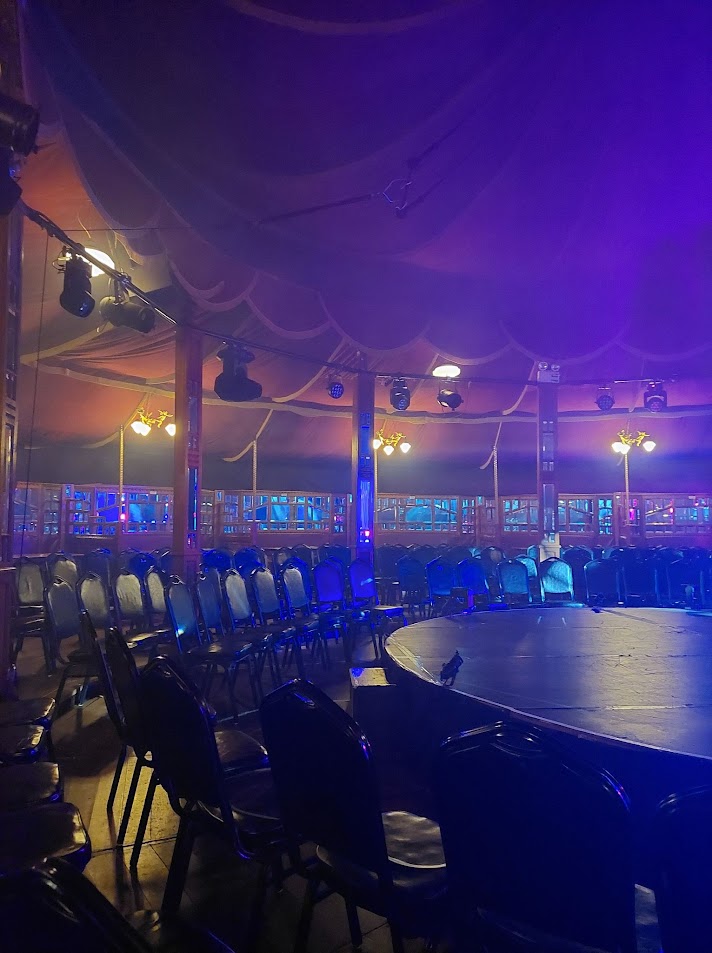
Also, red has been proven to be a much more effective colour than cooler colours like blues. It’s one of the reasons you see a lot of red brick in comedy clubs. It makes sense acoustically and also for colour.
The toilets and bar will be at the back of the room. Some comedians think it’s funny to call out audience members who are trying to discreetly access toilets that are near the stage, but it’s not cool. It’s neither comfortable nor pleasant for audience members. The comics only do it because it disrupts the show.
And did I mention lower temperatures? Yes I did. This has been proven time and again. David Letterman spent 3 years experimenting with temperatures on The Tonight Show and came up with proof that “slightly cooler then comfortable” is the ideal temperature for a laughing crowd. This is something you’ll see reflected in most professional comedy venues. I can tell you, performing regularly in the hot tropics of North Queensland that heat is a humour-killer.
And what about Zoom Comedy? Well I’ve done a fair bit of comedy online with Zoom and other applications, because I’m lucky enough to be alive in an age of global pandemic. First, I’ll tell you that I like a lot of it.
I’m a committed regular with Remotely Funny who use the platform to deliver comedy to remote areas and gives a voice to comedians who don’t live in capital cities. They have a great community, run by great people and I always enjoy participating there. They don’t mind (or know) that I do my gigs there without pants.

Also, I took to the wonderful world of online in 2020, the year of Covid, when live comedy stopped all over the world. I did Zoom shows hosted by comedy clubs in New York, Montreal, Scotland, the UK and Alaska. It was awesome and terrible. Any comic who’s done Zoom shows probably has a hilarious chunk about what a terrible experience it is.
I’m not going to lie – it’s hard. Really hard. Even if you do well it feels like bombing, and mostly likely it will be because you actually are bombing. Remember how I mentioned that bright lighting discourages laughter? Remember how I told you that people need anonymity to chuckle freely without inhibition? Remember how I said that proximity is your friend?
Exactly. Your typical Zoom show has everyone in well-lit rooms and facing each other. Also, they might all have their mics turned off, so you can’t count on hearing laughter. If you do hear laughter it will sound forced and insincere, like people are humouring you.
It’s awkward, cringe-inducing and most likely unsuccessful. I’ve done a lot of it because I see it as like training while wearing weights. It’s less pleasant but it will make you stronger. Also it’s a really honest way to test new material.
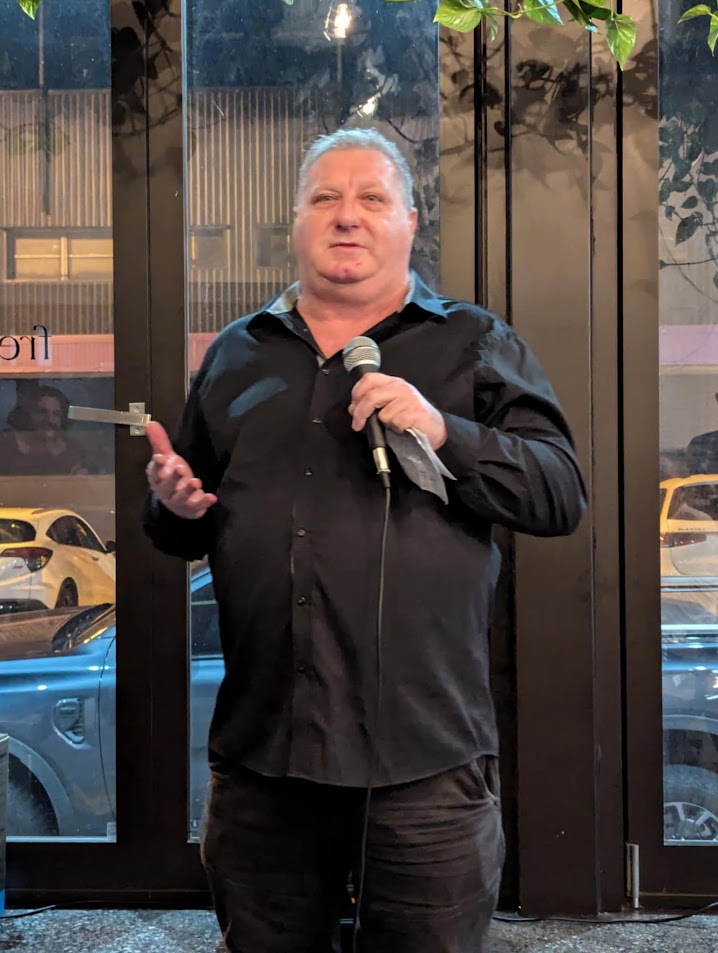
Plus, I’ve made friends and been entertained by comics I might never have otherwise met. Hey, if you’re reading this there’s a good chance you saw me perform in one of those things.
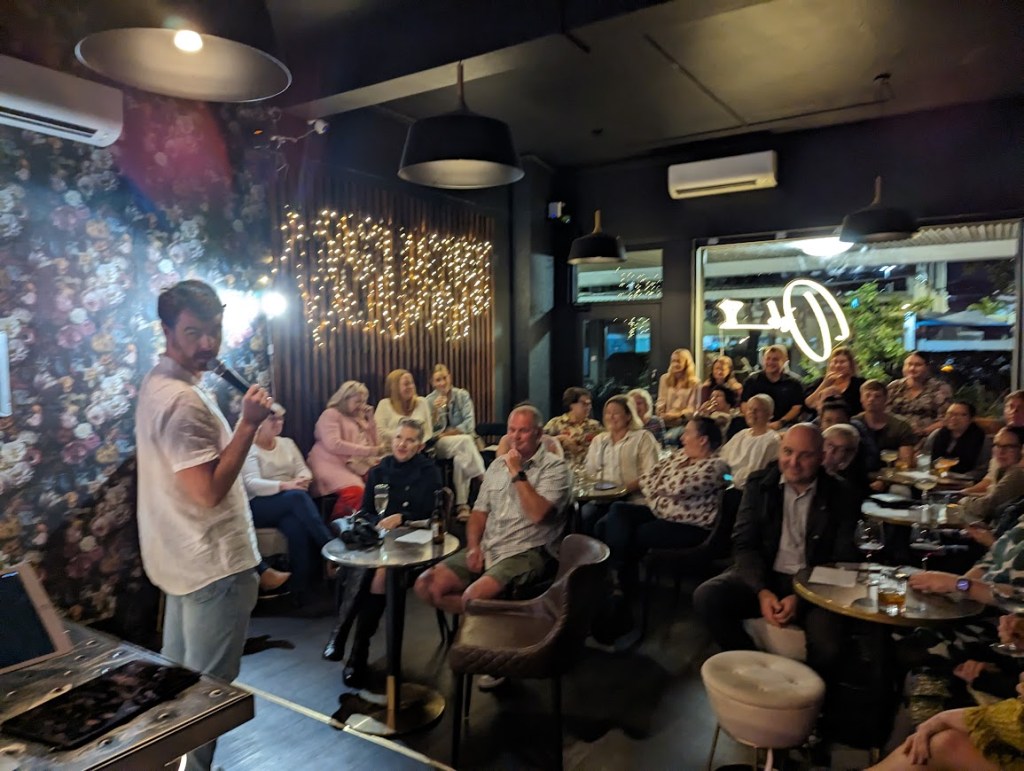
I’m not precious. I don’t need perfect conditions to do my thing. This year I’ve done most of my shows at the Fresno Espresso Cafe & Wine Bar and I love performing there even though I’ll be the first to agree that the room was definitely not designed as a comedy club.
Firstly, it’s well-lit. It’s bright and everyone can see everything. Secondly there’s no stage. You’re at the same level as everyone else. Third, it’s tiny. I think it can hold about 22 audience members, which often means the comics are standing outside sweating in the heat during summer.
Fourth, the crowding means no clear path to the performing space. Getting there is not graceful and doesn’t get the show off to a good start. Fifth is the windows. The whole wall behind you is glass that backs onto one of the main streets in the Townsville CBD. Lots of distraction, gawking and face-pulling from pedestrian bypassers, cars and whatever else.
This also contributes to #6 which is the noise. Over the road is a big pub that usually has a loud rock band performing during our comedy nights. That and loud cars drag-racing up and down Sturt Street can make it difficult to focus and keep everyone’s attention when you perform.
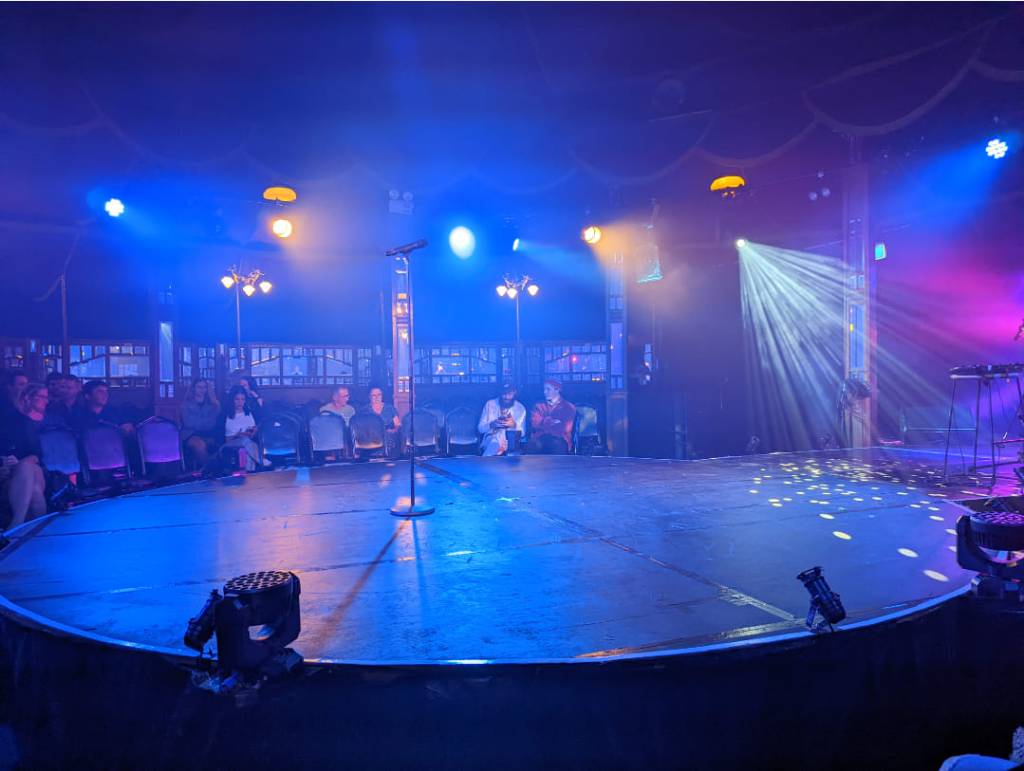
Coming in at number 7 is the proximity. We don’t want the audience miles from the performer, but it’s also not easy in a tiny cramped space either. There’s no stage, not even a 1-inch platform, and the front row are so close we could literally slap each other if we wanted.
This means that if audience members do talk to each other or to us, it’s intrusive to everyone in the room and needs to be addressed. You might be able to ignore that and push on in a darkened club but the elephant in the room is visible to everyone in Fresno.
If someone in the audience even glances at their phone it becomes a potential disruptive presence in the room. If you’re struggling (and, given all the other factors, you might be) the tiniest hint of negative feedback will throw you off your game.

And #8, which is both a strength and a weakness is that it’s a nice cocktail bar. I think this is great, and that the audiences are great.
But I know comedians – experienced and skilled ones – who struggled at Fresno because the jokes. language, attitudes and behaviour that are accepted at feral Open Mics nights in the Bogan Pub are inappropriate at the cocktail bar. I think that’s more than fine, but comedians who rely heavily on the C-word don’t feel comfortable “being themselves” there.
Anyway, to a lot of comics Fresno might look like a difficult place to do comedy. I’ll admit it’s not an optimal design, but there’s a lot to be said for liking the place and the people. Like doing Zoom comedy, it just means you have to use different skills, different muscles. you have to think about what you’re doing and take the environment into account.
Environment makes a difference. I’ve worked in venues so “hot” you could have a shitty performance with no real jokes and still get applause and say you had a great night. If the room is right, the audience is right and the MC has done a good job you could literally stumble through a crap gig and still do OK. That’s the power of a room optimized for comedy.
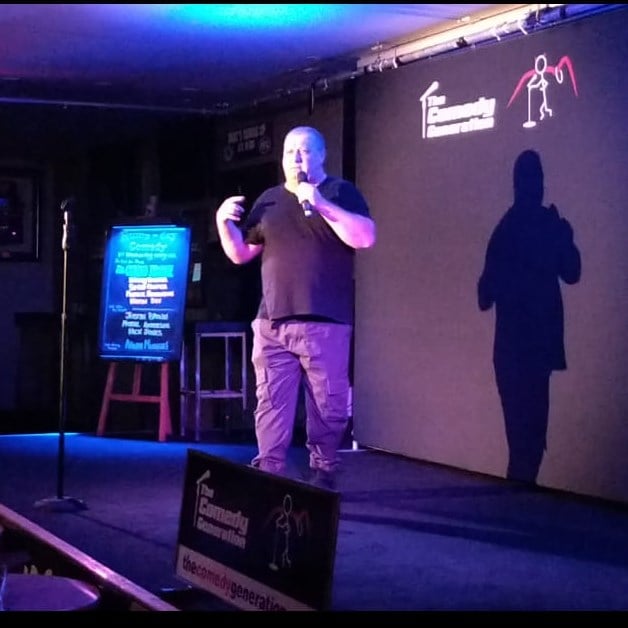
I enjoy working at Fresno and do well there. I’m happy on tuning my material to the audience I’m spending time with. I don’t need the venue to do all the heavy lifting, and . But I am conscious of the role environment plays in how a gig goes, and I believe that being conscious of what works for and against you is as much a skill to develop as all the other stuff we learn.
 Sean Cooper, Comedian
[…] I’ve written previously there are too many variables – from the temperature to the ambient light to the acoustics and other aspects of the room […]
LikeLike