
“I have a confession to make” she says when the dessert arrives at our table. “I checked out your stand up comedy and I don’t like it.”
When she sees I’m untroubled by this admission she’s emboldened and adds “In fact, I hate it. Everything about your routine offends my deeply-held Christian values.”
It’s 2020 and this is not a revelation. When we met she said she liked stand-up but later added that her favourite comic is Jeff Dunham. Jeff Dunham is a hugely popular puppeteer, thanks to his problematic racially-stereotyping characters (Achmed the dead Terrorist. Jose Jalapeno “on a steeek”. Sweet Daddy the African-American pimp. Seamus the drunk Irish baby). Everything about his routine offends my deeply-held Humanist values.
My date and I had been seeing each other for a few weeks. It was nice, despite glaring differences in our deeply-held values. “I don’t like your comedy” she says. “But I like you.”
I thought about that. A lot. Not so much in the context our relationship, but what it meant in terms of the relationship between art and artist.
For instance, I can’t imagine myself having a great relationship with a comedian like Jeff Dunham, and that’s purely based on me not liking his bullshit hacky act. I Google and discover he supported Trump and made fun of Hillary Clinton for being a woman. I feel vindicated. If he were a progressive social justice advocate I’d have been shocked.
Music and other artforms are filled with examples of loathesome artists making art that people love. Marilyn Manson has revealed himself to be an abusive narcissist, someone who’s physically and mentally abused women for decades. However, Antichrist Superstar is an amazing album that still sounds amazing 27 years after it was released.
Even with the knowledge we have, people still enjoy the music of R Kelly and Michael Jackson. People still revere the works of now-dead artists like Degas, Gaugin and Francis Bacon, even though the most superficial Google search reveals them to be monsters in their own time.
But there’s something different about comedy. Just ask the former fans of comics like Bill Cosby, Louis CK, Martin Lawrence and Chris D’elia. There’s something about stand-up that makes it much harder to separate the art from the artist.
We know that comedians are fabulists – most of the jokes couldn’t possibly be true stories. But somehow, skilled comedians manage to make us feel like we know something about them. Many narratives are rooted in personal experience. Most comedians present a point of view that is uniquely their own. A lot of stand-up is confessional in nature, and reveals detail and vulnerability more intimate than closest friends ever share.
Also, despite the surreality of it, there’s also a lack of artifice with stand-up. When a comic is onstage, they’re usually the only one facing against everyone else in the room. They’re not hiding behind a band, the character they’re playing, their instrument, music, smoke or special effects. They’re usually using their own name, and during the gigs that don’t go so well, that feels like the hardest and bravest part of it.
Sure… some comedians are part of a troupe with a name that’s not their own. Some will use stage names. Some of them hide behind characters. The really shitty ones might even hide behind racist puppets.
But most of the time we literally put our Selves out there, so the negative responses are a lot more personal than they would be for our band or brand. Sean Cooper the person and Sean Cooper the comedian don’t just look alike… We have the same name, the same body and even the same brain. My comedy is not a Jeckyll-and-Hyde thing. It’s me the whole time. When you tell me you hate my comedy but like me, I’m suspicious of whether you really mean the second part.
And, for the record, that’s OK. Nobody is obligated to like my comedy or to like me. I’ve been an adult long enough to know and accept that lots of people won’t. That’s fine. I’m also allowed to not like you, Jeff.
The lady I mention at the beginning of this post was the last instance of “I don’t like your comedy, but I like you” in my life. Before her there was a long procession of ladies with similar attitudes that were happy to be in relationships with me but had no enthusiasm or interest in my creative outlet, and possibly even disliked it or felt embarrassed about it.
This goes back to my days as a musician, for decades. What I’d told myself was that I’m not a narcissist, that I was avoiding the sycophants and groupies, that I had enough substance and integrity to look beyond my fanbase. That I had enough self-esteem to not need my lovers to be lovers of my body of work.
What a crock of unfiltered horseshit.
Self esteem? I had zero. If I’d had self-esteem I wouldn’t have repeatedly ended up with people who didn’t get me and didn’t like my expression. If I had self esteem I wouldn’t have spent decades in relationships feeling patronised or humoured. If I had self esteem, being into them wouldn’t have been enough… How much they “get me” might also have factored into my emotional commitments.
People tried to convince me that they liked me, even though they don’t like anything I say or think or do, would have seemed disingenous and manipulative to me. And that would have been a good thing – Because, in hindsight, most of them were.
I know you can like someone’s art, even if the artist is repulsive…. but can it work the other way around? Can you actually like an artist even if you hate their art?
I think the lady with the deeply-held Christian values was practising some version of “Hate the sin but love the sinner,” but I’ve always thought that’s kind of bullshit. I’m an Existentialist and we think people are what they do. An honest man who steals once isn’t necessarily a thief, but for someone who steals routinely for years there’s no other word. We’re all artists of some kind, and any Existentialist will tell you that we are the art we make.
Again, for comedy this feels especially so. Let me tell you the story about when I first met my friend, brilliant comedian Brendon Burns. This comic I admired, who’s DVDs I’ve had for over a decade, turns up at our local open mic to have a go. I’m the only one there who recognises him and we get on like a house on fire. We converse about everything from alternative energy to TV shows and I feel like I’ve made a new friend.
Meanwhile they’re putting together the lineup for the show. I’ve been opening here for months but tonight they’ve decided to make Brendon, Tim Axton and I the final three acts of the night. Tim regularly headlines locally, and Brendon’s a fucking Edinburgh Festival Perrier Award winner. FYI, that’s about the most prestigious win a comedian can achieve on this planet, but he’s also done sold-out theatres in the UK too.
And what happens? They move some things around and suddenly Tim’s on before Brendon and I’m closing the show, going on after Brendon Burns himself.
Yes, I panic. A lot. It’s an open mic and I’ve written a set that I haven’t tested and don’t know is funny. Tim does a strong set, and then Brendon bloody Burns shows everyone how hilarious he is. The Molly Malones’ audience might not have known his body of work, but they could instantly tell he’s a seasoned and skilled professional comedian, one of the greats. I had to follow this. Unfuckingbelievable.
So how’d I go? I’m pleased to tell you that I killed. I fucking murdered. My set was good (still one of my strongest, nearly three years later) and people were repeating catchlines from it out in the smoker’s area. I came offstage to rapturous applause. It’s still one of my fondest memories.
And when I returned to the bar, Brendon was there and offered me a beer. “Thank fuck you did well” he said. “If you ate shit up there, this would be awkward. I like you but if you were a shithouse comedian, we couldn’t be friends.”
And yeah, that’s how I feel too. I’ve got friends in the local scene, but my ability to like my peers is limited by how much I respect and enjoy their comedy. The ones I’ve had negative interactions with, because not everyone’s been super-nice to me, happen to be terrible comedians and that fact has helped me reconcile my feelings about them.
Yeah, you might be able to separate the art and artist… But if you’re a comedian I’ll bet you don’t. We might talk about our jokes and our act like they’re separate entities, as though they were accessories we purchased online, but we all know that our jokes and our act came from our brain and are an intrinsic part of us.
You have the right and possibly the inclination to not like my comedy, but don’t tell me that you feel that way and still like me. That’s a lie I can no longer believe.
After dating my female friend, the fundamentalist fan of faineant funniness from prejudiced puppeteers, I decided to break that pattern. I would no longer conduct relationships with women who didn’t like or respect the parts of me I’m most passionate about. I would no longer entertain a condescending partner who viewed me as a lovable sinner despite my sins.
I’ll have you know it’s going really well. The next woman I dated, the first instance of my new standard, is the one I’m still with today. She gets it and gets me. She loves that I’m a comedian and enjoys having a partners who’s creative and passionate. She’s proudly tells her friends that her guy is brave and charismatic (her words, not mine) and can effectively hold the attention of everyone in the room.
Even when she’s witnessed me bomb, she’s admired the strength I have to endure the negative feelings and still go back to risk it all. She’s one of the rare women who says she finds a sense of humour attractive and actually fucking means it. She likes all of me, and especially the parts that reflect my creative expression.
I happen to like Francis Bacon’s art, even though I dislike the person who created it. But it can’t be the other way around,. not for me. If your comedy tells me you’re a fuckwit (and for the record, I’m not confusing that with an ironic act. Anthony Jezelnik’s jokes might be cruel and narcissistic but I can tell he’s a sensitive and intelligent human), I’m going to find it hard to like you no matter how much you distance yourself from it in social gatherings.
If it comes down to your art and your act, I’ll believe the art. That’s the most honest part of you.
She doesn’t like my comedy but likes me? I know she believed what she said but it’s ultimately bullshit, disingenous self-talk from someone trying to cherry-pick my life for the bits they like and find useful. You don’t have to be a relationship counselor to know that the healthiest relationships are the ones where the participants like and accept everything about each other (although strangely, it took me way too many years to realize it).
Deciding that “love the sinner/hate the sin” is bullshit hasn’t just been fantastic for my love life, it’s been good for my comedy too. It’s liberating to be able to write and perform without feeling like it’s barely tolerated by a significant other, and it’s helpful to be able to run ideas past the most important people in your life and get honest feedback.
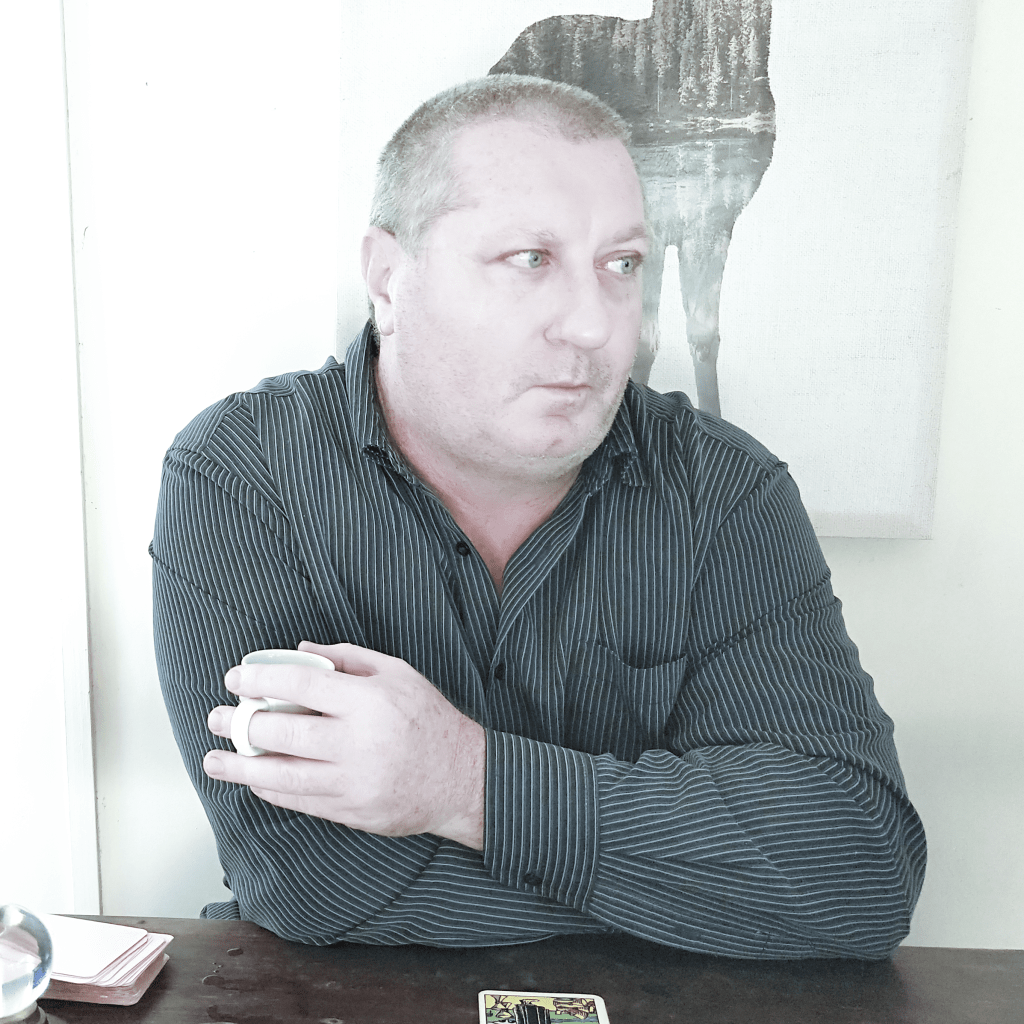
I don’t know why I put up with condescening and unsupportive people for most of my life, but since I stopped I haven’t looked back. Your jokes are the product of your own mind. They are you. Not eveyone will like them, but you deserve the company of people who do.
 Sean Cooper, Comedian